Human RightsRefugees & Migration
European Court: Sweden Cannot Deport Iranian Christian Convert
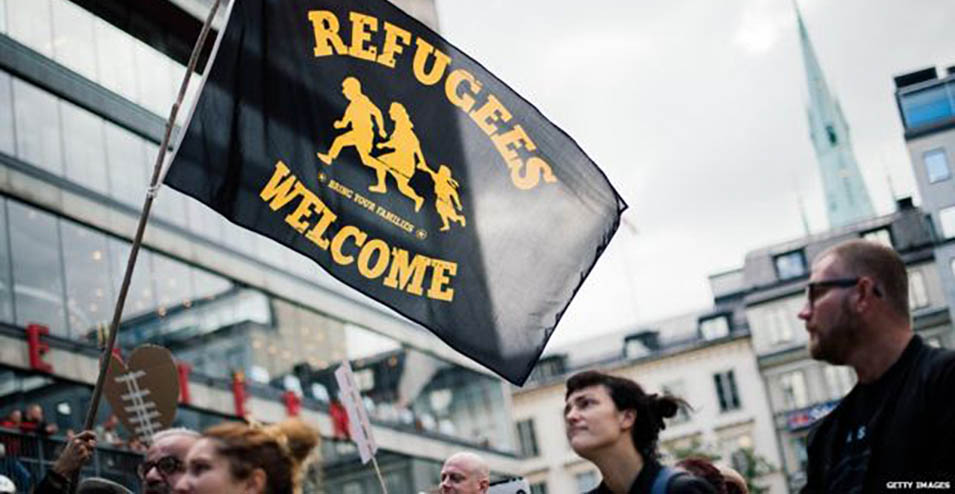
The European Court of Human Rights ruled on Wednesday, March 29, that the Swedish government must fairly assess the existing dangers facing a newly converted Iranian Christian before rejecting his asylum request and returning him to Iran in accordance with standards upheld by European governments.
According to the ruling of the European Court of Human Rights, the Swedish government must conduct a fair assessment of how this man’s life would be at risk upon return to Iran before deporting a man who converted to Christianity in Sweden and faces the threat of torture.
In Iran, which ranks as the ninth worst country in the world for persecution of Christians, apostasy from Islam is a crime punishable by death.
Although Sweden’s Migration Board rejected his asylum application in 2010 without a fair assessment of the dangers facing this apostate from Islam, the European court now demands that Sweden review his case and conduct a thorough analysis of the consequences of religious conversion for this man in Iran.
The court also stated that if Sweden fails to conduct a fair assessment of the dangers facing this newly converted Christian before deporting him to his homeland, it would be in violation of the European Convention on Human Rights.
Paul Clément, senior advisor and deputy director of the International Association for the Defence of Religious Liberty, stated in a press release: “Unfortunately, Iran’s existing laws against apostasy pose a direct threat to those who have converted to Christianity, and we must ensure that the right to life of these individuals is fully protected. He said: “We welcome this court decision because it takes into account the views of the International Association for the Defence of Religious Liberty and makes clear that deporting this person to Iran without a proper assessment of the risks and consequences he will face as a Christian contradicts his right to life and right to protection from torture.”
This ruling of the chamber was an appeal against the decision of the lower court chamber, which ruled in 2014 that Sweden’s rejection of this man’s asylum application was not in contradiction with the European Convention on Human Rights. At that time, the court believed that no serious danger or threat from this apostate would threaten him upon return to his country, because Iranian authorities were not yet aware of his conversion to Christianity.
Robert Clarke, director of advocacy for the International Association for the Defence of Religious Liberty in Europe, stated in a press release: “The first court ruling overlooked the potentially deadly consequences of conversion from Islam to Christianity in Iran and previous court decisions regarding Iranian apostates that had been issued in favor of these individuals.”
Following the lower court’s ruling, a number of human rights advocacy groups, including the International Association for the Defence of Religious Liberty, Jubilee Campaign, and the European Centre for Law and Justice, challenged the court’s claim that there was no danger to this man if he returned to Iran by submitting a brief statement.
In a letter filed by the European Centre for Law and Justice, it stated: “Those who have converted to Christianity, if identified by the Iranian government, suffer at minimum from often significant harm or even interference with freedom through deprivation of liberty, assault, and continuous harassment. In worse cases, the person could face severe mistreatment and even death.”
The letter continued: Contrary to Iran’s claims that its laws respect the Christian community and recognize them officially, Iran’s Christian congregation faces systematic and fundamental persecution and discrimination. The European Centre for Law and Justice, without addressing the specific characteristics of this case, believes that returning a genuine new Christian to Iran exposes him to persecution, which violates Article 3 of the European Convention on Human Rights.
Despite the fact that Christianity is severely suppressed in Iran, the house church movement within the country is rapidly expanding with approximately 450,000 active members.
A source close to Iran’s house church movement told Christian Post in March: “This movement is not against Iran, but rather an Iranian movement. This trend involves countless Muslims turning to Christ.”
Because Iran’s morality police have rapidly suppressed house churches and arrested hundreds of participants in these gatherings, the activities of these churches must be conducted clandestinely and quietly in small groups.