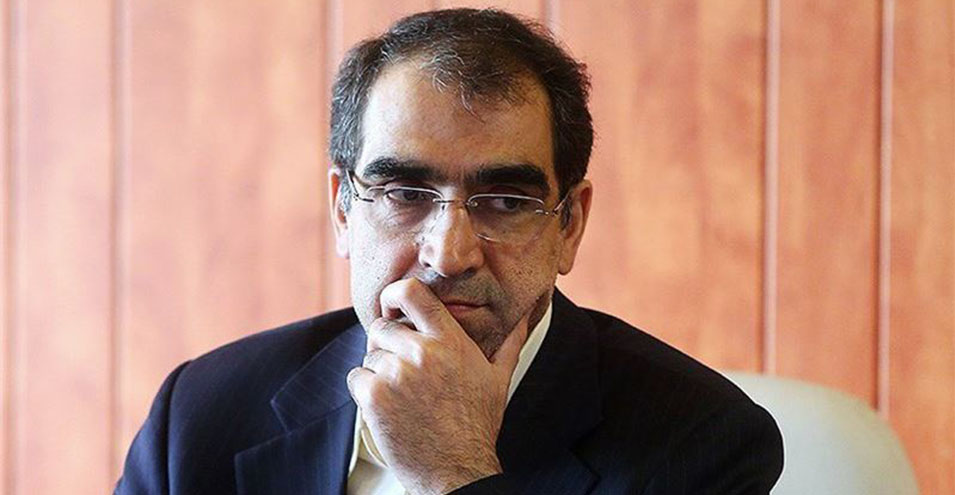
Hassan Hashemi, Iran’s Minister of Health, reported high statistics of depression in Iran and told those who, according to him, “spread despair in society,” that pumping despair into society with political motivations is unjust. He added: “No nation has done such a thing to itself.”
According to the Iran Students News Agency (ISNA), Hassan Hashemi, at a meeting held on Sunday, April 9th, regarding the prevention of high-risk social behaviors with a focus on suicide, said there are significant problems in the field of mental health in Iran that “unfortunately are denied both by the public and by officials.”
The Health Minister added: “12 percent of our society suffers from depression and this issue requires treatment.”
Hassan Hashemi also said that you can define cheerfulness however you want, but there must be discussion about nervous and mental disorders and the mental health of society. He considered politicization as causing neglect of real societal issues and expressed hope that such discussions would continue.
Based on this report, the Health Minister cited depression, substance abuse, and domestic violence as some of the causes of suicide and said these causes must be subjected to psychological autopsy.
At the same meeting, Dr. Ahmad Hajabi, head of the Mental Health Department of the Ministry of Health, said that suicide is an acceptable public health problem, but its social dimensions must also be considered.
According to Mehr News Agency, he also said that based on information data, the rate of suicide attempts is higher in women, but the number of deaths resulting from suicide is higher in men than in women.
Referring to the most common issues leading to suicide, he said that unemployed individuals are more likely to commit suicide than others, followed by housewives. He also said that the suicide rate in villages has reached 30 percent and in urban areas 70 percent.
The head of the Mental Health Department of the Ministry of Health also, referring to the education level of individuals who attempt suicide, said that the highest number of suicides occurred in people with a diploma and the lowest suicide rate was among those with a bachelor’s degree or higher.
Ahmad Hajabi added that until 1392, statistics showed that suicide was more common among single individuals, but from 1392 onwards, the rate of suicide attempts among married people has increased. He did not comment on the possible causes of this issue.
According to Mehr, the head of the Mental Health Department of the Ministry of Health announced the most common age of suicide attempts as between 15 and 24 years old and added that school counselors can, through the teachings of the Ministry of Health, make efforts in the discussion of suicide prevention.
The ISNA news agency, quoting the Health Minister, wrote that currently there is one health supervisor for every three thousand people who, according to him, “is aware of the health status and quality of the family.” He reported that 24 million people have been covered in Iran’s health network.
No statistics have been released so far by Iran’s Ministry of Health regarding the number of people who attempted suicide in Iran last year. However, based on a report from August 17, 2014, by the Mashriq newspaper, quoting the head of the country’s Legal Medicine Organization, 4,055 people died from suicide in Iran last year.
Ahmad Shoja’i, a major source of many social harms in Iran attributed to addiction, added that 55 percent of divorces in the country result from divorce.
The World Health Organization reported the number of suicides in the world at more than 800,000, and in 2014 in the United States, 42,773 people attempted suicide.
Source: Radio Farda