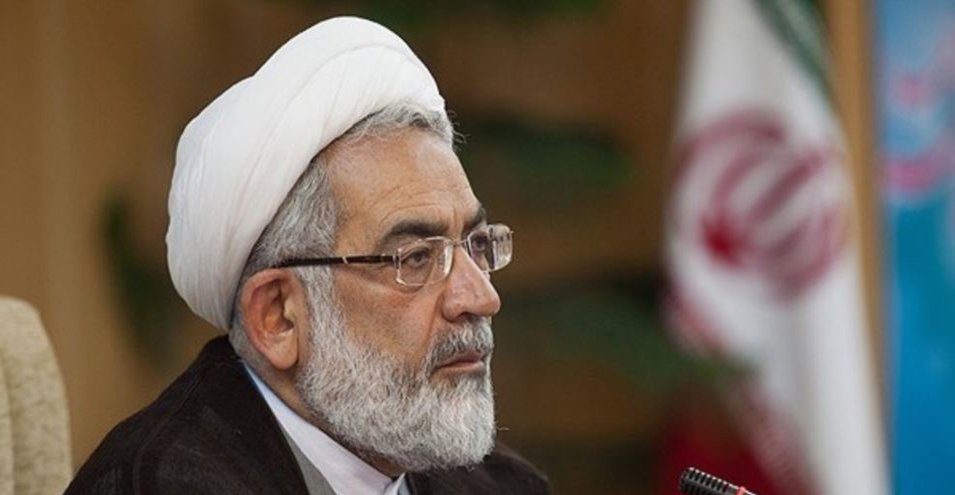
Mohammad Jafar Montazeri, the Prosecutor General of the country, has described cyberspace as a “polluted and poisoned space” from which “people are suffering,” claiming that every week his office deals with “hundreds and sometimes thousands of corruption centers” in cyberspace.
In remarks to journalists on the sidelines of a gathering of police advertisement chiefs, Mr. Montazeri, who serves as Prosecutor General and is a member of the Supreme Council of Cyberspace, stated that “cyberspace has become so polluted and poisoned that we constantly monitor it and identify and confront hundreds and sometimes thousands of corruption centers every week.”
This senior judicial official noted that “certainly people are suffering from this polluted space and we are working to solve these problems.”
These remarks come less than a week after Ayatollah Makarem Shirazi took a position in which, through periodic statements during various meetings, he compared a significant portion of cyberspace to a “cesspool” and called for planning regarding it.
In a meeting with the Minister of Science, he had called for universities to “take action to prevent the spread of unhealthy virtual spaces” and in his jurisprudence lessons, he had asked scholars to “take advantage of the month of Ramadan” and “protect young people.”
This source of emulation based in Qom also stated in early Ordibehesht month in a meeting with the Minister of Health that “the information we receive about virtual spaces is horrific and judicial officials and prosecutors should pay attention to these bad conditions in cyberspace.”
In this regard, Ayatollah Khamenei, the leader of the Islamic Republic, recently described cyberspace as a “real space of war” in a meeting with a group of scholars and emphasized that “clergy and scholars must be armed and prepared to enter the arena to confront doubts and false and deviant thoughts [in cyberspace].”
Recent positions taken by the Ayatollah regarding cyberspace have also been reflected in statements by the Prosecutor General, who said that Iran’s leader has “grievances” with the Ministry of Communications and the Supreme Council of Cyberspace.
This judicial official added that “fortunately his reminders had an effect and in the recent meeting of the Supreme Council of Cyberspace, proposals were put forward for organizing social networks.”
In the latest meeting of the Supreme Council of Cyberspace held on Saturday, June 8, emphasis was placed on prioritizing the issue of messaging networks, “based on the guidelines and concerns” of Iran’s leader.
Among the decisions of this meeting was the “obligation of foreign messaging companies” operating in the country to “transfer information and activities related to Iranian citizens” to inside Iran, and it was decided to “gradually and over a one-year transition period” continue with domestic messaging networks, and by providing support and facilitating facilities to these networks, “competitive conditions” would be created with foreign online networks.
These decisions come at a time when in the first meeting of the Supreme Council of Cyberspace in 2016, Hassan Rouhani, the president, emphasizing the special importance of cyberspace, called for “more effective and appropriate steps” to be taken in this field.
Mr. Rouhani also emphasized in a meeting with the Minister of Communications and senior officials in this sector on April 9 of this year that “we must root out corruption, and one of the ways to combat corruption is to open matters in cyberspace.”
The “concerns” of Iran’s leader regarding cyberspace and warnings from judicial officials in this regard come at a time when many senior officials and figures of the Islamic Republic, including the office of Ayatollah Khamenei, despite existing restrictions on access to cyberspace for Iranian users, maintain an active presence in social networks and cyberspace.
Source: Radio Farda