Greece Returns First Group of Refugees to Turkey
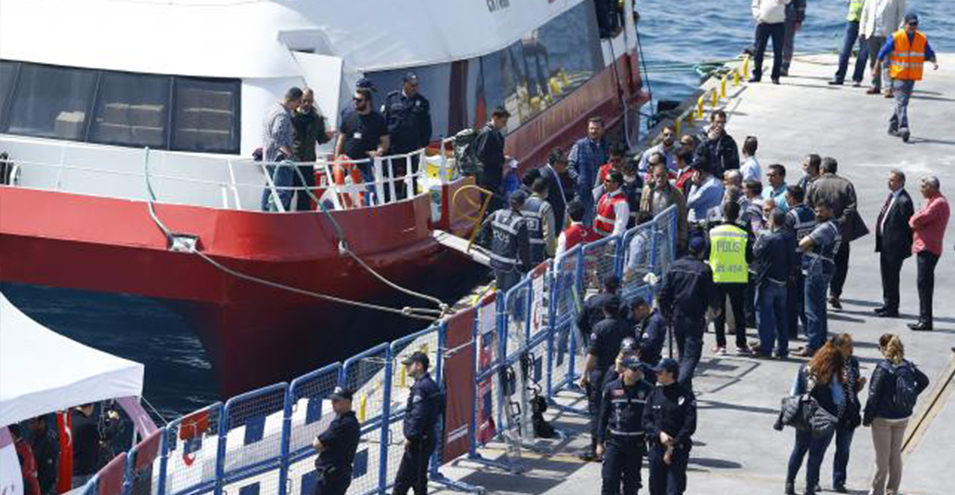
On Monday, March 4, a plan to deport refugees who entered the European Union from Turkey was launched. Prior to the start of this plan, hundreds of refugees submitted asylum applications in Greece. Mass deportation of these asylum seekers from the European Union will not be straightforward.
According to CNN, on Monday, March 4, the implementation of an agreement between the European Union and Turkey to return refugees began. The first ship carrying refugees who illegally entered Greek territory after March 20 departed from the Greek island of Lesbos at 6 AM on Monday, heading for the port of Dikili in Turkey.
It was planned that 250 refugees would be returned daily, and a total of 740 refugees would be returned from the island of Lesbos to this Turkish port in the first three days of the week. However, hours before the refugee deportation plan began, many of them submitted asylum applications in Greece.
The spokesperson for the police on the island of Lesbos confirmed to Deutsche Welle that of 2,987 migrants living in the Moria camp on the island of Lesbos, 2,718 had submitted asylum applications by Sunday night.
This number was around 500 applications just three days earlier. Now Greece must process the applications of all these asylum seekers, and their mass deportation is not possible under European Union law.
Initially Deporting Single Men
Mass deportation of refugees was supposed to include single men who entered Greece from Turkey starting March 20. The most numerous group of refugees included in this plan were citizens of Pakistan, North African countries, Bangladesh, Sri Lanka, and Central African countries.
It remains unclear whether 250 refugees will also be returned to Turkey on Monday or not.
By Sunday night, approximately 130 people were taken to a section of the Moria camp that is separated from other areas by barbed wire. All of these individuals were Pakistani citizens.
Mohammad Javad, one of these refugees, told Deutsche Welle that he is 17 years old and traveled alone from Pakistan to reach Greece.
He says he has not yet reached legal age and should not be deported according to European Union law. However, registration officers did not believe him and estimated his age to be at least 22 or 23 years old.
Determining the age of refugees who claim to be minors is one of the serious challenges European countries face in dealing with asylum seekers.
Police Accompaniment to Turkish Territory
Before launching the mass deportation plan, Greek authorities increased police forces on the island of Lesbos. Additionally, 350 police officers from Iceland, France, the Netherlands, and other European Union countries were sent to Lesbos to implement the EU-Turkey agreement.
These forces will support the transfer of refugees by bus to a port in Lesbos, and some will also accompany ships heading to Turkey. It appears that one police officer has been assigned for each refugee on this journey.
At 9 AM, human rights activists and non-governmental organizations opposed to mass deportation of refugees from the European Union are scheduled to gather in Lesbos. Greek police, concerned about tensions escalating at this gathering, have increased the number of security forces deployed to the location.
Source: Deutsche Welle