Nine Human Rights Organizations Protest Deportation of Afghan Refugees from Germany
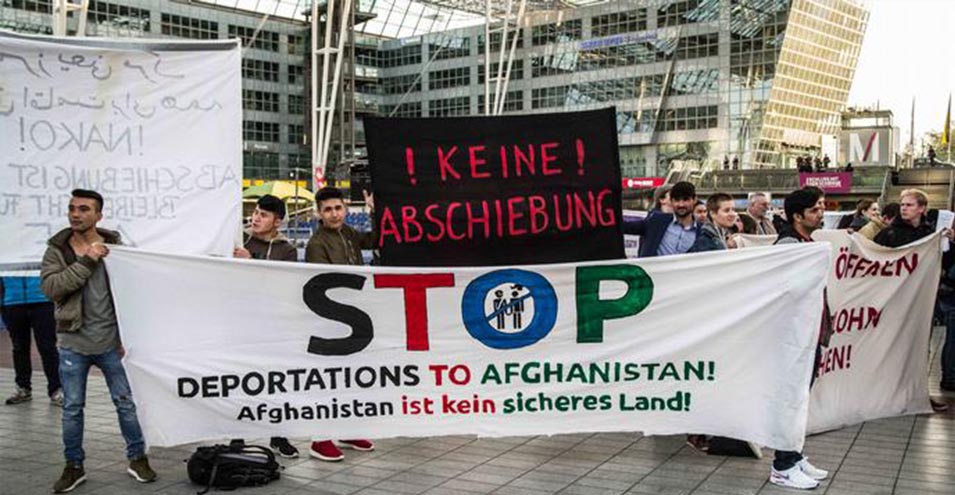
The controversy over the deportation of Afghan refugees in Germany has been ongoing for some time. Now, nine charitable organizations and refugee support groups have taken a new step, expanding the scope of protests and demanding an end to forced deportation proceedings.
Nine human rights organizations and charitable associations, including Amnesty International, the refugee support organization “Pro Asyl,” and the social services institution affiliated with the Protestant Church (Diakonie), appeared on Tuesday (May 30/June 9) at a press conference in Berlin to release a joint statement.
In their statement, they criticized the decisions implemented by Germany’s Federal Migration Office. These organizations are concerned that following incomplete review of asylum applications, Afghans whose applications have been rejected are being returned to Afghanistan, thereby putting their lives at risk.
According to these refugee support organizations, the German Federal Migration Office was recently forced to admit, after conducting another review, that several cases had been handled inadequately. According to information from these organizations, another mass deportation of refugees to Afghanistan has been scheduled for Wednesday of that same week (May 31/June 10).
These nine charitable and human rights organizations emphasize that newly available information about the dangerous security situation in Afghanistan is not being considered in refugee courts, while instead an increasing number of applications are being rejected. While Germany had responded positively to 78 percent of Afghan refugee applications two years ago, this figure dropped to 60 percent last year and to 50 percent in the current year.
Fragile Security Situation
Refugee support organizations doubt whether there are safe areas in Afghanistan where refugees could rely on internal relocation as grounds to abandon asylum applications in other countries. In their view, armed conflicts have spread so far beyond combat zones that people “can become victims of armed clashes, assassination attempts, and persecution everywhere”; something clearly evident during Taliban attacks at the beginning of this year.
The statement emphasizes that Afghanistan’s security situation is so unpredictable and fragile that even the United Nations refugee support fund rejects any distinction between “safe” and “unsafe” areas there. This is despite Thomas De Maiziere, the Interior Minister from the Christian Democratic Party, and most German states insisting that safe areas exist in Afghanistan.
Appeal to German Federal and State Governments
Charitable associations and refugee support organizations are therefore calling on Germany to fulfill its “international obligations” and ensure fair review of their asylum applications, rather than returning them to countries where “gross human rights violations threaten people’s lives.”
For this reason, these nine human rights organizations have called on the German federal government and state governments to carefully review the asylum applications of applicants and halt the deportation of refugees to Afghanistan.
In autumn of last year (2016), the German government signed an agreement with Afghanistan’s government on the deportation of Afghan refugees, which permitted their return to their homeland. The first forced deportation took place in December 2016 amid protests from refugee supporters. In the most recent deportation at the end of April of this year, 14 unmarried men were returned to Kabul.
The return of Afghan refugees to their homeland, which is neither particularly safe nor peaceful, has been a controversial issue since the initial decision-making process began, even between the federal government and some German states.
Source: DW