305 Ancient Sites Threatened and Destroyed for Supreme Leader’s Plan
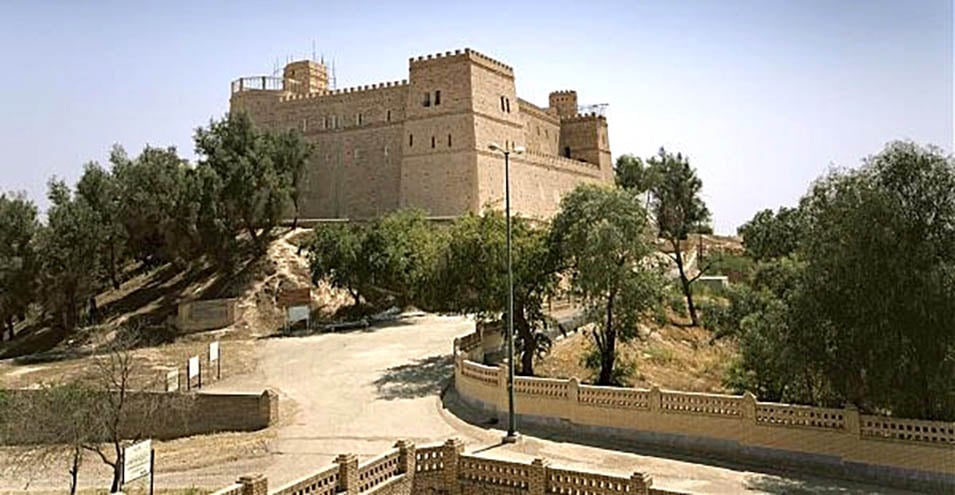
During a visit to Khuzestan in 1375 (1996), Ayatollah Khamenei ordered the reclamation of 550,000 hectares of agricultural land in Khuzestan Province. The implementation of this plan has threatened 305 ancient sites in Khuzestan, and some of these areas have been destroyed during this period.
West of Susa: Jihad Nasr Company destroyed and leveled several ancient sites in Beit Ajam of Susa
The “Jihad Nasr” institution, which presents itself as a “non-governmental organization” with a “jihadi spirit” but whose history dates back to “Construction Jihad” during the war period, has undertaken the implementation of the plan to reclaim 550,000 hectares of agricultural land in Khuzestan Province. The Khuzestan Governorate, the Ministry of Power, the Ministry of Agriculture Jihad, and the Ministry of Economy and Finance are among the government organizations and institutions that cooperate with Jihad Nasr institution to implement the Supreme Leader’s order.
The implementation of the leadership plan was approved in 1375 (1996), began in 1387 (2008), and accelerated in 1389 (2010) under the Mahmoud Ahmadinejad government. The budget for this plan was initially 1.5 billion dollars from the National Development Fund, but this amount gradually increased. Only last year, an additional 300 million dollars was allocated to the leadership plan.
Systematic Destruction of Khuzestan’s Cultural Heritage
Initially, reports were published suggesting that Khuzestan farmers had leveled some ancient mounds, for example Choghamish Mound. However, it has now become clear that the destruction of archaeological sites in Khuzestan Province has been systematic and is related to the leadership plan for reclaiming 550,000 hectares of agricultural land. The areas where this plan is being implemented are full of archaeological sites, and at the same time “Jihad Nasr” has refrained from obtaining inquiries from the Cultural Heritage Organization. The result is an increasingly widespread scope of destruction for Iran’s cultural heritage.
Examples of destructions:
Since 1392 (2013), dozens of ancient sites have been destroyed in the distance between Ahvaz and Molasani city in the first phase of the leadership plan implementation. Part of a large ancient site in the “Araiz” plain, which covers more than 200 hectares, was destroyed as a result of implementing part of the project. In the Abdul Khan (Alvan) area, the Jihad Nasr contractor needed soil to construct a canal and leveled an ancient mound that belonged to the Elamite-Achaemenid period.
In the Jalieh area and the historical site of Askar Mokaram, an ancient site was destroyed by “Jihad Nasr.” This company intended to rehabilitate an ancient canal in Seven Mounds and within the vicinity of the tomb of “Tepti Ahar,” an Elamite ruler, but the project was halted when cultural heritage experts intervened.
Canal rehabilitation in the ancient sites of Jandi Shapour and Choghabnut in Dezful was also halted when cultural heritage experts intervened. In addition to these destructions, several ancient sites have been destroyed and leveled in the villages of Syed Thamer, Abu Gharib, Beit Hamadi, and Beit Ajam of Susa.
Phase Two: Destruction of Drinking Water Resources and Cultural Heritage
According to Hashem Baldi, Crisis Management Director of Khuzestan Governorate, rainfall in the province this year has decreased by 65 percent. It is predicted that if the decrease in rainfall continues, Khuzestan Province will face a drinking water crisis. To address the water shortage crisis, Khuzestan Governorate has ordered that water not be extracted from the tributaries of the province’s rivers except for drinking water purposes.
Hassan Alaqeh Band, Executive Deputy of “Jihad Nasr,” in a press conference on Monday, the 11th of Aban month, requested that the Ministry of Power provide the necessary water for 550,000 hectares for the implementation of phase two of the leadership plan. At the same time, cultural heritage activists fear that with the implementation of phase two of this plan, archaeological sites covering an area of 3,000 hectares in Khorramshahr and Abadan, as well as in the “Dehmla” region, will be exposed to destruction. The ancient site of Ramhormoz is also in the path of implementing phase two of this plan.