Economic Damage of Drugs in Iran: $12 Billion Annually
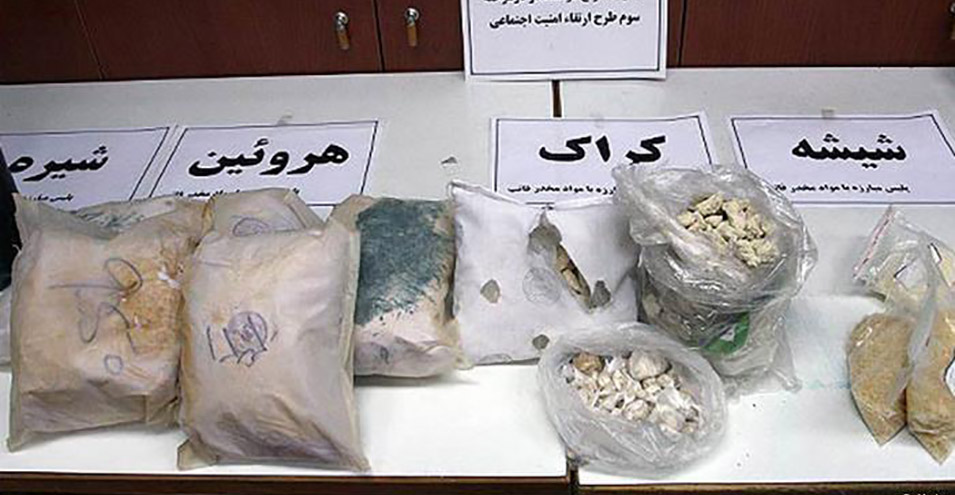
A senior Iranian official states that the amount of money derived from drug trafficking is at least 40,000 billion tomans, with smugglers’ annual sales reaching 16 to 17,000 billion tomans. He has not concealed the cooperation of some government employees with smugglers.
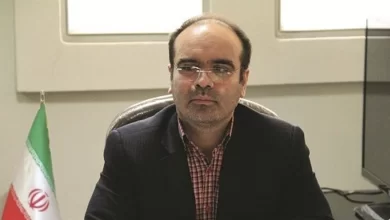
“The economic damage caused by drugs in Iran every 24 hours is 110,000 billion tomans.” This statement comes from Ali Hashemi, head of the independent drug control committee of the Expediency Discernment Council’s secretariat, who told ISNA: “If we consider the number of addicts to be 2 million people, this number of addicts causes 40,000 billion tomans in annual economic damage to the country.”
Hashemi, comparing Iran’s 10 billion toman defense budget with the $12 billion in economic damage resulting from drug trafficking, added: “If we assume these figures are correct, the proximity of these two numbers shows what dimensions a social problem can have and what other things could be accomplished with its costs. Even if we want to compare it with development budgets, with $12 billion annually, hundreds of thousands of jobs could be created, tens of thousands of houses built, and several infrastructure facilities established.”
The Iran News Agency (IRNA) reported on Saturday, September 27, quoting Ali Hashemi: “Currently, the value of Iran’s stock exchange is approximately 320,000 billion tomans, or about $92 billion; meaning the total value of petrochemical plants, refineries, automobile manufacturing, steel production, mining, telecommunications, and other facilities in the stock exchange is $92 billion; whereas the economic circulation of drugs every year is about 13 percent of Iran’s stock exchange value, which shows how much money is wasted in this field.”
Incentives for Cooperation with Smugglers
Cooperation between government employees and smugglers is one of the points that Ali Hashemi has addressed. According to his statements, 2.5 percent of 2 million arrests in the country between 1999 and 2003 were government employees: “In those years, we arrested 65 such individuals daily, and of course 30 percent of them were soldiers.”
In explaining government employees’ cooperation with smugglers, he pointed to economic incentives, poverty, and high unemployment, and considered creating employment and economic prosperity as a solution to this reality.
Hashemi stated that the high demand for drugs in Iran should be managed through substitute medications and effective, affordable treatment.
Three weeks earlier, Mohammad Baqir Olfat, the social deputy and crime prevention officer of the judiciary, announcing the ineffectiveness of executing drug smugglers, had said: “Unfortunately, the volume of drugs entering the country and transiting through it, the variety of drugs, and the population involved in it have all increased, and the statistics in this field are negative.”
Ali Hashemi also emphasized in the winter of 2015 that 90 percent of the drug economy is based on money laundering. During a session titled “Alternative Policies on Drugs” at the Institute for Research in Forensic Sciences and Criminology, he stated among other things: “By eliminating poppy cultivation within the country in the early years after the Islamic Revolution, in practice the “black market” was handed over to drug mafias.
Hashemi acknowledged that the destruction of poppy cultivation by order of the Revolutionary Council and without any serious consideration, ended “to the detriment of the people and to the benefit of drug mafias.”
This senior official announced in the aforementioned session that during the eight years of Mahmoud Ahmadinejad’s presidency, as a result of policies and government inefficiency in combating drugs, the country’s youth were killed and destroyed to the extent of “8 years of sacred defense.”
Source: DW