Judiciary as Repression Machine: Threats of Swift Trials and ‘Merciless’ Punishment
The Islamic Republic’s judicial repression apparatus is pursuing the silencing of protests with promises of rapid trials and “merciless” justice.
As a fresh wave of widespread arrests unfolds, concerning reports emerge about prison conditions, and mounting evidence surfaces of protester killings, the head of the Islamic Republic’s judiciary has announced in explicit and threatening language the beginning of a new phase in suppressing protests; a phase that this time has taken on a judicial face and intensified warnings about the danger of widespread executions.
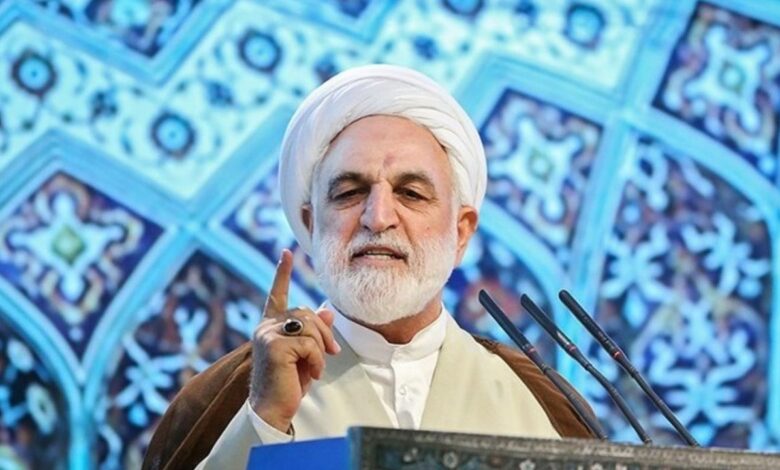
Gholamhossein Mohseni Ejei, head of the judiciary, announced yesterday Sunday, January 25, corresponding to 5 Bahman, that those arrested in recent protests will be tried “as soon as possible.” Speaking about the protesters, he said: “People rightfully expect that the defendants and main elements of the riots, terrorist activities and violent acts be tried as quickly as possible.”
Mohseni Ejei further emphasized: “The judiciary is obliged to deal, without the slightest leniency, with those who have taken up weapons, committed murder, or engaged in destruction and arson.” From the perspective of human rights observers, these statements set the groundwork for issuing harsh sentences and expedited trials.
These positions are being raised at a time when, according to reports from independent human rights organizations, during the widespread January protests, thousands to tens of thousands of people have been arrested in various parts of Iran. Meanwhile, reports from credible sources indicate the deaths of more than 30,000 people in the suppression of protests; statistics that, due to the nationwide internet blackout since January 8, have faced serious obstacles to independent verification.
In the midst of this crackdown, the broadcast of footage from state television showing the head of the judiciary personally interrogating some detainees has sparked widespread reactions. Human rights activists view these scenes as clear evidence of pressure to obtain “forced confessions” and as a prelude to show trials.
The combination of open threats from senior judicial officials, lack of information about the fate of thousands of detainees, and the Islamic Republic’s history of issuing death sentences following protests has increased concerns about widespread and covert executions; particularly regarding prisoners who lack access to independent counsel, contact with family, or fair legal proceedings.
Observers say that at this stage, the judiciary is acting not as an independent institution, but rather as an arm completing security-based repression; a tool for creating judicial intimidation and breaking the wave of social protests.
Meanwhile, a recent report from Hrana news agency on the condition of women detainees in Adel Abad Prison in Shiraz has revealed other dimensions of the crisis. According to this report, at least 150 women (mostly students) have been arrested in connection with nationwide protests and transferred to the political ward of this prison; a ward that, according to informed sources, does not even have a capacity of 30 people.
According to these sources, phone contact for female detainees has been completely cut off over the past two weeks, and visits take place only in a limited and visitation booth format. Severe food shortages, lack of sufficient drinking water, and absence of basic sanitary facilities have brought conditions to a critical level; to the extent that one standard meal that previously belonged to one prisoner is now divided among four people.
In response to these reports, security officials of the Islamic Republic continue to deny the use of firearms against protesters. “Colonel Mehdi Sharif Kazemi,” commander of the special police unit, claimed that police forces have not used firearms against protesters in any way and have only used “non-lethal tools.”
However, this claim is in clear contradiction with existing findings. Multiple published videos indicate that Islamic Republic security forces in early January fired military bullets at protesters in at least 19 Iranian cities and six Tehran neighborhoods.
The sum of these developments shows that the Islamic Republic not only shows no signs of retreat in the face of social protests, but by simultaneously activating security and judicial tools, is pursuing organized suppression; suppression accompanied by mass arrests, threats of expedited trials, intensified pressure on prisoners, and blatant disregard for human rights, and could have irreversible consequences.