Secret Arrests, Forced Confessions, and the Shadow of Execution Looming Over Iran’s Christians
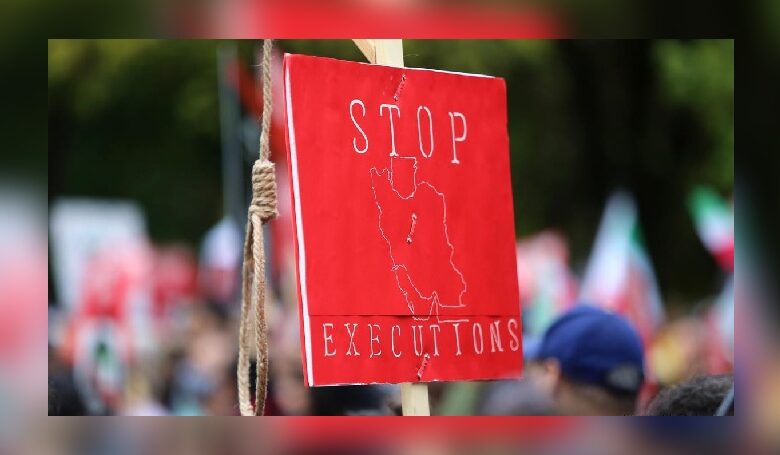
A shocking exposé about secret arrests and the shadow of execution hanging over Christians and protesters has brought a new wave of severe concerns about the situation of Iran’s people.
As the world’s attention remains focused on developments in Iran, a fresh report by “Human Rights Watch” released today, Tuesday, February 24, corresponding to Esfand 5, reveals disturbing dimensions of repression following the December protests; a crackdown that has not only persisted but, according to this organization, has entered a more hidden and dangerous phase: “widespread arrests, enforced disappearances, and the detention of thousands in unofficial detention centers.”
According to this report, security forces continue to pursue and arrest those who are actual or perceived opponents; a broad range encompassing students and journalists to lawyers, doctors, environmental activists, and members of religious minorities, including Christians and Baha’is.
The report states: “Security and intelligence forces have continued to arrest actual opponents or individuals who are perceived as opponents. Targeted individuals include protesters, lawyers, medical staff and specialists, human rights defenders, students, schoolchildren, athletes, journalists, political activists, environmental activists, and members of ethnic and religious minorities including Christians and Baha’is.”
Amid the wave of arrests, Christians, particularly those converted from Islam, have again become targets of security forces. Among these citizens, one can mention “Ghazal Marzbaan,” a Christian citizen and civil activist who was arrested at midnight on December 25, 1404 (2025) during a raid by security forces on her home and transferred to the Ministry of Intelligence detention center.
Reports also indicate the arrest of other Christian citizens in Tehran, Rasht, Shiraz, and Karaj; arrests whose details cannot be disclosed due to security concerns. Christian sources say the families of these individuals are under pressure to refrain from any disclosure.
According to statistics compiled by Christian human rights organizations, at least 19 Christian citizens have lost their lives during the protests. Among the names published are “Zahra Erajmandi,” “Nader Mohammadi,” “Mohsen Rashidi,” “Ehsan Efshari-Manesh,” and “Ajmin Messihi,” an Armenian citizen. This list continues to be updated, and there are fears that the actual number of Christian victims may be higher.
The Human Rights Watch report emphasizes that authorities refuse to provide any information about the whereabouts and condition of detainees; an act that constitutes “enforced disappearance” under international law.
Many families have been left wandering for weeks and months searching for news of their loved ones. Some have only received brief contact during which they learned of the death of their child or spouse, without being allowed to claim the body or hold a funeral.
Meanwhile, government media continue to broadcast confessions from detainees; confessions that human rights activists attribute to torture and psychological pressure. The history of broadcasting such confessions in recent years has repeatedly been criticized by international bodies.
Concerns about the issuance and execution of death sentences are also increasing. Officials have repeatedly called protesters “criminals” and “mohareb” (those who wage war against God), a theological term whose punishment is execution. Human rights experts warn that the widespread use of this designation could pave the way for a wave of summary and even secret executions.
Amnesty International has also announced that children are among at least 30 people facing the risk of capital punishment; an issue that has sparked widespread international reactions.
During the December 1404 (2025) protests, reports were also published of dozens of students and teachers being killed or arrested. The security atmosphere in schools and pressure on families to remain silent have doubled concerns.
UNICEF also officially released a statement declaring: “UNICEF is deeply concerned by reports that children detained in connection with Iran’s protests continue to be held in prison.” This positioning shows that the crisis has transcended domestic borders and has become a global concern.
Human Rights Watch has called on UN member states to pressure for the immediate release of all arbitrarily detained persons, the disclosure of the fate of the disappeared, and the cessation of executions. This organization has also called for unimpeded access by a UN fact-finding mission to prisons, detention centers, hospitals, and even cemeteries.
As repression continues, protests are also sporadically taking place at some universities. Students, holding historical symbols and chanting protest slogans, are attempting to keep alive the silenced voice of the streets; a movement sometimes accompanied by symbolic expressions such as “mourning dance.”
What is happening in Iran today is not merely a political crisis, but a moral test for the global community and particularly for defenders of freedom of religion and conscience. Silence in the face of secret arrests, enforced disappearances, and threats of execution would mean turning a blind eye to the suffering of thousands of families, including Christian families.