Dispute Over Andalusian History: Pope Leo XIV’s Remarks Spark Wave of Criticism in Spain
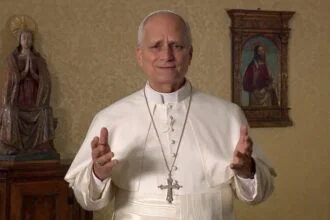
Pope Leo XIV’s remarks about the role of dialogue and religious coexistence during the presence of Muslims in the Iberian Peninsula have become a heated debate in Spanish historical and religious circles. While the leader of the Catholic Church referenced some aspects of cultural interaction among Muslims, Christians, and Jews in Andalusia as an example for overcoming today’s divisions, a group of Spanish historians and analysts have deemed this description an incomplete account of history and warned that the bitter realities of that period should not be forgotten in the shadow of emphasis on dialogue and cultural exchange.
Pope Leo XIV, on the first day of his visit to Spain, while calling on Spanish society to avoid divisive narratives, referenced a part of Andalusian history and said: “The presence of Islam in the Iberian Peninsula was not limited only to confrontation and war, but was also seen as an effort to create a space for contact, dialogue, and the pursuit of truth among Christians, Muslims, and Jews.” He also cited the historical cities of “Toledo” and “Córdoba,” as well as the Toledo School of Translators, as examples of cooperation between cultures and religions.
However, these remarks were met with sharp reactions from some researchers. Critics argue that emphasizing the positive aspects of Islamic Andalusia without sufficient reference to the restrictions imposed on Christians and Jews presents a one-sided picture of history. They point out that non-Muslims lived under the “dhimmi” system during much of the period of Islamic rule in Spain; a status that placed them in a legally and socially inferior position and was accompanied by special taxes and religious restrictions.
Among the most prominent critics, Darío Fernández-Morera, author of the book “The Myth of the Andalusian Paradise,” argues that the prevailing narrative of Andalusia as a land full of religious tolerance is not consistent with historical evidence. He writes: “The existence of a Muslim kingdom in medieval Spain where different races and religions lived in harmony and multicultural tolerance is a historical myth.”
Critics also point to examples that they believe are inconsistent with the picture presented of complete coexistence, including the “Martyrs of Córdoba” (a group of Christians who were executed in the ninth century for their insistence on their faith). They also recall that Maimonides, a prominent Jewish philosopher and scholar, was forced to leave his homeland following the rise of the Almohad dynasty, and Ibn Rushd, a famous Muslim philosopher, also faced exile and the burning of his works at one point in his life.
Another focal point of criticism was the Pope’s reference to the Toledo School of Translators. Opponents of this narrative emphasize that this scientific center was formed after Toledo was recaptured by Christian forces and therefore cannot be considered solely the product of Islamic government policies. However, many historians believe that the transfer of Greek, Arabic, and Hebrew scientific heritage to Europe was the result of a complex and multilayered process in which scholars and translators from different religious backgrounds played a role.
This historical dispute actually reflects a broader debate in today’s Europe: how the past should be narrated and what relationship exists between Europe’s Christian identity, the experience of migration, and the concept of multiculturalism. While Pope Leo XIV draws on history to call for reconciliation and dialogue, his critics warn that any reinterpretation of the past must also take into account all its dimensions, including periods of persecution and discrimination against religious minorities.
The debate over Andalusia has become more than merely a historical disagreement—it has become a contemporary question: Can the past serve as a model for coexistence today, or do idealized narratives of history prevent us from understanding its complex and sometimes painful realities?