Canada Blocks Path for Former Deputy Interior Minister of Islamic Republic
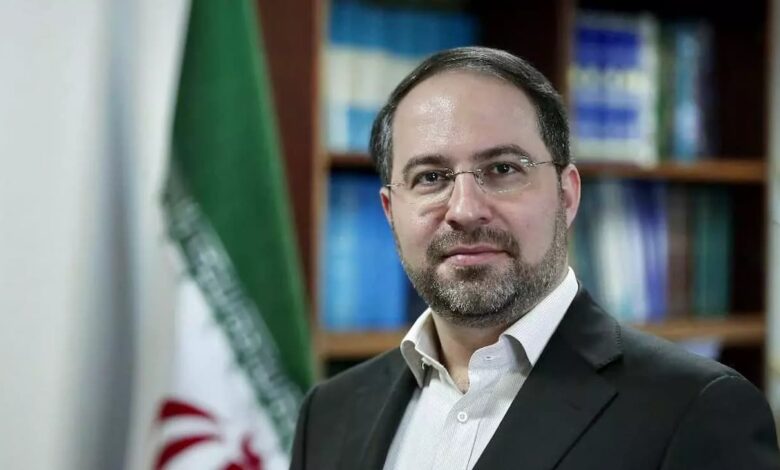
Canada’s federal court rejected the request of Salmān Sāmānī, former deputy and spokesperson of Iran’s Interior Ministry, to stop his deportation. The former official, who worked within the repressive structure of the Islamic Republic’s government, entered Canada on a tourist visa but now faces deportation. This case once again highlights the contradiction between the suppression of Iran’s people and some officials and their families enjoying safe and free lives in the West.
Canada’s federal court rejected Sayed Salmān Sāmānī’s request to halt his deportation on July 1, 2026. According to Law360, Judge Sébastien Grammon denied his request for a stay of deportation, which was scheduled for July 3rd.
Sāmānī had previously attempted to stop the Canadian immigration authority’s decision and claimed in a court filing that his deportation violated his rights. He also requested that his identity be concealed in documents related to his case and that abbreviated initials be used instead of his full name. The court faced this request as well—a move that, given the sensitivity of cases involving Islamic Republic officials in Canada, garnered media attention and drew the attention of the Iranian community in the country.
This came as Canada’s Immigration and Refugee Board issued a deportation order against Sāmānī in 2024. He is one of the senior officials of the Islamic Republic who was identified in Canada after leaving Iran. Sāmānī served as deputy interior minister between 2016 and 2021 and also worked as a spokesman for the Interior Ministry.
After leaving the government in 2021, he entered Canada on a visitor visa issued in Ankara. After reviewing his background, the country’s authorities initiated deportation proceedings against him.
Since 2022, Canada has banned the entry of senior officials of the Islamic Republic. However, the country’s immigration authorities have faced multiple cases of individuals with a record of senior positions within the Islamic Republic’s structure present on Canadian soil in subsequent years.
According to statistics released by Canadian immigration authorities cited by Global News, the country’s border agency identified 34 individuals suspected of holding senior positions in the Islamic Republic’s government for possible deportation, and as of the report’s publication, only one of them had been returned to Iran.
Sāmānī’s case is not limited to his administrative positions. Canada’s border agency, in a report on his background, described Sāmānī as a “professional politician” who held multiple positions in the Islamic Republic’s government between 2007 and 2021. The report stated: “This individual demonstrated commitment and loyalty to the regime throughout his professional career.”
Canadian authorities also assessed Sāmānī’s position as far beyond that of a government spokesperson, saying he had “considerable influence in the exercise of governmental power” and was only two positions away from Iran’s president.
In Canada’s border agency report about his role as Interior Ministry spokesman, it stated: “Sāmānī served as a conduit for government propaganda; he was responsible for disseminating information aligned with the government narrative while suppressing dissenting views.” This assessment highlights Sāmānī’s position in the Islamic Republic’s propaganda and political structure.
One important part of Sāmānī’s case traces back to the November 2019 protests. At that time, the increase in gasoline prices sparked waves of nationwide protests in various Iranian cities. The Islamic Republic’s government resorted to security and law enforcement forces to control the protests, while simultaneously cutting off the country’s internet on a widespread scale.
Sāmānī was the Interior Ministry’s spokesman at that time and played a role in the government’s official positions on the protests.
Canada’s border agency also noted in its assessment the Interior Ministry’s role in dealing with protests and the restriction of rights related to freedom of expression and assembly in Iran.
In his defense, Sāmānī denied direct involvement in human rights violations and attempted to downplay his position within the government structure. He also claimed that after the November 2019 protests, he became dissatisfied with the existing situation and even intended to leave the government; however, he remained within the Interior Ministry’s structure until 2021.
In his legal efforts to prevent deportation, Sāmānī argued that returning to Iran posed serious risks to himself. He contended that if returned, he might face torture, execution, or even suicide; however, Canada’s federal court did not find this argument sufficient to halt the deportation process and rejected his request.
This part of the case also reveals a notable contradiction: an individual who worked for years within the Islamic Republic’s governmental structure and defended its actions has now turned to the legal system of a democratic country to seek legal and security protection.
Sāmānī’s case is being pursued at a time when the presence of officials and families affiliated with the Islamic Republic in Western countries has become a controversial issue in recent years.
An investigation published by Global News in March 2026 examined the lives of the children of some senior Islamic Republic officials in Western countries. The report showed that some children of prominent government figures have lived or studied in countries such as Canada, the United States, Australia, and other Western nations.
The Guardian report in February 2026 also addressed widespread criticism of the luxurious lifestyle of the children of some members of the Islamic Republic’s ruling establishment in the West and wrote that critics view this situation as an example of hypocrisy among the ruling elite—officials who chant anti-Western slogans inside Iran while their family members enjoy the amenities and freedoms of Western societies.
One slogan that also echoed during Iran’s protests well summarized this contradiction: “Their child is in Canada, our child is in prison.” This phrase was cited in Global News’s report about the lives of the children of some Islamic Republic officials in the West.
The existing contradiction is not limited to where families live. In the Islamic Republic, protesters have faced arrest, violence, heavy judicial sentences, and in some cases, execution; in contrast, some figures close to the power structure or members of their families have been able to enjoy educational, economic opportunities, personal security, and civil freedoms in Western countries.
This situation raises a fundamental question: How can a government that restricts citizens’ basic freedoms within Iran and responds to dissent with suppression witness the lives of its own families and affiliates abroad in the same societies that guarantee freedom and human rights for their own citizens?
Sāmānī’s case is a clear example of this very duality. He was once a spokesman for a structure that, according to Canadian authorities, played a role in suppressing protests and restricting civil freedoms; yet after leaving Iran, he turned to Canada’s legal system to prevent his deportation and utilized the legal rights available in that country.
On the other hand, Iranians who protest inside the country for freedom of expression, freedom of assembly, justice, and basic human rights often face harsh security and judicial measures, including execution sentences.
Canada’s federal court’s decision regarding Sāmānī may hold special significance for Canada’s Iranian community—a community that has long warned about the presence of Islamic Republic officials and the possibility of Canada becoming a haven for regime affiliates.
Global News reported that Canadian Iranians have repeatedly called for greater transparency in identifying and deporting Islamic Republic officials. In a similar case, Canada’s Immigration and Refugee Board emphasized the importance of the proceedings being public, noting that transparency could help with accountability, prevent impunity, and increase public confidence in the judicial process.
Now Sāmānī’s case once again raises this question before the Canadian government: How should officials who played a role in the Islamic Republic’s structure but appear in Western countries after leaving Iran be treated?
For many Iranians, the answer is not limited to executing a deportation order. The core issue is that those who defended the Islamic Republic’s repressive policies within its power structure should not be able to leave Iran and escape their political past while enjoying the freedom and security of the same countries their government has propagandized against for years.
Sāmānī’s case ultimately provides a clear picture of a larger contradiction: people who pay the price for their most basic rights in Iran, while some affiliates and associates of that same power structure are living their lives in safe and free Western countries.