Iranian Parliament Representative: Country’s Oil Sales Have Decreased Up to 20-Fold
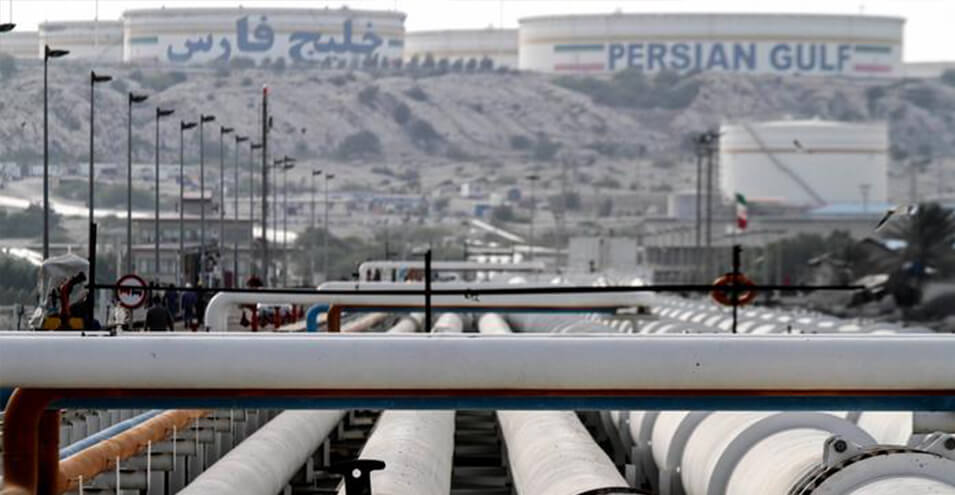
According to Hashmatallaah Falahatpisheh, Iran’s oil sales have decreased up to 20 times. A member of the National Security and Foreign Policy Commission of the Parliament believes that the Foreign Ministry should find a way out of this situation.
Hashmatallaah Falahatpisheh stated that Iran’s oil sales are facing a decrease of up to 20-fold, and this is an important issue that Iran’s Foreign Ministry should address by “designing a strategy and acting in such a way that the country can take new steps in the first year of ending economic contraction, so that some of the people’s problems can be resolved”.
A member of the National Security and Foreign Policy Commission of the Parliament, speaking on Tuesday, November 5 (November 5) in an interview with the Parliament News Agency about Hassan Rouhani’s announcement of the fourth step in reducing JCPOA commitments, said that in his view the JCPOA has entered a “winter hibernation” and “the catalyst of the fourth step is not serious enough to disrupt the hibernation governing the JCPOA and create new conditions”. According to Falahatpisheh, this hibernation began when Rouhani’s trip to New York yielded no results.
Iran’s President announced on Tuesday the implementation of the “fourth step in reducing JCPOA commitments” starting Wednesday, November 6. According to him, “feeding gas into centrifuges” at the Fordow nuclear facility will be the Islamic Republic’s fourth step in reducing its commitments regarding the nuclear agreement. Following this announcement, Europe and Russia expressed concern about the collapse of the JCPOA. The Islamic Republic had given the remaining JCPOA members, particularly European countries, until November 5 to fulfill their “banking and oil commitments” to Tehran and take “practical steps” to facilitate banking transactions and Iran’s oil sales.
Falahatpisheh continued in his interview with the Parliament: “We cannot wait for new diplomacy in the JCPOA field because priorities have changed; Trump is himself caught up in impeachment, Europeans are engaged with Brexit, and the Middle East is engulfed in turmoil in countries that each face their own specific challenges.”
As a result, according to Falahatpisheh, Iran’s nuclear issue is no longer in the focus of Western media and diplomacy, but at the same time the problem of Iran’s severely reduced oil sales persists and exerts pressure on Iran’s economy and its people.
Following the United States’ withdrawal from the nuclear agreement in May of last year, previously lifted or suspended sanctions against Iran were reimposed. The U.S. has stated that the purpose of intensifying sanctions is to reduce Iranian oil exports to zero and apply “maximum pressure” on the Islamic Republic in order to bring Iran to the negotiating table. The prospects for these negotiations are described as reaching a new agreement that would permanently end concerns about Iran’s nuclear program, regional activities, and missile programs.
Prior to the U.S. withdrawal from the nuclear agreement, the Islamic Republic was exporting an average of over 2.5 million barrels of oil per day.
According to reports previously published, Iran’s oil sales in recent months had dropped to 300,000 barrels per day. Some estimates have assessed this figure to be as low as 200,000 barrels or even less.
Source: DW