Trump Declares End of Ceasefire with Iran: “Negotiations with Tehran Are a Waste of Time”
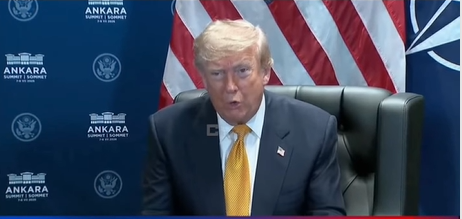
Tensions between Washington and Tehran have entered a new phase. Donald Trump announced on the sidelines of the NATO summit that from his perspective, the ceasefire with Iran has ended and he called negotiations with Tehran “a waste of time”; remarks made only hours after extensive U.S. strikes on targets in Iran and Tehran’s reciprocal response, raising concerns about the escalation of the conflict and its consequences for regional security and global energy markets.
U.S. President Donald Trump announced that he considers the temporary ceasefire agreement between the United States and Iran to be over and believes that continuing negotiations with Tehran will yield no results. These statements were made on Wednesday, July 8, during the NATO leaders’ summit in Ankara and alongside Mark Rutte, NATO Secretary General.
When asked about the future of the ceasefire, Trump said: “From my perspective, this is over.” He also added: “In my view, this is nothing but a waste of time.”
The U.S. president accused Islamic Republic officials of insincerity in the negotiation process and claimed that Tehran agrees to certain provisions of an agreement in private discussions but, after leaving the meeting, denies the existence of those same agreements before the media.
Trump continued in a sharp tone, saying: “They are liars.” He also added: “We reach an agreement, but they leave the meeting and talk to reporters and say we never discussed such a thing at all. In my view, this case is closed.”
He clarified that although American negotiators can continue talks, he believes these negotiations will bear no fruit. Trump went on to say: “They can continue talking but in my view they’re just wasting their time. They are liars, deceitful, and they are sick people.”
Trump’s remarks came hours after the U.S. military launched a new wave of airstrikes against more than 80 military targets in Iran. According to U.S. Central Command (CENTCOM), the operation was conducted in response to Iranian attacks on several commercial vessels in the Strait of Hormuz. The targeted facilities reportedly included air defense systems, radars, military centers, and vessels affiliated with the Islamic Revolutionary Guard Corps.
In response, Iran also carried out strikes against U.S. military bases in Bahrain and Kuwait; an action that has heightened concerns about the expansion of the conflict in the region. Meanwhile, oil prices in global markets also experienced a significant increase in reaction to these developments.
The temporary agreement between Washington and Tehran was formed with the aim of reducing tensions and reopening the passage of commercial vessels through the Strait of Hormuz; a strategic waterway through which a significant portion of global oil exports passes. However, recent attacks on commercial vessels and the U.S. military response have effectively placed this agreement under serious challenge.
While U.S. officials have not completely ruled out the possibility of continuing diplomatic efforts, Trump’s remarks suggest the White House has become more pessimistic about the prospect of reviving the agreement and continuing negotiations with Tehran than before.