Persian Gulf States Call for End to Tensions and Return to Negotiations
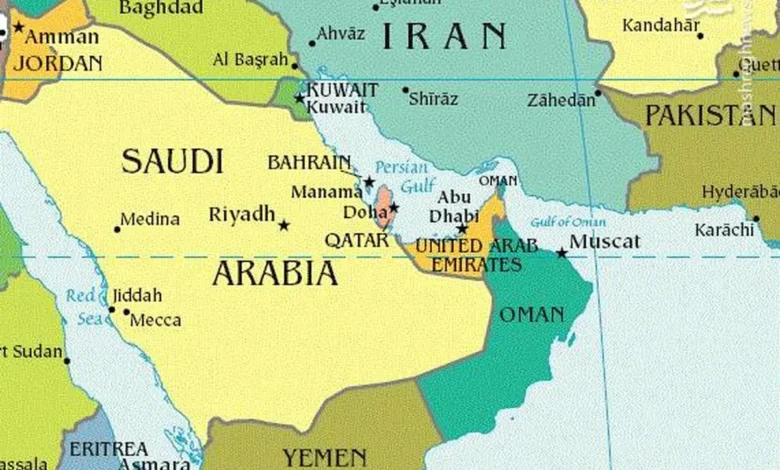
As military confrontation between Iran and the United States enters a critical phase and reciprocal attacks in the region intensify concerns over the escalation of the crisis, Arab states on the Persian Gulf littoral, while condemning Tehran’s recent actions, are working to keep diplomatic channels open. Simultaneously, statements from Iranian officials regarding the Strait of Hormuz indicate that Tehran still considers this strategic waterway part of its sphere of influence and security; a matter that has heightened regional and international concerns.
Following the escalation of military clashes between Iran and the United States over the past 24 hours and attacks attributed to Tehran against targets in Kuwait and Bahrain, Arab states on the Persian Gulf periphery issued separate statements calling on both sides to exercise restraint and continue the path of dialogue.
These positions were taken at a time when Donald Trump announced at the NATO leaders’ summit in Ankara that, from his perspective, the ceasefire between Washington and Tehran had ended. However, regional countries attempted to prevent the complete closure of diplomatic channels while condemning Iran’s actions; because from their perspective, a return to a full-scale war in the Persian Gulf would have severe security and economic consequences.
Regarding the continuation of negotiations with Iran, Trump said he would allow talks to continue, but expressed doubt about their outcome. He said: “Negotiators want to negotiate, but they will have to come back to me.” He also added: “Getting even with the Iranians is just a waste of time.”
These remarks were made while a new round of negotiations between Iran and the United States was scheduled to take place within the framework of an agreement to end the war.
Qatar, which is considered one of the main mediators in the negotiation process between Tehran and Washington, expressed serious concern over the attack on the Qatari tanker “Al Raqqa” as well as a Saudi tanker in the Strait of Hormuz. After these attacks, Doha summoned Iran’s embassy chargé d’affaires and handed him a protest note.
The note stated: “This attack is a serious violation of international maritime security, a direct threat to global energy security, and a blatant and flagrant violation of international law.”
Qatar’s Foreign Ministry also demanded that Iran immediately cease any action that endangers regional security and refrain from jeopardizing international shipping and global energy supply.
Doha emphasized that it reserves the right to take any necessary measures to protect its interests and assets.
In the UAE, “Anwar Gargash,” the diplomatic adviser to the country’s president, warned about the continuation of tensions. He said: “Iran cannot turn the page of war and move past it. Arab states on the Persian Gulf cannot remain targets while Iran oscillates between escalating tensions and the path of rationality, stability, and peace.”
Oman, which has played an important role in mediating between Iran and the United States in recent months, condemned the attacks against Bahrain, Kuwait, and Saudi and Qatari vessels.
Muscat considered these actions a threat to global trade and called on all parties to pursue the path of dialogue and crisis mitigation instead of escalating tensions.
Kuwait also condemned the attacks attributed to Iran against regional countries, calling them “heinous acts.” “Jasem Muhammad Al-Budaiwi,” the Secretary General of the Gulf Cooperation Council, said on this matter: “These attacks show that Iran continues to pursue a course aimed at undermining international and regional efforts to establish security, peace, and resolve the crisis.”
“Hamid Reza Azizi,” an analyst of Iranian affairs, believes that the attack on Saudi and Qatari tankers in the Strait of Hormuz carried a political message from Tehran. He said: “Iran wants to send the message that neither signing a memorandum of understanding with the United States nor its willingness to improve relations with Arab Persian Gulf states should be interpreted as a green light for regional countries to freely pass through the strait without regard to Tehran’s claims about the right to control and manage this waterway.”
He added: “The long-term strategic value of the Strait of Hormuz is greater than the potential economic benefits resulting from an agreement with the United States or improved relations with Gulf states.”