Islamic Republic Extends Crackdown to Teenagers and Arab Families in Ahvaz
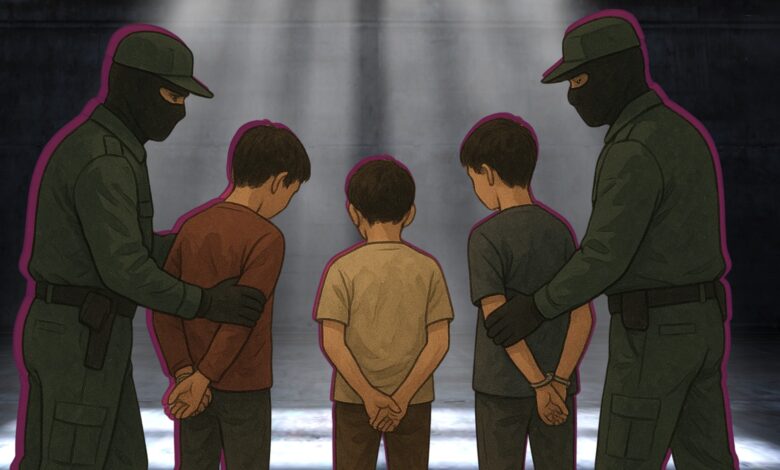
The arrest of three children—one 12 years old and two 16-year-olds—along with three other members of an Arab family in Ahvaz has sparked fresh concerns about the Islamic Republic’s treatment of children and ethnic minorities. Reports indicate that security forces, without presenting any court order, raided the “Kut Abdullah” area and arrested these individuals in broad daylight with beatings—a move critics view as evidence of expanding state repression that now extends even to children.
As part of an ongoing wave of mass arrests across Khuzestan Province, at least six Arab citizens from one family in the Kut Abdullah area of Ahvaz were arrested by the Islamic Republic’s security forces. According to released information, three of those detained are children under 18 years old: 12-year-old Jamal Naseri, 16-year-old Mojtaba Naseri, and 16-year-old Yaseen Naseri. Also arrested in the operation were 21-year-old Morteza Naseri, 27-year-old Mohammad Naseri, and 50-year-old Abuyasser Naseri.
According to a report by human rights organization Hengaw, on July 7, government forces raided the “Khazami” neighborhood in Kut Abdullah without presenting any court order and arrested several citizens. Local sources say security personnel violently arrested these individuals, including children, in public view with beatings and humiliating treatment. Such conduct has heightened serious concerns about violations of children’s rights and the use of violence against minors.
According to informed sources, security personnel not only arrested family members but also confiscated Mohammad Naseri’s motorcycle and severely damaged his personal vehicle with baton strikes. To date, no official body has provided any explanation regarding the reasons for these arrests, the location where detainees are being held, or potential charges against them.
These arrests come at a time when human rights organizations have repeatedly warned in recent months about increasing pressure on Arab citizens of Khuzestan. Hengaw previously reported widespread raids on Arab-populated areas of Ahvaz, mass arrests, warrantless entry into homes, and the creation of an atmosphere of fear and terror for families, particularly women and children.
Human rights activists believe that the arrest of children alongside adults, without judicial transparency and through the use of violence, demonstrates that the Islamic Republic no longer respects even the boundaries of child protection when dealing with opponents or ethnic and religious minorities. In the view of critics, the use of detention, intimidation, and violence against individuals under 18 years old not only violates Iran’s international commitments, including the Convention on the Rights of the Child, but also reflects an approach that has extended the securitization of society to families and children, and shifted the burden of repression onto the most vulnerable sectors of society.