Controversial Proposal for Establishing “Government in Exile” Under Reza Pahlavi’s Leadership
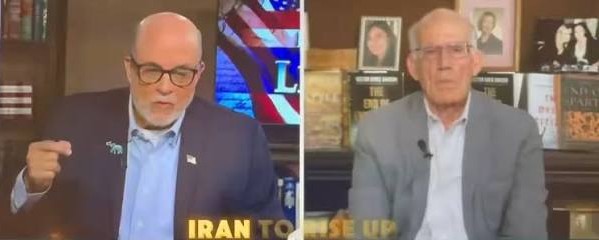
The publication of statements by “Mark Levin,” a filmmaker and figure close to the American conservative movement, and “Victor Davis Hanson,” an American historian, regarding the possibility of forming a “government in exile” led by Reza Pahlavi, has sparked widespread reactions on social media and has once again ignited discussions about the role of opposition outside the country and Iran’s political future.
A video has been circulated on social media showing an interview between filmmaker Mark Levin, a media figure close to Donald Trump, and American historian Victor Davis Hanson with the Fox News network, in which the proposal to establish a “government in exile” led by Reza Pahlavi is presented.
According to this plan, such a structure could, by creating a political institution outside Iran, represent some of the opponents of the Islamic Republic and even provide services such as travel documents or independent financial structures.
Reza Pahlavi, the son of Iran’s last shah, has in recent years presented himself as one of the prominent figures opposing the Islamic Republic and has emphasized the necessity of political transition, secularism, and the establishment of a democratic system in Iran. International media has repeatedly covered the increase in his presence in the political sphere of Islamic Republic opponents in recent years.
In videos and images circulated on social media, it has been claimed that if a “government in exile” could issue imperial passports to even one million Iranians outside the country, it could generate at least $100 million in independent revenue.
Supporters of such an idea believe that creating a formal structure outside the country could give opponents of the Islamic Republic greater political and organizational identity; conversely, critics argue that a government’s legitimacy is shaped only by genuine support from the people within the country and international recognition.
In recent years, Reza Pahlavi has attempted to present himself as a unifying figure for various currents opposing the Islamic Republic. He has stated in various interviews that his goal is to transition Iran to a democratic system rather than to impose a specific form of government. However, there remains serious disagreement about the extent of domestic support for him and the capability of opposition outside the country to create a political alternative.
Mark Levin stated in his remarks on Fox News: “I believe that we should do more to help the people of Iran to rise up and give them what they need, some education and some weapons.”
American historian Victor Davis Hanson further added: “I think we should declare an Iranian government in exile and see if the shah’s son will step forward. We are willing to accept that if he returns, elections will be held within a year or two and I swear that he will do this, and we engage with a sort of government in exile and ignore the regime and do not negotiate with them. Force them to pay the price for the damages they inflict.”
Mark Levin, agreeing with Hanson, says: “I think that’s a very good idea. I have spoken with him once or twice off the air and he is a very serious man who wants the best for his people. He really is not seeking power and is a very civilized and intelligent person. I like this idea and I think, as you pointed out, it will greatly terrify this regime. They are really frightened because in that case people would have a focal point for concentration and organization.”
Although the claims made about Mark Levin and Hanson’s formal proposal for establishing a “government in exile led by Reza Pahlavi” have not yet been confirmed by reputable international media outlets, its widespread publication demonstrates the continuation of discussions about Iran’s political future, the role of opposition outside the country, and efforts to find an alternative to the Islamic Republic.