Uncertainty Surrounds Fate of Majdeh Hashemi Bazargani; Accounts of Torture, Forced Confessions, and Death Sentence
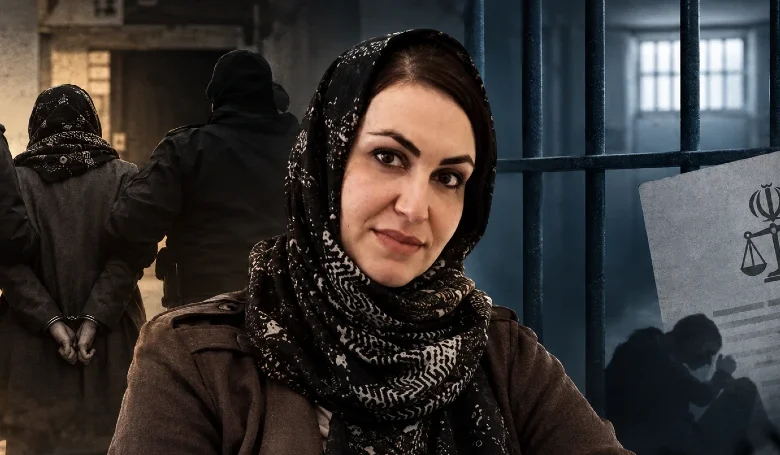
Majdeh Hashemi Bazargani, a 27-year-old woman detained in Qazvin Central Prison, was arrested following a nighttime raid by security forces on her home. She faces serious security charges and, according to human rights reports, was subjected to pressure and beatings during interrogation. While a report has been circulated claiming her death sentence was upheld by the Supreme Court, human rights sources who previously reported on her case have stated that her detention remains unresolved and her status unclear.
Hashemi Bazargani, a resident of Alvand city in Qazvin Province, was arrested at her home on April 3, 2026 (Farvardin 15, 1405). According to reports by Hengaw and Hrana, security agents entered her house during the operation and, following her transfer, a file was opened against her with charges including “insulting the supreme leader,” “espionage,” and “cooperation with Israel and America.”
An account provided by the detainee herself in an audio file from inside the prison reveals another dimension of this case. She stated that security forces attacked her house around 2:30 a.m. and used an iron-cutting device to enter. Hashemi Bazargani then spoke of severe beatings during interrogations and injuries to her head, neck, and body. Voice of America also reported on this audio file, reflecting her account of arrest, torture, and pressure for forced confessions.
In part of her audio message, she described pressure to write what interrogators wanted: “They attach a thousand charges to me. They forcibly tell me that whatever they said, I must write it down and sign it.”
Hashemi Bazargani also claimed that while blindfolded, she was beaten, and interrogators edited her statements to produce a video portraying her as a “terrorist.” According to her, charges including espionage, cooperation with Israel and America, and receiving money from abroad were also raised against her. She denied the accusation of sending information or the location of a military facility to a “enemy.”
Human rights reports also mentioned the broadcast of images and videos related to her confessions by Qazvin Provincial Television. Hengaw stated that these confessions were obtained under physical and psychological pressure—a claim that Iranian judicial and security authorities have yet to publicly clarify.
The physical and psychological condition of this detainee has become another source of concern in the case. Sources close to her family said that the pressures during detention affected her condition, and reports have emerged about the severity of her psychological state. Meanwhile, human rights sources had previously announced that more than two months after her arrest, her legal status remained unresolved.
In the meantime, the situation of Hashemi Bazargani’s elderly mother has become another humanitarian dimension of the case. In her audio file, she expressed concern about her mother being left alone in Alvand and said her mother, due to physical health problems, needs assistance with daily tasks and medical visits. Iran Wire also reported that her mother was left practically alone following her daughter’s arrest.
Reports on Majdeh Hashemi Bazargani’s case become even more significant in light of concerns raised by human rights organizations in recent months regarding the handling of security cases in Iran, including detainees’ access to lawyers, the use of televised confessions, and allegations of torture and pressure for confessions.
However, the claim that Majdeh Hashemi Bazargani’s death sentence was upheld by the Supreme Court of the Islamic Republic could not be independently verified through reliable official sources. Therefore, until the publication of this report, the details regarding the issuance and confirmation of her death sentence require greater caution and verification.