Noose Looms Over Female Prisoners; Warning Over Execution Danger for Eight Political and Ideological Detainees in Iran
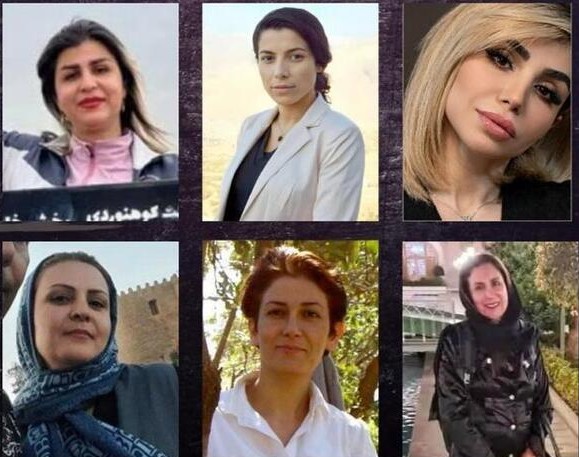
As executions intensify in Iran, human rights organizations have warned of the imminent danger of carrying out execution sentences against six imprisoned women and the re-issuance of death sentences for two other detainees; cases that, according to critics, have been accompanied by security-related charges, forced confessions, and judicial proceedings lacking fair trial standards.
While a wave of executions has reached new dimensions in Iran, human rights organizations report the imminent danger of executing six female political and ideological prisoners and the possibility of re-issuing death sentences for two other women. Cases that, according to these organizations, have been accompanied by security charges, torture, forced confessions, and unjust trials, and now threaten the lives of eight women with serious danger.
As the number of executions in Iran increases, concerns about the fate of imprisoned female political and ideological detainees have also risen noticeably. Domestic and international human rights organizations warn that the Islamic Republic’s judiciary has intensified the use of capital punishment against political opponents, civil activists, and ideological prisoners in recent months; a process that, according to these organizations, serves as a tool for creating terror and silencing social protests.
According to the latest report by the Hengaw Human Rights Organization, six female prisoners including “Pakhshan Azizi,” “Zahra Shahbaz Tabari,” “Nasimeh Islamzehi,” “Maryam Hedayat,” “Arghavan Fallahi,” and “Mahnaz Charduoli” face the danger of execution. Additionally, “Varisha Moradi” and “Bita Hameti,” whose death sentences were previously overturned by the Supreme Court, continue to face the risk of re-issuance of these sentences.
In the cases of these eight prisoners, the Islamic Republic’s judiciary has raised charges including “rebellion,” “enmity against God,” “membership in anti-regime groups,” “membership in the Mujahedin-e Khalq Organization,” “membership in ISIS,” “action against national security,” “operational action for the enemy state America,” “assembly and conspiracy,” “propaganda against the regime,” “attacking a mosque with Molotov cocktails,” and “arson at the Seyyed al-Shohada Mosque.”
However, human rights organizations state that many of these cases have been based on forced confessions, interrogations accompanied by torture, and deprivation of access to independent counsel, and fair trial standards have not been observed in them.
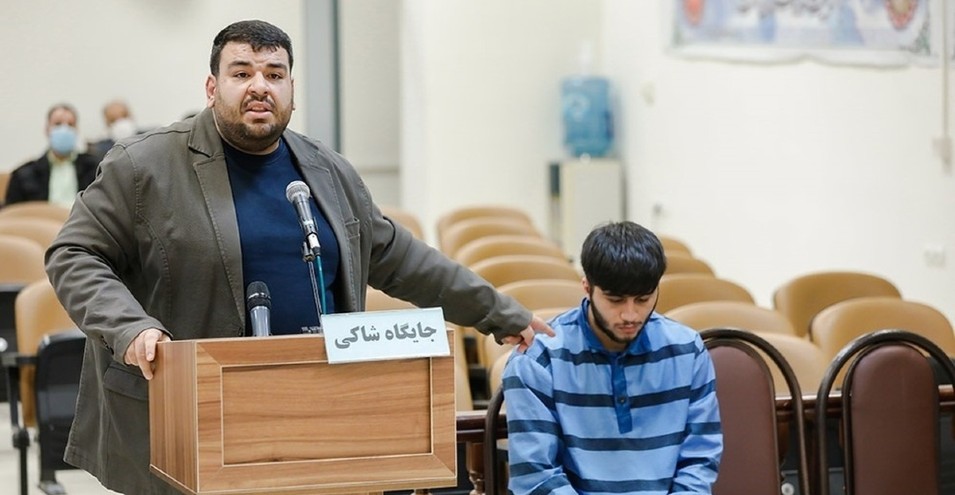
Among the judicial officials whose names have been mentioned in these cases are “Iman Afshari,” head of Branch 26 of the Tehran Revolutionary Court, “Abolghasem Salwati,” head of Branch 15 of the Tehran Revolutionary Court, “Ahmad Darvishgoftar,” head of the first branch of the Rasht Revolutionary Court, and “Abolfazl Ameri Shahriabi,” head of the Criminal Court of the Qods Judicial Complex in Tehran.
The aforementioned judges have issued death sentences or supplementary sentences against these prisoners in various cases. Human rights organizations have repeatedly warned about the functioning of revolutionary courts, the use of broad security charges, and restrictions on defendants’ access to counsel of their choice.
Pakhshan Azizi, a women’s rights activist and social worker from Mahabad, has been sentenced to death by Branch 26 of the Tehran Revolutionary Court, headed by Iman Afshari, on charges of “rebellion.” Her sentence was upheld by the Supreme Court, and her requests for retrial have been rejected twice.
Amnesty International considers Pakhshan Azizi to be among those facing imminent execution danger and has stated that her trial was conducted in a “grossly unfair” manner, with reports of torture and mistreatment against her.
Varisha Moradi, a Kurdish activist and member of “Kejar,” was previously sentenced to death on charges of “rebellion” through membership in the Free Life Party of Kurdistan (PJAK). Although the Supreme Court overturned her sentence due to investigative deficiencies, the case was returned to Branch 15 of the Tehran Revolutionary Court for retrial, and there remains a possibility of re-issuance of the death sentence. Amnesty International has also identified her as among prisoners facing the risk of issuance and execution of death sentences.
Among other prisoners, Zahra Shahbaz Tabari has been sentenced to death on charges of “rebellion through membership in the Mujahedin-e Khalq Organization,” Nasimeh Islamzehi on charges of “enmity against God through membership in ISIS,” Maryam Hedayat on charges related to participation in the Seyyed al-Shohada Mosque arson case, Arghavan Fallahi on charges of “rebellion through membership in anti-regime groups and armed action,” and Mahnaz Charduoli on charges including attacking a mosque with Molotov cocktails, assembly and conspiracy, and presence at illegal gatherings have all been sentenced to death.
In the case of Bita Hameti, the judiciary has raised the charge of “operational action for the enemy state America and hostile groups.” Although the Supreme Court overturned her death sentence, retrial of the case continues.
Amnesty International, in a statement about the rise in political executions in Iran, has warned that Islamic Republic officials use capital punishment as a tool to suppress opponents and create a climate of terror. The organization has called for an immediate halt to executions, abolition of these sentences, and trials conducted in accordance with international standards.
According to Hengaw reports, pressure on female activists, particularly following the “Woman, Life, Freedom” movement, has increased significantly, and the issuance of death sentences against imprisoned female political detainees is assessed as part of this process.
As the wave of executions continues in Iran, the fate of these eight imprisoned women has become one of the most significant concerns for human rights organizations. Critics argue that the use of security charges, deprivation of fair trial, multiple reports of torture and forced confessions, have cast doubt on the legitimacy of these sentences; while families and human rights activists are calling for an immediate halt to executions and independent and transparent investigation of these cases.