“Caspian Express”: Russia’s New Route to Strengthen the Islamic Republic
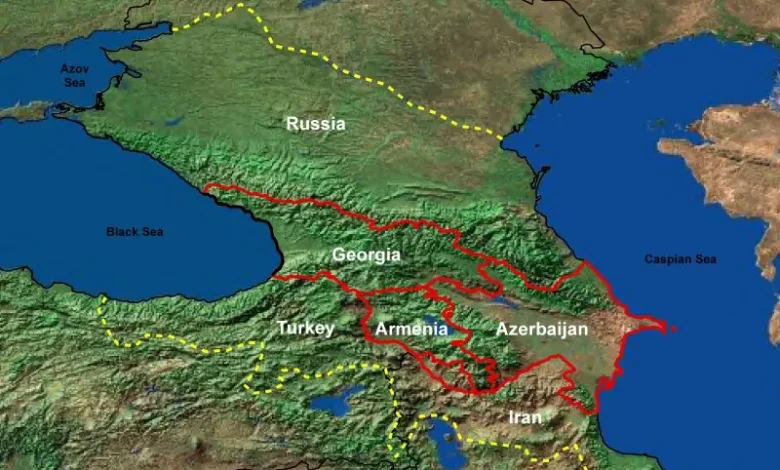
Russia is reinforcing a strategic supply route through the Caspian Sea for the Islamic Republic; a route that, according to international reports, could facilitate the transfer of drone components and military equipment while circumventing several maritime chokepoints facing Western pressure. This cooperation has transformed the Caspian into one of the most important arteries of military ties between Moscow and Tehran.
In recent years, as Russia has intensified its confrontation with the West and expanded military cooperation with the Islamic Republic, it has sought routes that would allow it to continue transferring goods, equipment, and technology without relying on vulnerable maritime pathways subject to Western pressure. Now it appears the Caspian Sea has become more central to this strategy than ever before.
British publication The Telegraph, in a report, compared this new route to a model Russia previously employed during the Syrian war to support the Bashar al-Assad government. During that period, a maritime route later known as the “Syria Express” became crucial for transferring equipment and supporting Russian forces in Syria.
Now, following the restriction of Russian maritime routes as a result of the Ukraine war and regional geopolitical changes, the Caspian Sea could play a similar role for Tehran-Moscow relations; with the difference being that this time the destination is the Islamic Republic and one of Russia’s most important military partners.
Independent reports also confirm the growing importance of this route. The New York Times reported in May 2026, citing American officials, that Russia is transferring drone components through the Caspian Sea to Iran; a route that allows Tehran to secure part of its military needs through a channel far less accessible to direct U.S. naval forces.
These reports have been published at a time when Iran has lost a significant portion of its drone capabilities following recent confrontations. The Center for Strategic and International Studies (CSIS) has estimated that Iran has consumed approximately 60 percent of its drone stockpiles and roughly 30 percent of its missile inventory during the conflict.
Under such circumstances, the transfer of components and equipment from Russia could hold particular significance for Tehran. American officials who spoke with the New York Times said that continuation of this process could help Iran rebuild its drone capabilities.
The importance of the Caspian Sea for this cooperation is not limited to its geographical position. This sea has no direct access to open waters and only five littoral states—Iran, Russia, Azerbaijan, Kazakhstan, and Turkmenistan—have access to it. This very characteristic has made the Caspian an attractive route for transferring cargo that might face the risk of interception, sanctions, or military pressure through other routes.
Lloyd’s List Intelligence, in a report on Russian-Iranian maritime trade, announced that maritime traffic between the two countries in the Caspian has increased, and some vessels operating on this route repeatedly turn off their Automatic Identification System or AIS; an action that, according to analysts, could indicate an effort to hide the nature or destination of certain cargo. This source also stated that the number of vessels traversing this route increased from approximately 30 per month to around 50 vessels during a reviewed period.
The Royal United Services Institute (RUSI) has also described the Caspian Sea as one of the important nodes in the commercial and military network between Russia and Iran. The institute states that Russian ports in Astrakhan, Ulyanovsk, and Makhachkala are connected with Iranian ports including Anzali and Amirabad, and this route has become increasingly important for the exchange of goods, oil, and military equipment since 2022.
In this way, the Caspian is not merely a commercial route; rather, it is part of a multi-faceted network that connects maritime transport to rivers, railways, and roads, and can transfer goods from Russia to Iran and from there to southern routes and even India.
CSIS, in its review of the North-South transport corridor, describes the Caspian route as the shortest branch of this network; a route that connects Russian ports on the Caspian to Iran’s northern ports and subsequently enables the continuation of transport to southern ports and Indian markets.
Military cooperation between Iran and Russia is, of course, not a new phenomenon. Tehran, during Russia’s war against Ukraine, provided Moscow with Shahed drones and the technology for their production, and Russia, utilizing Iranian technology, established a production line for drones called “Geran-2” in the Alabuga region.
Documents and published reports about the Alabuga plant show that Russia, with Iran’s assistance, had planned to produce thousands of drones based on the Shahed design. The Washington Post reported in 2023 about a target of producing 6,000 drones in this facility.
On the other hand, data released in January 2026 shows that military cooperation between the two countries has not been limited to drones. Based on a report citing Bloomberg information, Iran-Russia weapons contracts from late 2021 onwards have been estimated at over four billion dollars, with a significant portion including ballistic missiles and air defense systems.
Carnegie has also written in its assessment of bilateral relations that Moscow has purchased over four billion dollars worth of weapons systems from Tehran, and in return, Russia has sold training fighters, attack helicopters, armored vehicles, and other weapons to Iran.
Therefore, what is being observed today in the Caspian Sea should be understood as part of a deeper military relationship; a relationship in which both Tehran and Moscow are attempting to neutralize some of the pressures resulting from sanctions and international restrictions by creating alternative routes.
One of the most important reasons is the vulnerability of traditional routes. In circumstances where the Strait of Hormuz faces military and political pressure and regional maritime routes face the risk of attack and disruption, use of the Caspian could enable Iran to conduct part of its imports and receipt of equipment from the north.
Meanwhile, Russia is also using Caspian routes to connect to Iran’s transport network and subsequently to South Asian markets. This route is part of the International North-South Transport Corridor; a project that has gained increased importance for Moscow in recent years. CSIS states that the trans-Caspian section of this corridor has acquired special appeal for Russia due to its lower dependence on multiple countries. However, the military significance of this route has become more apparent in recent months.
In late March 2026, an Israeli air strike on the port of Anzali demonstrated that Caspian Sea routes are no longer necessarily immune to the consequences of regional confrontations. RUSI placed this strike in connection with one of the important commercial routes between Russia and Iran in the Caspian.
In July, Ukraine also attacked an Iranian commercial vessel in the Caspian Sea; an attack that, according to Iranian officials, resulted in the death of one sailor and the injury of another. Reuters reported this incident within the framework of escalating confrontation between Ukraine and networks associated with Iran and Russia transfers.
The Wall Street Journal also reported that Ukraine has extended its long-range drone strikes to the Caspian Sea, targeting ships and infrastructure believed to be connected to the transfer of Iranian drones to Russia.
Here, the significance of the term “Caspian Express” becomes clearer. Rather than being the formal name of a project, this title is a description of a pattern in which Russia is attempting to transform the Caspian Sea into a safer conduit for its connection with Iran.
If this route becomes established, its implications will extend beyond bilateral Tehran-Moscow relations. Russia could use it to maintain connection with Iran, transfer goods and equipment, and develop Eurasian transport corridors; while the Islamic Republic would also have an alternative route for receiving goods and part of its military needs.
From this perspective, the Caspian has become a convergence point of three crises: Russia’s war with Ukraine, the Islamic Republic’s confrontation with America and Israel, and the broader competition between global powers over Eurasian commercial routes.
The history of wars has repeatedly shown that supply lines can be as important as battlefields. If one side can maintain its route for transferring weapons, fuel, components, and personnel, it also increases its capacity to continue the war.
For this reason, Russia’s efforts to develop the Caspian route are not merely an economic or commercial measure. If reports about the transfer of military equipment and drone components continue, this route could become one of the important elements of the Islamic Republic’s military rebuilding capacity.
The Telegraph, in summarizing its report by pointing to this very significance, raised the question: Will the American government take action to counter the “Caspian Express” before it becomes the backbone of permanent logistical cooperation between Russia and Iran, or not?
The Telegraph’s report states: “History shows that wars are often decided not only on the battlefield, but along the supply routes that keep them going.”
However, what can be gleaned from the collection of independent reports is that this route is no longer merely a theoretical possibility. The increase in maritime traffic, the reported transfer of drone components from Russia to Iran, the connection of the two countries’ ports, and efforts to conceal the routes of certain vessels all demonstrate that the Caspian Sea is becoming one of the most important arenas of geopolitical competition between Russia, Iran, and their rivals.
Under such circumstances, any disruption to this route could have implications far beyond the Caspian; because this waterway is now linking to a larger network of ports, railways, rivers, and roads that connect Russia and Iran to each other and to Asian markets.
It appears the “Caspian Express” is more than simply a new route; it is a sign of the formation of a new architecture for Russia-Islamic Republic cooperation; an architecture aimed at reducing the vulnerability of both countries to sanctions, maritime pressures, and constraints arising from competition with the West.