From Gorgan to St. Peter’s Church: When the Islamic Republic Targets Iranian Christians’ Property and Heritage
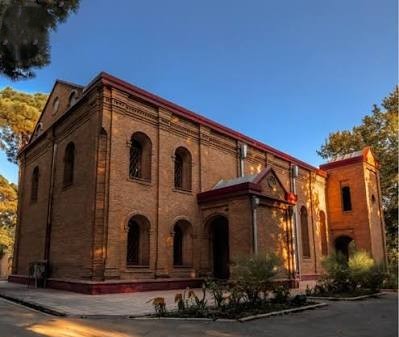
St. Peter’s historic church in Tehran, after nearly 150 years, has become a fresh symbol of the Islamic Republic’s pressure on Iran’s Christian community; yet the confiscation of this complex is not an isolated incident. From the closure of Persian-speaking churches and detention of Christians to confiscation and even sale of church properties, evidence from the past several decades reveals a systematic governmental process aimed at restricting the living and worship space of Christians in Iran.
In the latest developments and recently released reports, security forces have been stationed around the evangelical St. Peter’s Church in Tehran, and according to Christian sources, they are preventing church members from returning and re-entering the complex. This action followed the forced evacuation of residents and implementation of a property confiscation order for a site that for nearly a century and a half has been part of the history of Iranian Protestants.
St. Peter’s Church was established in 1876 on Sixtieth Street in Tehran. The complex, in addition to the church building, included residential houses, two schools, and offices related to Christian institutions. The entire complex spans approximately 10 hectares and, given its location in central Tehran, possesses considerable economic value.
The ownership file of this complex dates back to a ruling in 1998. According to reports, the Revolutionary Court ruled that year that the entire complex be transferred to the “Executive Headquarters of the Imam’s Decree.” The Council of Evangelical Churches of Iran remained unaware of this ruling until 2008 and subsequently protested it; however, the appeals process essentially came to nothing.
Now this old ruling has been enforced in circumstances where approximately 20 Armenian and Assyrian families were living within the church compound. Reports indicate these families were given a short timeframe to leave their homes, and congregation members were told to worship at other churches.
UN special rapporteurs have also reacted to this action. Nazila Ghanea, Special Rapporteur on freedom of religion or belief, and Mai Sato, Special Rapporteur on the situation of human rights in Iran, stated in a joint statement: “The forced eviction of 20 Armenian and Assyrian families is incompatible with international human rights law and poses a risk of homelessness for members of recognized religious and ethnic minorities.”
The two UN officials further clarified: “This is not an isolated incident, but rather the culmination of a long process of actions against Iran’s Christian community and particularly the worship of Persian-speaking Christians.”
UN rapporteurs also emphasized that the St. Peter’s complex was not merely a property for its residents, but rather “a home, school, and place of worship” for them. They called for the return of residents and congregation members, an end to threats, and the release of Christians who have been arbitrarily detained.
The importance of the St. Peter’s case becomes clearer when examined in connection with the history of the past several decades. The Islamic Republic has repeatedly emphasized internationally that Armenians and Assyrians are recognized as religious minorities and have the ability to conduct their religious ceremonies. However, in practice, numerous reports show that the situation of Christians, particularly Persian-speaking Christians and converts to Christianity, is vastly different.
A report by Article 18 shows that in recent decades, the number of active Protestant churches in Iran has declined sharply. Once approximately 50 Protestant churches operated in Iran, but today only a limited number are permitted to function, and many of these churches are not even allowed to conduct services in Persian.
St. Peter’s Church was also previously forced to suspend its Persian-language services—an action that, according to Christian sources, was intended to prevent the attendance of converts to Christianity.
In June 2026, a Protestant church in Mashhad that had a history of conducting Persian-language services was demolished without prior warning. Article 18 has identified this church as one of the recent examples of demolition or repurposing of church buildings in Iran.
Therefore, the St. Peter’s case cannot be viewed merely as a legal dispute over ownership of land or a building. When a historic church is confiscated, its Christian residents are forced to leave their homes, and the congregation is denied access to their place of worship, the issue directly relates to religious freedom and the right to have a place of worship—a point the World Council of Churches has also emphasized.
However, perhaps one of the most explicit examples demonstrating that the matter does not end with closure or confiscation is the case of the Gorgan Jama’at-e Rabbani Church.
This church is located in northern Iran in the city of Gorgan and holds special significance for the history of Protestantism in Iran. The church was founded in 1970 by Haik Hovsepian, one of the most recognized leaders of Iran’s evangelical Christians.
Haik Hovsepian later became head of the Jama’at-e Rabbani Churches of Iran and died under suspicious circumstances in January 1994. Another prominent leader of this church was Hossein Soodmand, who was executed in 1990 on charges of “apostasy.” Mohammadbaghir Yousofi, known as the Nurse, was another priest associated with this church who died under suspicious circumstances in the 1990s.
After years of closure, the church building was listed for sale in 2023 on a website affiliated with the “Executive Headquarters of the Imam’s Decree.” The announced price for selling this building was 6.3 billion rials, equivalent to approximately $150,000 at that time, and the Executive Headquarters itself described this offer as an “exceptional proposal.”
This case is important because it demonstrates that the fate of some church properties in the Islamic Republic has not merely ended with church closures. In some cases, property has first been closed or confiscated, and after years of passage, entered the cycle of state assets and has even been put up for sale.
Article 18 also considers the Gorgan Church an example of Christian property that, after forced closure, was ultimately confiscated by the state and offered for sale.
The Gorgan Church is not the only example. In 2017, officials from the “Executive Headquarters of the Imam’s Decree” gave the Council of Jama’at-e Rabbani Churches of Iran a three-day notice to vacate “Sharon Garden” in Vald Abad, Karaj. This property covered more than 10,000 square meters and, according to Article 18 reports, was valued at nearly three million dollars.
This garden had been acquired since the early 1970s through financial contributions from church members and was used for organizing retreats and church activities. The Revolutionary Court issued an order for its confiscation in 2015, and in subsequent years the property came under control of government institutions.
This means the St. Peter’s case does not mark the beginning of a process, but rather a fresh link in a chain that began years ago. In the meantime, another important issue exists: the pressure of the Islamic Republic has not been limited to church buildings and properties.
Persian-speaking churches have repeatedly been closed. For example, the Persian-language church in Jannatabad, Tehran, was closed in 2012 by order of the Intelligence Organization of the Islamic Revolutionary Guard Corps. In 2019, Islamic Republic forces raided the historic Assyrian Protestant Church in Tabriz, changed its locks, and removed the church official from the premises. A joint report submitted to the UN Human Rights Committee documented these incidents within the framework of violations of property rights and freedom of religion and belief.
In recent years, pressure on Christian converts has continued. A report by the U.S. Commission on International Religious Freedom shows that Christians, particularly those who have converted from Islam to Christianity, have faced arrest and heavy prison sentences.
Thus, what occurred at St. Peter’s Church can be seen as part of several simultaneous policies: restricting Persian-language worship, closing churches, pressuring church leaders, detaining Christians, and in some cases confiscating or repurposing Christian properties. This situation creates a clear contradiction with the Islamic Republic’s claims about respecting the rights of religious minorities.
Representatives of the Islamic Republic in international forums have repeatedly spoken about the rights of religious minorities. But the fundamental question is: if a religious community is denied possession of its place of worship, if Persian-speaking churches are closed, if the homes of Christian families within a church complex are confiscated, and if the property of a closed church is eventually put up for sale, how compatible is the claim of religious freedom with the actual reality of that community’s life?
This contradiction has also been reflected in international reports. Article 18, in a report on the presence of Islamic Republic representatives at the United Nations, noted that while government officials claim to have “restored 40 churches,” other church properties have been confiscated, repurposed, or put up for sale—including the Gorgan Church.
The St. Peter’s Church case has now transcended Iran’s borders. The World Council of Churches, in a statement on July 27, 2026, expressed serious concern about the confiscation of the church complex and headquarters of the Council of Evangelical Churches of Iran, the eviction of residents, and reports of the suspension of worship at this historic church.
The council called for the reversal of the confiscation, the return of the complex to the Council of Evangelical Churches of Iran, and permission for residents and congregation members to return. Under such circumstances, the issue is no longer merely about preserving a historic building. St. Peter’s Church is part of Iranian Christians’ religious and social heritage—a place where generations of Iranian Christians have worshipped and lived, shaping their community.
The Islamic Republic can speak in official speeches of respect for Armenians, Assyrians, and their conducting of religious ceremonies, but the true measure of religious freedom should be sought in the government’s treatment of churches, church properties, Christian leaders, and followers of this faith.
When a church closes, no other place of worship takes its place; when property is confiscated, more than just a deed of ownership is lost; and when Christian families are driven from their homes, the issue extends beyond the realm of property rights and relates to the security, dignity, and right to life of a religious community.
St. Peter’s Church now stands at the center of this question: Do Iranian Christians truly enjoy religious freedom, or only insofar as their worship and presence do not conflict with the Islamic Republic’s security and political interests?
The experience of churches in Gorgan, Sharon, Tabriz, Mashhad, and now St. Peter’s shows that the issue cannot be considered an “isolated incident.” Even UN special rapporteurs, using precisely this reasoning, have described the St. Peter’s case as “the culmination of a long process” against Iran’s Christian community.
And perhaps the most bitter aspect of the matter is that in a country with a long history of Christian presence, part of their heritage is now either behind closed doors, confiscated, repurposed, or, as with the Gorgan Church, subject to sale.
St. Peter’s is not merely the story of one church; it is the story of a community about whose rights the Islamic Republic speaks in official propaganda, but whose presence and freedom the government has systematically narrowed and further restricted over decades.