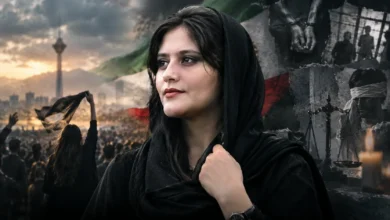
Widespread Strike in Kurdistan on Fourth Anniversary of Zhina’s Death
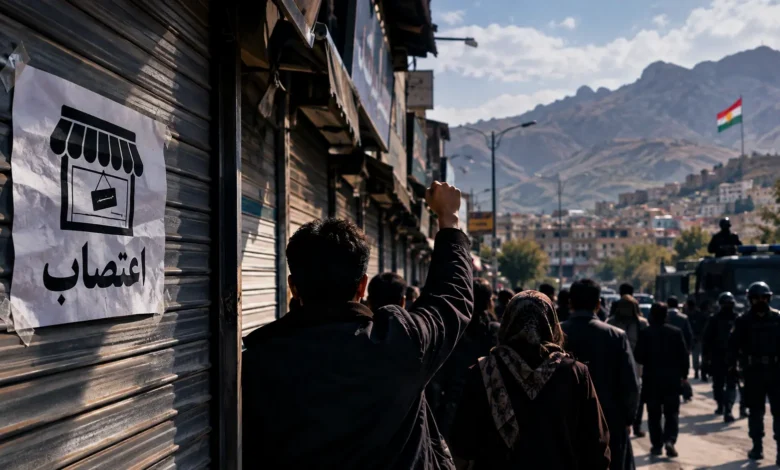
Coinciding with the fourth anniversary of Zhina Amini’s death and following a call from the Coalition of Kurdish Parties in Iran, merchants and bazaar vendors in at least 11 Kurdish-populated Iranian cities went on strike. Reports indicate widespread closure of markets in Saghez, Sanandaj, Mahabad, Boukan, Divandarreh, and Ashnouieh; the strike took place as security forces summoned and detained a number of merchants and activists, and the atmosphere in some cities became increasingly securitized and militarized.
Today, Wednesday, September 16, 2026, coinciding with the fourth anniversary of Zhina Amini’s death and the fourth anniversary of the launch of the “Woman, Life, Freedom” uprising, merchants and bazaar vendors in several Kurdish cities across Iran shut down their shops.
The strike was organized following a call from the “Coalition of Kurdish Parties in Iran.” This alliance had previously urged merchants and bazaar vendors to close their businesses on the anniversary of Zhina Amini and to abstain from work.
Reports published by the Kurdistan Human Rights Network also confirmed the occurrence of strikes in cities including Saghez, Mahabad, and Sanandaj, and reported widespread strikes in Boukan, Divandarreh, Ashnouieh, and Marivan.
According to field data released by Hengaw, the strike in Saghez, Zhina Amini’s hometown, took the most widespread form. The human rights organization reported that despite extensive deployment of security forces, the majority of the market and commercial units in the city remained closed, with only essential services such as bakeries and pharmacies operating.
In the cities of Sanandaj, Divandarreh, Mahabad, Boukan, and Ashnouieh, Hengaw also reported broad merchant participation, estimating participation rates at around 50 to 70 percent.
In Qorveh, Bijar, Marivan, Kamyaran, and Piranshahr, sections of the markets also closed, with participation rates estimated by the organization at around 30 to 40 percent. These figures represent estimates by a human rights organization based on field data and received videos, not official government statistics.
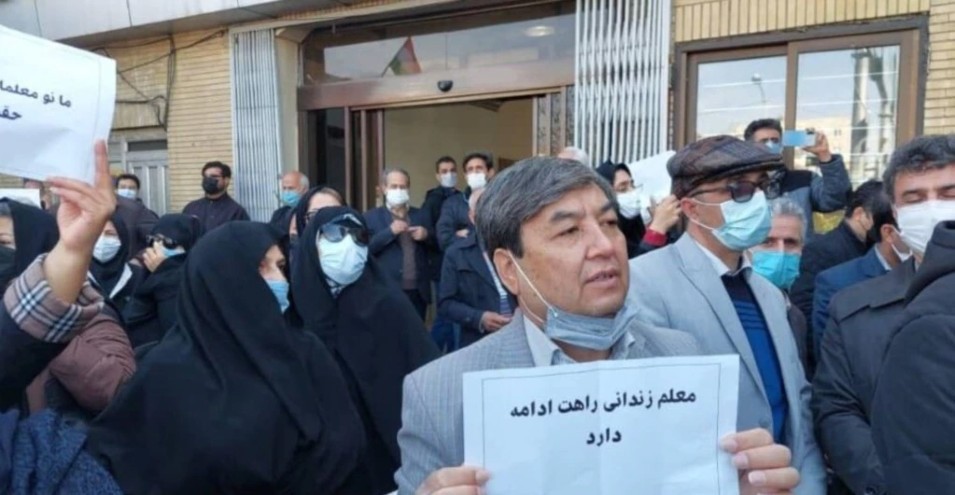
The strike took place under conditions where the Islamic Republic’s security institutions had previously attempted to prevent the strike from taking shape by summoning and threatening merchants. In the days leading up to September 16, security forces summoned a number of civil activists and merchants and obtained commitments from them not to participate in the strike.
In Sanandaj, 46-year-old Jalal Khoda Moradi and 37-year-old Mohsen Hossein Panahi were detained after being summoned to the municipal office and transferred to an unknown location. According to Hengaw’s report, the two had previously been summoned by phone to provide written commitments not to participate in the public strike.
In Ashnouieh, on September 15 (one day before the strike), security forces raided citizens’ homes and detained at least four people. Three of the identified individuals were merchants and bazaar vendors. These preventive detentions occurred despite the stated goal of the call being to use market closures and work abstention as a form of civil protest.
As the anniversary of Zhina Amini’s death approached, reports emerged of increased presence of security and military forces in various Kurdish cities.
Iran International also reported, citing Hengaw, the deployment of military convoys and government forces in Saghez and Sanandaj, and the movement of military forces along the route from Divandarreh to Saghez.
According to published reports, in some areas riot control units and security forces were also deployed. Such an atmosphere, coupled with the summoning and detention of citizens, demonstrates that the government had attempted to prevent the expansion of the strike by creating a securitized environment before it began.
General strikes in Kurdistan have a long history as one of the methods of collective protest. In the recent call, market and bazaar closures were used as a tool to express opposition and social solidarity.
From the perspective of international law, Article 21 of the International Covenant on Civil and Political Rights, to which Iran is also a party, recognizes the right to peaceful assembly. The UN Human Rights Committee in its general interpretation has stated that collective actions and civil disobedience, if nonviolent, can fall within the scope of protecting the right to peaceful assembly.
The committee has also emphasized that restrictions on assemblies must be legal, necessary, and proportionate, and governments should not use restrictions to create a deterrent effect or dissuade citizens from participating in peaceful assemblies.
From this perspective, summoning or detaining individuals solely because of their peaceful participation in a protest action raises serious concerns about the Islamic Republic of Iran’s compliance with its human rights obligations.
Four years after Zhina Amini’s death, her name remains one of the most important symbols of protest against discrimination, repression, and restrictions on civil freedoms in Iran. The strike on September 16 in Kurdistan demonstrated that Zhina’s memory has not merely remained in the form of memorial ceremonies but has become, for part of society, a symbol of civil protest and demands for change.
In response, the government’s security reaction once again underscored the deep chasm between citizens’ civil demands and the Islamic Republic’s repressive policies; a chasm that manifested itself in the summoning of merchants, detention of activists, and increased presence of security forces in Kurdish-populated cities.
For many Kurdish citizens, Zhina Amini remains a symbol of a woman whose death led to one of the largest waves of protest in Iran’s recent four decades; a wave that carried the slogan “Woman, Life, Freedom” from Saghez to cities across Iran and then to various parts of the world.
In such circumstances, the closure of markets on her anniversary can be viewed not merely as an economic action, but as a form of collective and civil expression; an action to which the government’s security response has itself become another dimension of the dispute over the right to protest and fundamental freedoms in Iran.