Moscow Warns Tehran Against Withdrawing from NPT; Kremlin: We Do Not Want Iran to Leave the Treaty
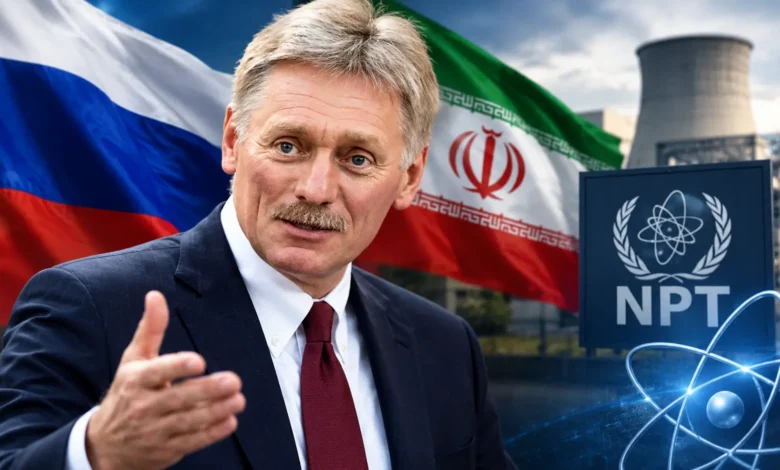
As Iran’s potential withdrawal from the Nuclear Non-Proliferation Treaty (NPT) has once again become a focal point of Tehran’s nuclear file, the Kremlin stated on Tuesday, September 29, that Russia is opposed to Iran’s exit from the pact and is calling on Tehran to remain bound to its commitments as a “responsible member.”
Dmitry Peskov, the Kremlin’s spokesman, responding to recent statements by Ali Nikzad, Iran’s deputy parliamentary speaker, said that Moscow has heard his remarks about the possibility of Iran withdrawing from the NPT, but these statements require further clarification. Peskov emphasized: “We do not want Iran to withdraw from the Nuclear Non-Proliferation Treaty” and added that Russia views this pact as “the cornerstone of the non-proliferation regime.” This position was stated at a time when Moscow has been among Tehran’s closest diplomatic partners in recent months and has simultaneously emphasized diplomatic solutions to the nuclear crisis and Iran’s confrontation with the United States and Israel.
The Kremlin’s statement came after Iranian state media reported that Ali Nikzad had announced a plan being reviewed in parliament under “fast-track” procedures for Iran’s withdrawal from the NPT. According to these reports, Nikzad claimed that Tehran no longer trusts the International Atomic Energy Agency and its Director General Rafael Grossi, and stated that the plan can be considered on the same day of submission. He also said parliament would examine the international consequences of withdrawing from the treaty.
These statements come as part of a wave of calls for reconsideration of Iran’s relationship with the NPT. Several current and former Iranian officials and some hardline parliamentarians have recently called for halting cooperation with treaty-related frameworks and beginning the withdrawal process. In this regard, Mohsen Rezaei, Secretary of Iran’s Supreme National Security Council, stated on September 10 that the IAEA’s destructive political measures could push countries toward NPT withdrawal.
The root of this tension lies in deep disagreements between Tehran and the IAEA over inspections and verification of Iran’s nuclear program. In its recent reports, the IAEA has expressed concerns about unresolved issues related to undeclared nuclear materials and activities in Iran and has emphasized the need for greater Iranian access and cooperation. In response, the Islamic Republic views the IAEA’s reports as politically motivated and insists that its nuclear program is not being pursued for the purpose of developing nuclear weapons.
Iran remains a member of the NPT, and its Comprehensive Safeguards Agreement with the IAEA has been in force since 1974. Therefore, talk of withdrawal is not the same as suspending or reducing cooperation with the IAEA. The NPT defines a specific mechanism in Article 10 for a country’s withdrawal: the member state must declare that extraordinary events related to the treaty’s subject matter have jeopardized its vital interests and must notify other treaty members and the UN Security Council of this decision at least three months before withdrawal.
On the other hand, UN documents emphasize that withdrawal from the NPT does not eliminate a country’s responsibility for violations that occurred before withdrawal, and issues related to materials, equipment, and commitments created before withdrawal can still be matters of legal and international concern.
The significance of Russia’s position lies in the fact that Moscow, in the face of the current crisis, has unlike the United States and some European countries, not supported further pressure against Tehran and has emphasized negotiation and political solutions. The foreign ministers of Russia and Iran also reaffirmed on September 25 at the margins of the UN General Assembly that the current crisis should be resolved through diplomatic channels.
Meanwhile, the issue of NPT withdrawal has emerged at a time when the atmosphere for nuclear negotiations between Iran and the United States remains fragile. Reuters reported on Tuesday that Tehran has announced its readiness for talks, but emphasizes that negotiations should not take place under pressure or coercion; conversely, Donald Trump has rejected any new proposals for reducing sanctions on Iran in exchange for nuclear concessions.
Thus, Tehran’s recent statements about the possibility of withdrawing from the NPT do not yet constitute the formal initiation of a withdrawal process, but they indicate increased political pressure within Iran over how to continue cooperation with the nuclear safeguards and verification system. Moscow’s swift reaction also demonstrates that even one of Tehran’s closest international partners does not view Iran’s withdrawal from the treaty as a desirable step and seeks Iran’s continued membership in one of the world’s most important frameworks for preventing the proliferation of nuclear weapons.
The main question now is whether the threat of withdrawal will remain merely a tool for increasing leverage in negotiations and political confrontation with the West, or whether Tehran will actually initiate the legal process of withdrawing from the NPT—a decision that, under the treaty itself, requires formal notification and a three-month period and could move Iran’s nuclear file into a new and more complex phase at the international level.