Death Sentence of Mazhdeh Hashemi-Bazargani Upheld: Forced Confession and Security Charges Converted into Death Warrant

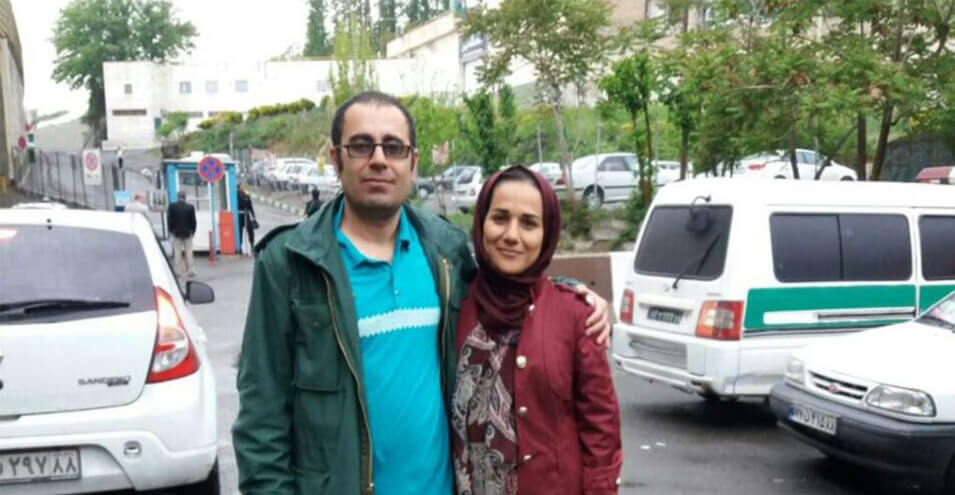
The death sentence of Mazhdeh Hashemi-Bazargani, a 27-year-old Red Crescent employee and detainee held in Qazvin Central Prison, has been upheld by the Supreme Court of the Islamic Republic. The case, as reported, presents a disturbing picture of a trajectory in which violent arrest, deprivation of chosen counsel, allegations of torture and forced confession have ultimately resulted in the issuance and confirmation of a death sentence for a young woman.
According to reports from human rights organizations and citing an informed source at Iran International, Mazhdeh Hashemi-Bazargani was arrested following detention during the 40-day conflict, facing charges including espionage and moharebeh (waging war against God), with a death sentence, and her sentence has now been upheld by the Supreme Court. The 27-year-old woman was arrested in the early morning of April 4 during a security force raid on her home in Alborz; forces that, according to reports, used an iron-cutting device to enter the house.
However, the more troubling aspect of the case concerns allegations about the interrogation methods and case construction. Hashemi-Bazargani had stated in an audio message from prison that during her detention and interrogation she was beaten and tortured, and was placed under pressure to make forced confessions. According to human rights sources, she had claimed that security forces beat her during interrogation so severely that her teeth were broken, and that she was then used to construct a security narrative.
Subsequently, videos and confessions attributed to her were broadcast on Qazvin Radio and Television in which charges including collaboration with the United States and Israel, espionage, transmitting military area locations, and receiving money from abroad were attributed to her. However, no independent evidence that could verify these claims in the public sphere has been released, and Hashemi-Bazargani herself has denied the charges leveled against her.
Deprivation of chosen counsel is another serious concern in this case. Iran International reported, citing an informed source, that Hashemi was denied her choice of legal representation during the case proceedings—an issue of particular importance in cases resulting in capital punishment and directly related to the right to a fair trial.
Mazhdeh Hashemi’s case cannot be separated from the broader process of executing opponents and protesters in Iran. Human Rights Watch announced in September 2026 that the Islamic Republic executed at least 59 people on political and vague national security charges alone between March 18 and the end of August, with at least 29 of them arrested in connection with recent protests. The organization also reported highly unfair trials, use of torture-tainted confessions, and deprivation of detainees from access to independent and chosen counsel.
The United Nations Independent Fact-Finding Mission regarding Iran also announced in September that at least 29 men were executed in connection with protests between March and the end of August, and over 70 people, including women and teenagers, remain at immediate risk of execution. This mission emphasized that several death sentences have been issued following proceedings in which rights related to fair trial, access to chosen counsel, and prohibition of forced confessions were violated.
Thus, the issue is not merely the fate of a 27-year-old detainee; it is a pattern in which vague security charges can lead to the death penalty, while reports of torture, forced confessions, and deprivation of independent counsel are raised. When the ultimate punishment in a case is death, any serious doubt about interrogation methods, the credibility of confessions, and respect for the right to defense becomes critically important.
The Islamic Republic, simultaneously with intensifying protests, has expanded the use of capital punishment rather than responding to social and political demands. Amnesty International had previously warned that Islamic Republic officials have used the space referred to as “wartime conditions” to intensify arbitrary arrests, expedited trials, and politically motivated executions.
If reports concerning torture and forced confession in Mazhdeh Hashemi-Bazargani’s case are confirmed, issuing a death sentence based on such a process is not merely a judicial matter; it would be an example of using the judicial apparatus and capital punishment as tools for political repression and creating fear in society. The UN Fact-Finding Mission and human rights institutions have previously warned of the conversion of capital punishment into a tool for suppressing opponents in Iran. Human Rights Watch has described this process as part of the systematic use of executions to create fear and prevent protests.
Under such circumstances, the confirmation of Mazhdeh Hashemi-Bazargani’s death sentence raises a weighty question before society and international institutions once again: if a confession was extracted under torture and the defendant was deprived of the right to have chosen counsel, how can such a case be made the basis for taking a human life? Answering this question, before any sentence is carried out, requires transparent, independent, and monitored investigation of torture allegations and full assurance of the right to defense.