Arrest of Amir Farnia, 23-Year-Old Son of a December Protests Fatality
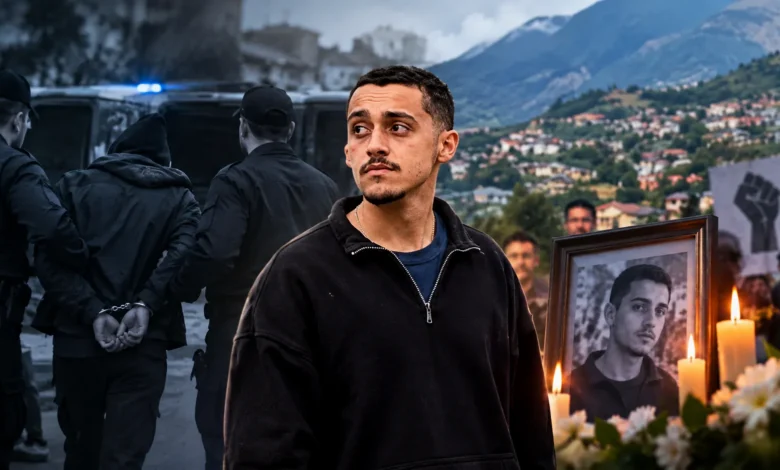
Continuing a wave of pressure on families seeking justice in Iran, Amir Farnia, a 23-year-old young man and son of Majid Farnia, one of the fatalities from the December 2025 protests, has been arrested in Klardasht and transferred to an unknown location. This arrest once again raises the question of why in the Islamic Republic, families who have lost loved ones during protests must subsequently bear the cost of seeking justice and pursuing the truth through arrest and intimidation.
According to reports from human rights organizations, Amir Farnia was arrested on Tuesday, September 28, 2026, while at his workplace in Klardasht during a raid by government forces. To date, neither the detaining agency has been identified, nor has the charge or reason for his arrest been announced, and his family has no precise information about his place of detention. Iran International has also reported that he was arrested at his workplace that morning, and no information regarding his fate remains available.
This arrest occurred while Majid Farnia, Amir’s 48-year-old father and a resident of Klardasht, was killed on the evening of December 9, 2024, during the protests in Chalus by direct fire from government forces. Hana has reported that he was first shot in the leg and, after falling to the ground, was killed by another shot to the forehead. Majid Farnia’s name is also listed in the Abdulrahman Boroumand Foundation’s registry of those killed in the December 18 protests.
Now, merely a few months after Majid Farnia’s death, his 23-year-old son has also been arrested, without the Islamic Republic’s authorities providing any clear explanation for the reason for this detention. Such a situation, for a family still confronting the death of one of its members, is far more than an ordinary legal matter: the arrest of a family member without disclosure of charges or place of detention effectively places the family in a state of anxiety and uncertainty.
Amir Farnia’s case did not occur in isolation. Iran International has reported that on the same day, Mona Mahmoodyian, the wife of Ibrahim Mostafapour, one of the fatalities from the December protests, was also arrested in Babol. A few days later, reports of the arrest of Zahra Fadakar, wife of Vahid Firouzi, a fatality from the protests, were published.
Meanwhile, reports have also surfaced of economic pressures on families of the deceased, including reports of the cessation of government benefits to a family following the killing of their child during the December protests. This collection of cases, combined with the arrest of family members, presents a picture of multi-layered pressure on families seeking answers about the fate of their loved ones.
Seeking justice is not a crime. Asking who killed a protester, why they were shot, and why the murder case is not being investigated independently is a human and legal demand. Even within the framework of the Islamic Republic’s laws, Article 34 of the Constitution recognizes the right to seek justice. For this reason, the arrest of Amir Farnia without public disclosure of charges or his place of detention raises serious concerns about the respect for his fundamental rights.
What is most concerning in this case is the silence of official authorities. If Amir Farnia has committed a crime, why are his charges not being disclosed? If his arrest has no connection to his father and the protests, why have the detaining agency and his place of detention not been announced? And if there is a security matter involved, why are his family and lawyer unaware of his situation?
The arrest of the son of a fatality, especially under circumstances where no clear answer has yet been provided about how his father was killed, cannot be regarded merely as another security matter. This case is another example of the price that families seeking justice in Iran pay to keep the truth alive—families who first lose their loved ones and then face summons, threats, pressure, and arrests of family members.
As of the publication of this report, no official statement has been issued by the Islamic Republic’s authorities regarding the reason for Amir Farnia’s arrest, any potential charges, or his place of detention. Therefore, what is raised about the motive for his arrest should continue to be regarded as a report and human rights concern, not as an established fact. However, one clear reality remains: uncertainty about the fate of a 23-year-old after arrest, without disclosure of charges or place of detention, cannot be normalized.