Death Sentences Issued for Three Kurdish Protesters by Tehran Revolutionary Court
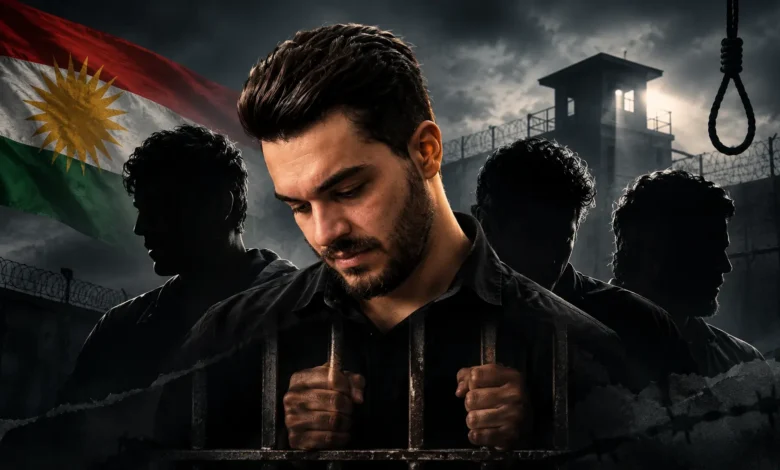
In continuation of a wave of death sentences issued against detainees from the December 2024 protests, the Islamic Republic has condemned three Kurdish citizens from Kermanshah to execution. Khosrow Mohammadi-Nia, Masoud Toshmallani, and Sirwan Shebani, after months of detention and uncertainty, now face the threat of execution while imprisoned in Qazlhesar Prison in Karaj. Human rights reports on this case document prolonged solitary confinement and what has been described as “forced confessions,” while full details of the trial proceedings and their access to a chosen lawyer remain unclear.
According to reports published by human rights organizations and HANA, Branch 23 of Tehran’s Revolutionary Court has sentenced all three in a joint case to execution on charges including “moharebeh” (enmity against God), “gathering and conspiracy to undermine national security,” and “operational measures in favor of hostile states.” The verdict was issued under the signatures of Judge Karami and Judge Taghi-Zadeh, and all three are currently imprisoned in Qazlhesar Prison in Karaj.
Sirwan Shebani, 25 years old, is an artist, musician, and director of a pop and traditional orchestra, identified as a resident of Kermanshah and the Vavan district of Islamshahr. Khosrow Mohammadi-Nia and Masoud Toshmallani are also from Kermanshah. All three were arrested simultaneously on December 19, 2024, during nationwide protests in Islamshahr by security forces.
According to HANA’s report, after their arrest, these three citizens were held for months in solitary confinement and, following what the organization described as “extraction of forced confessions,” were transferred to Qazlhesar Prison. Masoud Toshmallani was initially released on bail following his arrest but was re-arrested days later. However, independent details regarding the content of the confessions, the evidence cited by the court for issuing the death sentence, and the quality of their legal defense have not been released.
What makes this case increasingly concerning is the gap between the severity of the punishment and the transparency of the judicial process. When a charge such as “moharebeh” can result in a death sentence, it is natural that the manner of interrogation, the credibility of confessions, the evidence presented in court, and the defendants’ access to independent counsel should be clearly verifiable. However, for these three prisoners, significant portions of this information remain inaccessible to the public. Human rights reports have also emphasized that sufficient information about the trial proceedings and their access to chosen counsel has not been made public.
The issuance of these three sentences comes at a time when other cases involving December protesters are facing severe sentences. Iran Wire reported that a fourth detainee, “Mehdi Nami,” has also been sentenced to death by Branch 23 of Tehran’s Revolutionary Court in recent days. This pattern has intensified concerns among human rights organizations regarding the use of capital punishment in cases related to protests.
For Sirwan Shebani, Khosrow Mohammadi-Nia, and Masoud Toshmallani, the issue is no longer merely a court verdict; the lives of three human beings are at stake. If the Islamic Republic’s judicial apparatus claims these individuals committed crimes warranting death sentences, it must present clear and verifiable evidence, and their trial proceedings must comply with standards of fair justice. Issuing a death sentence in a case where even the fundamental details of the trial process and legal defense rights remain unclear to the public intensifies concerns that capital punishment is being weaponized to silence protesters.
These three citizens remain in Qazlhesar Prison, and no reports of execution have been released. Given the history of executing some protesters, their situation demands immediate attention from human rights bodies and the international community. Protest, civil activity, or political opposition must not become a pathway to depriving people of their right to life, and no death sentence should be carried out on the basis of obscure proceedings, disputed confessions, or non-transparent trials.