New Details in Hoshyar Alipour Case; This Political Prisoner Sentenced to 38 Months in Prison After Death Sentence Overturned
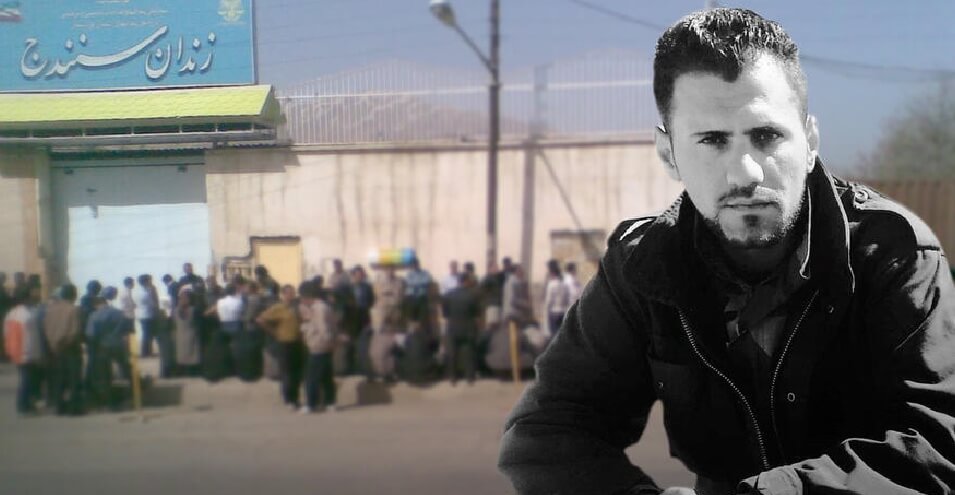
A day after Voice of America reported on the unjust death sentence of Hoshyar Alipour, an Iranian Kurdish political prisoner, his brother says the death sentence issued against him has been overturned and the Revolutionary Court has sentenced him to 38 months in prison in a new ruling.
Hejar Alipour, brother of Hoshyar Alipour, told Voice of America that after the Supreme Court overturned the death sentence issued by the first branch of the Sanandaj Revolutionary Court against Hoshyar Alipour on charges of “moharebeh” (enmity against God) on September 16, the case of this political prisoner was referred to the second branch of the Sanandaj Revolutionary Court for reconsideration.
According to the brother of this political prisoner, the hearing on this case was held on Sunday, September 30, in the presence of Alipour and his defense lawyer. The court, by issuing a new ruling, overturned the death sentence of this political prisoner and reduced his 16-year prison sentence on charges of “membership in a party or group opposing the system” and “propaganda against the system” to 38 months in prison.
A Case Based on Coerced Confessions
Hejar Alipour had previously told Voice of America that Hoshyar Alipour was forced during interrogations to confess to participation in clashes that occurred several years before his arrest in cities in Kurdistan, Saghez, and Sardasht, and even to operations that occurred at the time of his arrest at one of Saghez city’s police stations. According to Mr. Alipour, the current case, which was being reviewed in Urmia Criminal Court, has also been closed.
On the other hand, Mr. Alipour told Voice of America: “Although the prison sentence has been reduced from 16 years to 38 months, the lawyers on the case are seeking to appeal this ruling as well so that the prison sentence is reviewed as soon as possible and Hoshyar, like Mohammad Estadqader, his co-defendant who was released in early May, is released from Sanandaj Central Prison as soon as possible.”
Hoshyar Alipour and Mohammad Estadqader were arrested by Saghez city security forces on August 3, 2018. On December 29, 2019, a death sentence was issued for Alipour; a ruling that has now been overturned. The Islamic Republic claimed that these two were “members of an opposition Kurdish party” and broadcast their confessions on Islamic Republic radio and television. Amnesty International at that time expressed concern in response to these confessions.
Iranian state television typically publishes images of televised confessions of security detainees to prove the correctness of their convictions, but nearly all detainees, after being released from solitary confinement and transferred to prison general wards, have recanted their televised confessions and attributed this to pressure, torture, and threats of harm to relatives by interrogators.
Forced confessions accompanied by violence by Iranian security forces have been raised repeatedly in the past. The use of this confession-extraction method, which has been criticized repeatedly by human rights bodies, continues to be used by the Islamic Republic’s judiciary. Some of these forced confessions of detainees, such as those of Maziar Bahari, Maziar Ebrahimi, Sepideh Ghilian, Ibrahim Bakhshi, Saeed Malekpour, and dozens of others, have been published on Iran’s official television networks.
In recent months, the issuance of death sentences by Iran’s judicial system for opponents and participants in protests has been repeatedly criticized and protested by human rights organizations. Human rights organizations say the Islamic Republic does not fairly investigate charges and sometimes innocent people have been tried and even executed. For example, the Islamic Republic executed tens of thousands of people with prison convictions in the 1980s.
The United States has repeatedly and in various cases condemned violent conduct and widespread suppression of protesters and civil activists, as well as repeated and continuous violations of the rights of Iranian citizens by the regime ruling that country.
Source: Voice of America