United States Sends Third Carrier Strike Group to Middle East
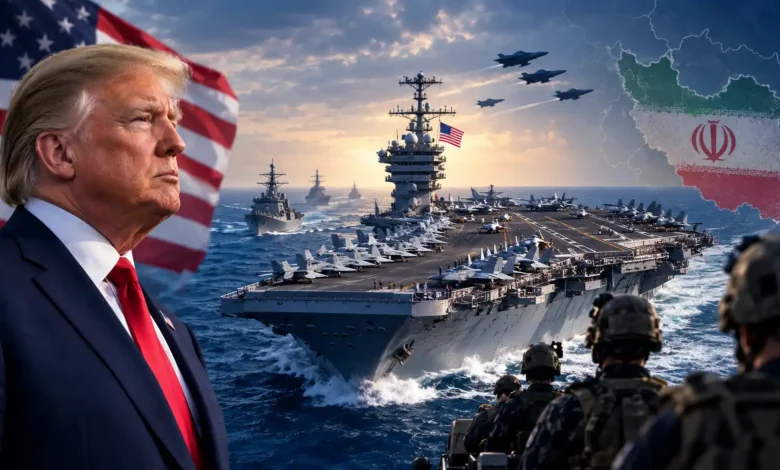
As the Iran-U.S. conflict continues and diplomatic efforts remain deadlocked, the United States is deploying a third carrier strike group to the Middle East—a move that could bring the total number of American naval and Marine forces in the region to over 20,000 personnel. This military deployment comes as U.S. President Donald Trump has not ruled out the possibility of resuming or intensifying air strikes against Iran following the November 3 midterm elections, stating that such an option is possible.
According to the Associated Press, the USS Theodore Roosevelt carrier strike group, along with the USS Michigan Amphibious Ready Group and two amphibious ships, will transport approximately 9,000 sailors and Marines toward the Middle East. If these forces arrive in the region as scheduled, there is a possibility of three American aircraft carriers being simultaneously present in the Middle East through late October.
Currently, the aircraft carriers USS George H. W. Bush and USS George Washington are deployed in the region, and the USS Boxer Amphibious Ready Group is also stationed in the Middle East. According to estimates by U.S. officials who spoke with the Associated Press, with the arrival of the new forces, the number of American sailors and Marines in the region will exceed 20,000 personnel, and hundreds of aircraft will also be at the disposal of these forces.
This redeployment occurs as the United States previously, in April, deployed three carrier strike groups simultaneously to the Middle East for the first time since 2003. Redeploying such a large volume of naval forces indicates that Washington is attempting to preserve and strengthen its military options against Iran in the current situation.
Meanwhile, Trump, in an interview with Time magazine published Thursday, raised the possibility of intensifying the bombing of Iran following the November 3 midterm elections. When asked about the details of this strategy, he refrained from providing further information, saying he could not specify which targets would be attacked.
Trump also stated that he has not accepted Tehran’s recent ceasefire proposal, arguing that Iran’s proposal to end the conflict was insufficient. The U.S. president specifically referenced the Strait of Hormuz and said that Tehran’s proposal for opening this important energy corridor was not sufficiently favorable.
The Strait of Hormuz has become one of the most critical crisis points in recent months, as disruptions to shipping through this corridor have had a direct impact on the global energy market, and the Iran-U.S. conflict has led to severe increases in fuel prices across various countries. The Group of Seven also reacted to rising energy prices and disruptions caused by the conflict, agreeing on Friday to release 100 million barrels of oil from emergency reserves of member nations.
In another part of his interview, Trump also discussed the impact of the conflict on the American midterm elections. When asked whether a war accompanied by increased living costs and fuel prices could harm Republicans, he initially responded “maybe,” but then claimed that preventing the Islamic Republic from obtaining nuclear weapons could ultimately benefit Republicans.
This position was stated amid a recent AP-NORC poll showing that only 28 percent of Americans approve of Trump’s handling of Iran, and 65 percent of American adults hold his administration’s policies, including the conflict with Iran, responsible for rising prices. These figures indicate significant discontent regarding the economic costs of the war, though they alone cannot determine the outcome of the midterm elections.
On the other hand, Washington has recently attributed new security incidents to Iran, including an incident near RAF Fairford air base in Britain and a failed attack on a flydubai pilot on a flight bound for Israel. American officials have mentioned the possibility of Iran’s involvement in these cases, but investigations into both incidents remain ongoing and their connection to Tehran has not been independently and definitively proven.
Overall, the deployment of the U.S. third carrier strike group to the Middle East, coupled with the presence of over 20,000 American naval and Marine forces and Trump’s explicit statements about the possibility of intensifying attacks following the elections, demonstrates that military options remain an important part of Washington’s calculations regarding the Iran conflict. In contrast, Trump’s rejection of Tehran’s ceasefire proposal and the continuation of American military movements indicate that the gap between the two sides’ positions remains significant, and the risk of a renewed escalation of the conflict persists.