Execution of Ali-Sina Mostafavi, Professional Mountaineer and Detainee from the Forty-Day War
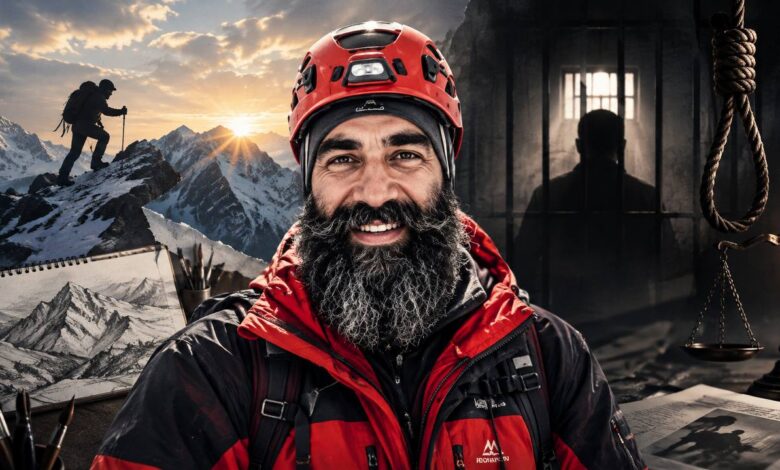
The Islamic Republic continues to target protest detainees; following street crackdowns and the killing of protesters, reports of executions of prisoners on political and security charges are now being released one after another. Ali-Sina Mostafavi, a 37-year-old mountaineer and artist from Bam, was executed at dawn on October 13, 2026 (22 Mehr) in Kerman Central Prison; a case in which the government’s official narrative is accompanied by serious questions about transparency of proceedings, credibility of confessions, and the right to fair trial.
According to reports from human rights organizations and Mizan news agency, affiliated with the judiciary of the Islamic Republic, Ali-Sina Mostafavi’s execution order was carried out on Wednesday, October 13, 2026 (22 Mehr 1405), in Kerman Central Prison.
Mostafavi was from Bam; a professional mountaineer and Himalayan climber whose resume included ascents of Island Peak and Kalapatthar in Nepal. He also played the tar, an instrument whose sound is part of Iran’s musical heritage.
But his life ended not on mountain slopes, but in prison. A man sentenced to death on charges of “moharebeh” (enmity against God), following his arrest during the forty-day war between Iran, America, and Israel, faced a death sentence; an order that was ultimately executed, leaving no opportunity to clarify the ambiguities in his case.
Mizan news agency claimed that Mostafavi engaged in armed activities during the war, photographed missile impact sites in Kerman, and sent the images to foreign media outlets. The judiciary has also claimed that he had connections to monarchist movements and that images related to December protests and weapons were found on his mobile phone.
In another official narrative released by judiciary-affiliated media, Mostafavi was accused of shootings in Kerman and wounding civilians, including a teenage girl. Judicial authorities stated that the death sentence was issued based on reports from security agencies and confessions attributed to him, and that the Supreme Court confirmed it.
These are very serious charges; however, the gravity of the charges does not replace fair trial. The public must be able to know what evidence was presented in court, under what conditions confessions were obtained, whether the accused had access to a lawyer of their choosing and effective defense, and how an independent review of the claims was ensured.
According to human rights reports, important details of the trial proceedings remain unclear. The Hana human rights organization has also referred to reports of Mostafavi being beaten during arrest and being subjected to forced confessions; claims that require independent and transparent investigation.
Confirmation by the Supreme Court alone is not an answer to all these questions. When the imposed punishment is death, the government is obligated to adhere to the highest standards of justice and effectively investigate any claims of torture or forced confessions.
The execution of Ali-Sina Mostafavi occurred at a time when multiple reports of executions in political and security cases are being released. Human rights bodies have warned against the use of capital punishment in cases related to protests and political activities.
During the protests, citizens were killed on the streets and others were arrested. Now families of political prisoners and detained protesters live with concern about the fate of their loved ones; a concern that intensifies with each new report of execution.
The issue is not just one case or one prisoner. When proceedings in security cases are shrouded in ambiguity, access to information is limited, and claims of forced confessions are not independently investigated, there is a risk that capital punishment becomes a tool to instill fear in society.
The government may describe cases with titles such as “moharebeh” or “action against national security”; but no judicial title should prevent careful examination of evidence and guarantee the right to defense. Even if the charges are serious, the accused still has the right to a fair trial.
Ali-Sina Mostafavi is no longer alive to defend himself or explain what happened to him during arrest and trial proceedings. Execution makes it more difficult to independently clarify many questions; but it does not eliminate accountability.
Judicial authorities must provide documented explanations regarding the evidence in the case, the conditions under which confessions were obtained, the accused’s access to a lawyer, and how the trial was conducted. Claims related to torture or forced confessions should also be independently investigated, not simply dismissed by citing official narratives.
The Islamic Republic cannot execute a prisoner and hang the questions related to his case with him. Execution is the end of a human life, not automatic proof of the accuracy of all allegations against him.
The execution of Ali-Sina Mostafavi once again increases concerns about the fate of other political prisoners and detained protesters. Families have the right to know the condition of their loved ones; prisoners have the right to access independent lawyers and fair trials; and society has the right to know what evidence death sentences are based upon.
If the government claims to carry out justice, it must allow the truth of cases to be clarified with transparency and the possibility of independent review. Justice has no meaning through ambiguous confessions, non-transparent proceedings, and silencing the voices of the accused.
Ali-Sina Mostafavi, the mountaineer and tar player, will no longer return to the mountains or take up his instrument. But the questions in his case remain; as does the concern about the lives of prisoners still awaiting their fate.
Each execution, before being the end of a case, reminds of the responsibility the government bears toward human lives. This responsibility does not end with issuing or confirming a sentence; it gains meaning through accountability, transparency, and ensuring fair trial.