Trump Blocks New Israeli Attack on Iran, But Military Option Remains on the Table
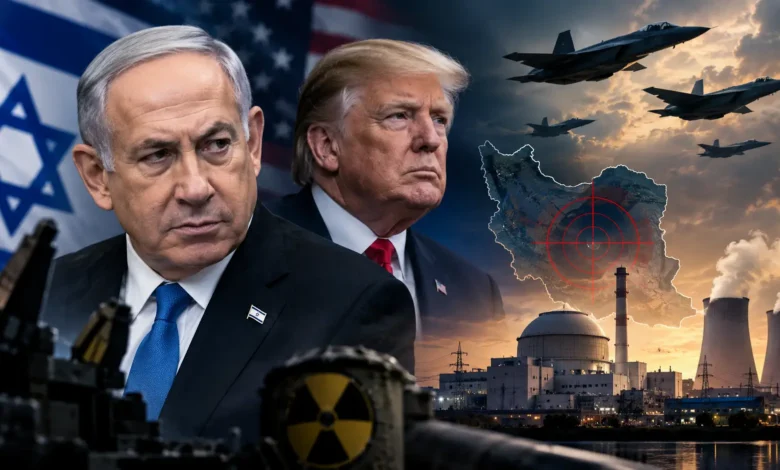
The Financial Times reported that Benjamin Netanyahu ordered the Israeli military to prepare for a multi-day and more extensive attack on Iran in October, but Donald Trump opposed the resumption of war before the U.S. midterm elections. According to the report, Iranian nuclear facilities, power plants, and civilian infrastructure were on a list of potential targets, and informed sources do not rule out the possibility of a new attack in the coming weeks.
The Financial Times reported on Wednesday, October 21, citing three informed sources that Benjamin Netanyahu, the Israeli Prime Minister, had requested that the country’s military prepare to carry out a multi-day campaign of attacks on Iran at the end of the week of October 10. This operation was to be more severe than the joint U.S.-Israeli attacks in February; attacks that led to an escalation of military confrontation between Tehran and Washington.
According to the report, the list of potential targets was not limited only to nuclear facilities and centers related to the Iranian government, but also included civilian infrastructure, including power plants. The sources cited by the newspaper said that Israeli officials had provided the American side with a new list of targets that had been prepared based on new intelligence.
However, the details of this plan have not been officially confirmed by Israeli officials. The office of the Israeli Prime Minister did not respond to the Financial Times’ request, and the Israeli military also did not comment on the report.
According to Financial Times sources, one of Donald Trump’s main concerns was the resumption of war before the U.S. midterm elections for Congress on November 3, corresponding to November 12. These elections could affect the political situation of his administration and the Republicans’ ability to maintain a majority in Congress.
“Anna Kelly,” Deputy Spokesperson for the White House, in an interview with the Financial Times described the economic and military situation of the Islamic Republic as unfavorable and said that America will not attack Iran before the midterm elections.
This position is consistent with reports stating that the U.S. government currently has no inclination to resume military operations. However, opposition to an attack on the eve of elections does not necessarily mean that the military option is being set aside for the future.
One source familiar with Israeli military planning told the Financial Times: “Either there will be a deal or there will be an attack.” This statement, cited in the newspaper’s report as an assessment from one of the sources, demonstrates the continued uncertainty about the path ahead: Can diplomatic efforts lead to an agreement between Tehran and Washington, or will differences lead to another military confrontation?
According to the Financial Times report, one source suggested that Israeli military preparations may have been aimed at increasing pressure on the Islamic Republic during negotiations. In this interpretation, a display of readiness to attack could be a tool to force the other side to accept the terms of a deal. However, this assessment is one possibility raised by an informed source and does not constitute proof of such intent by the Israeli government.
The same report also raises the possibility of renewed participation by both countries, the United States and Israel, in potential future attacks; however, no official confirmation has been released regarding the final decision or a specific time for new operations.
The report of a possible attack plan on Iran was released at a time when the Israeli military announced restrictions on military leave ahead of the Knesset elections on October 27, corresponding to November 5. According to reports from Israeli media, “Eyal Zamir,” Chief of the General Staff of the Army, ordered that troop leave be restricted or cancelled from Thursday onwards and that the level of readiness in units be increased.
Israeli military officials have explained these measures within the framework of preparations to ensure election security and maintain vigilance on various fronts. Therefore, one cannot simply conclude from the cancellation of leave that the army has made a final decision to attack Iran.
Meanwhile, it was reported that “Pete Haguste,” U.S. Secretary of Defense, met with Netanyahu at Ovda Air Base during an unannounced visit to Israel. Some reports mentioned the presence of officials from the United Arab Emirates at this meeting; however, the full details and ultimate purpose of this meeting have not been independently clarified.
The coverage of the Financial Times report in international media shows that the possibility of returning to military confrontation remains part of the region’s security calculations. Nevertheless, a distinction must be made between three issues: preparing a military plan, making a political decision to implement it, and actually launching an attack. The published report discusses a prepared plan and Trump’s opposition at the time in question, but by itself does not prove that a new attack will necessarily take place.
On the other hand, the approach of elections in Israel and America has also given this crisis a political dimension. Decision-making regarding a possible attack could affect, in addition to military consequences, energy prices, regional security, and diplomatic efforts.
As of the publication of this report, no official and independent statement has been released indicating that a final order has been issued for a new attack on Iran. Consequently, the possibility of resuming war should be taken seriously, but not as a certain event or one with a specific timetable.