Washington and Tel Aviv Preparing for Fresh Attack on Iran
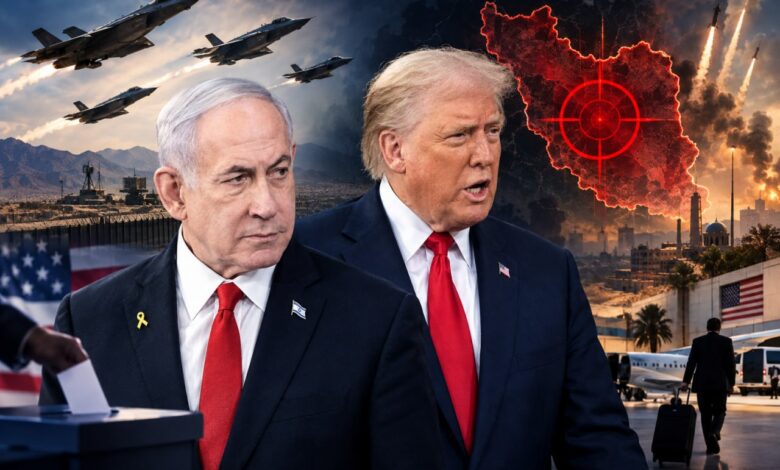
The New York Times reported that the United States and Israel have drawn up plans for short but intense military operations to resume attacks on Iran following the U.S. mid-term elections on November 3rd. Simultaneously, Israeli fighter jets flying near Iran’s border and the withdrawal of unnecessary American diplomatic personnel from Saudi Arabia have heightened concerns about escalating regional conflict; however, Washington’s final decision to launch a new attack has not yet been confirmed.
The New York Times, citing American officials and informed sources, reported that U.S. and Israeli military forces have reviewed new military options for attacking Iran. According to the report, planning is focused on operations that, if given a political order, could conduct extensive strikes against selected targets in a short timeframe.
The report states that the military forces of both nations have increased their exercises and drills, with some flights over Iraq conducted on routes suitable for practicing attack maneuvers.
Potential targets discussed, based on information cited in the report, include Iran’s nuclear facilities, missile and drone arsenals, and portions of its energy infrastructure. Some American officials believe that fresh military pressure might force Tehran to make greater concessions in negotiations; however, this assessment represents the view of those officials and offers no guarantee such an outcome would materialize.
The Axios website reported separately that dozens of Israeli fighter jets and refueling aircraft flew over Syria and Iraq toward Iran’s border on Monday, October 19th. According to American and Israeli officials cited by Axios, the aircraft changed course before entering Iranian airspace and returned to Israel.
The flight pattern resembled a potential operation against Iran. However, Axios sources stated that Israel had previously briefed Washington and described the flight as a drill aimed at displaying power and deterrence.
Meanwhile, some American sources told Axios that they suspected the military display might have been intended to provoke an Iranian reaction. This interpretation has been attributed to unnamed sources and has not been confirmed by Israel’s stated official objective.
In this tense atmosphere, Pete Hegseth, U.S. Secretary of Defense, traveled to Israel on Monday in an unannounced visit and met with Benjamin Netanyahu, the country’s prime minister, at Ovda Air Base.
According to the New York Times report, the possibility of resuming attacks on Iran was among the topics discussed by officials. Full details of these talks have not been officially released, and it remains unclear whether any decisions were made regarding the timing or authorization of new operations during this meeting.
The reports also indicate continued American military preparations in the region. However, sources cited by the New York Times emphasized that Donald Trump could still decline to approve the attack or defer his decision to another time.
One issue raised in the New York Times report is the possibility of targeting Iran’s underground nuclear facilities, including a site identified in some reports as “Kolang Mountain.”
Donald Trump had previously discussed reviewing the option of using the massive “GBU-43/B” bomb, known as the “Mother of All Bombs” or MOAB. This bomb is among the largest conventional American munitions, but mentioning its name in political discussions does not mean a definitive decision to use it. Furthermore, without precise information about the structure and depth of the targeted facilities, one cannot draw definitive conclusions about the effectiveness of such an attack.
According to the New York Times, several factors could influence Trump’s decision. U.S. congressional mid-term elections will be held on November 3rd, and the president has previously stated that he will not launch a new attack before these elections.
On the other hand, the expansion of the conflict in recent months has brought significant economic and military consequences, from rising energy prices and inflationary pressure to the depletion of American air defense missile reserves and increased risk of attacks against U.S. forces and allies in the region.
Therefore, even with military plans in place, the decision to implement them will depend on political calculations, force readiness, economic costs, and assessments of potential consequences.
On the other side, Iranian officials have warned that if new attacks occur, Tehran’s response might extend beyond military targets and merchant vessels to include sensitive regional infrastructure. The New York Times report references statements about the possibility of targeting data centers and submarine internet cables.
These threats, if carried out, could have consequences beyond the battlefield; from disruptions in communications and digital services to increases in transportation costs, maritime insurance, and regional trade. However, until concrete action occurs, these must be evaluated within the framework of warnings issued by officials, not as certain events.
Concurrent with reports about the possibility of renewed attacks on Iran, the U.S. State Department ordered the evacuation of non-essential government personnel and their family members from American diplomatic missions in Saudi Arabia.
Reuters reported on October 21st that this decision was made following increased attacks attributed to Yemeni Houthis against civilian targets and vital infrastructure in Saudi Arabia. Saudi officials announced that the debris of an intercepted drone fell near the Shiba oil facility, resulting in two deaths and two injuries.
“Tommy Pigott,” spokesman for the U.S. State Department, said: “The announced order pertains to Saudi Arabia,” and linked it to increased Houthi threats. Reuters also reported, citing four American officials, that families of American diplomatic personnel in other Persian Gulf countries might also be evacuated; however, the U.S. State Department limited its public explanation of this measure to Saudi Arabia.
Consequently, the evacuation of diplomatic personnel cannot be definitively interpreted as a sign of a decision to attack Iran. Houthi threats were cited as the official reason for this action, although increasing regional tensions may have influenced Washington’s security assessment.
Donald Trump, in his speech in South Carolina, again stated that the war with Iran will soon end. He claimed that the United States has weakened Iran militarily and financially, and that Washington’s objective is to prevent the Islamic Republic from acquiring nuclear weapons.
Trump also described the naval blockade of Iran as successful and considered rising fuel prices an acceptable price for preventing Iran from obtaining nuclear weapons. These statements reflect the American government’s position on the war’s objectives; however, they do not alone clarify whether the president will authorize a new attack or prefer the path of negotiation.
The collective reports from the New York Times, Axios, and Reuters suggest an increase in military readiness, continuation of diplomatic pressure, and rising security concerns in the region. Nevertheless, there remains an important distinction between drafting military plans and making a final decision to implement them.
As of this report’s publication, no formal and independent confirmation has been released indicating that a final order has been issued to begin a new round of American and Israeli attacks on Iran. The future of the crisis continues to depend on political decisions, military calculations, and the possibility of achieving diplomatic understanding.