Three Baloch Citizens Killed by Security Forces Through Direct Fire and Execution-Style Shooting
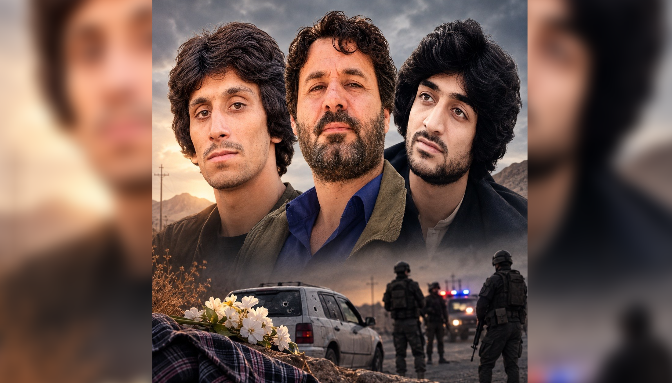
Hanżaleh Jamalzahi, Omid Jamalzahi, and Mobin Gangoozahi (Rigi)—three Baloch citizens—were shot and killed by military and security forces early this morning on the Lakhshak-Zahedan road. According to human rights sources and local witnesses, armed forces opened fire on their vehicle without issuing a stop command or prior warning, and after the vehicle was immobilized, two of the passengers were shot execution-style. If this account is verified, we are facing an extremely serious allegation concerning the killing of apprehended individuals and a blatant violation of the right to life—an allegation that cannot be overlooked in silence by responsible authorities.
According to the Hengaw Human Rights Organization report, this incident occurred around 3 a.m. on Wednesday, November 20, 2026, on the Lakhshak-Zahedan road. The three Baloch citizens were returning from Tehran to Zahedan when plainclothes military and security forces opened fire on their vehicle.
According to information from the news collective “Halesh,” the identities of the deceased have been announced as Hanżaleh Jamalzahi, 30 years old; Omid Jamalzahi, 30 years old; and Mobin Gangoozahi, known as Rigi, 34 years old. All three were from Mirjaveh and residents of Zahedan.
According to informed sources, armed forces opened fire on the vehicle without issuing a stop command or prior warning. After the vehicle was immobilized by gunfire, the forces approached it and, according to this account, killed Hanżaleh Jamalzahi and Mobin Gangoozahi with execution-style shots to the head and body, then left the scene.
The bodies of the three citizens were transferred to Zahedan’s forensic medicine center with assistance from local residents and emergency services. The families and relatives of the deceased were also present at the center. As of the time of this report’s publication, security and judicial authorities had provided no explanation regarding the shooting.
This incident cannot be examined separately from recurring reports of military and security forces shooting Baloch citizens. In many of these cases, victims are individuals who were targeted while in private vehicles or on public roads—people whose families, after their death, face ambiguity about the reason for the shooting and an absence of clear accountability.
According to the Hengaw Human Rights Organization’s annual report on the state of human rights in Iran in 2025, at least 74 citizens were killed by direct fire from government forces. Of these individuals, at least 44 were Baloch—approximately 60 percent of all recorded cases. These figures demonstrate that Baloch citizens have borne a disproportionate share of victims of direct shooting by government forces.
These figures represent cases documented by a human rights organization and do not necessarily encompass all incidents that have occurred. Nevertheless, the repetition of such reports underscores the necessity of an independent and transparent investigation into the conduct of armed forces in Baloch-populated areas.
According to United Nations principles on the use of force and firearms by law enforcement officials, intentional and lethal use of weapons is permitted only in circumstances where it is absolutely unavoidable for the protection of human life. Officers must employ non-violent methods to the greatest extent possible, preserve human life, and report any deaths resulting from the use of weapons.
Within such a framework, the allegation of shooting to the head and body of individuals whose vehicle had been immobilized constitutes something far beyond an ordinary shooting incident. If this part of the witnesses’ account is accurate, responsible authorities must explain why lethal force was used after the vehicle was stopped and what immediate threat, if any existed, could justify such an action.
Three families in Zahedan have lost their loved ones, and to date, based on available information, no formal and clear explanation has been provided regarding the reason for the shooting, the identity of the officers present at the scene, or the circumstances of the deaths. Merely transferring bodies to forensic medicine and filing a potential case does not constitute accountability.
It is essential that judicial and security authorities disclose the details of the operation, preserve footage from any available cameras and scene evidence, identify the officers involved, and conduct an independent and impartial investigation into the allegations of shooting without warning and execution-style killing. The families of the deceased must also have access to case information and the ability to pursue judicial remedies without intimidation or pressure.
The lives of Baloch citizens should not be treated as less valuable than those of other citizens on the roads of Sistan and Baluchestan. No armed force has the right to decide about people’s deaths without accountability and oversight. If the report of execution-style shooting is verified, this case must be investigated as a serious allegation of extrajudicial killing, not abandoned to oblivion in silence and obscurity.