Security Raid on Five Bahai Families in Semnan with Arrests, Confiscation of Books and Religious Symbols
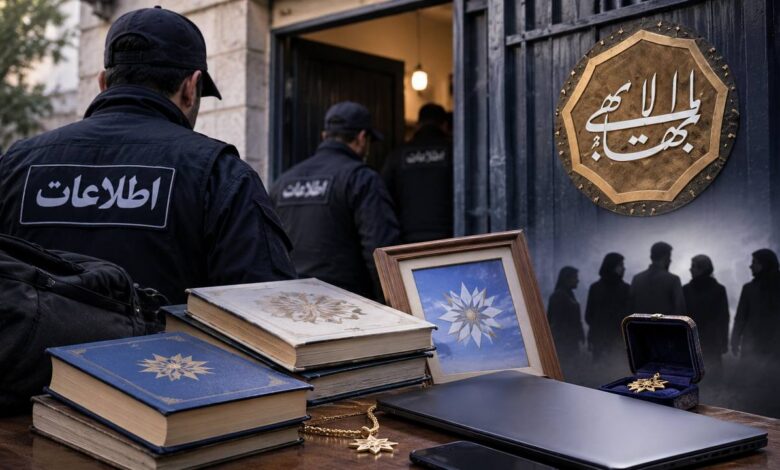
Intelligence forces of Semnan Province conducted simultaneous raids on the homes of five Bahai families and one business premises; three citizens named Behfar Khanjani, Hossam Tabanian, and Zahra Nikkhayyim were arrested and at least three other citizens faced summons or threats of summons. During these searches, officers confiscated mobile phones and laptops in addition to books, images, and jewelry related to the Bahai faith; an action that once again raises the question: why has the religious belief of citizens become a security issue in the Islamic Republic?
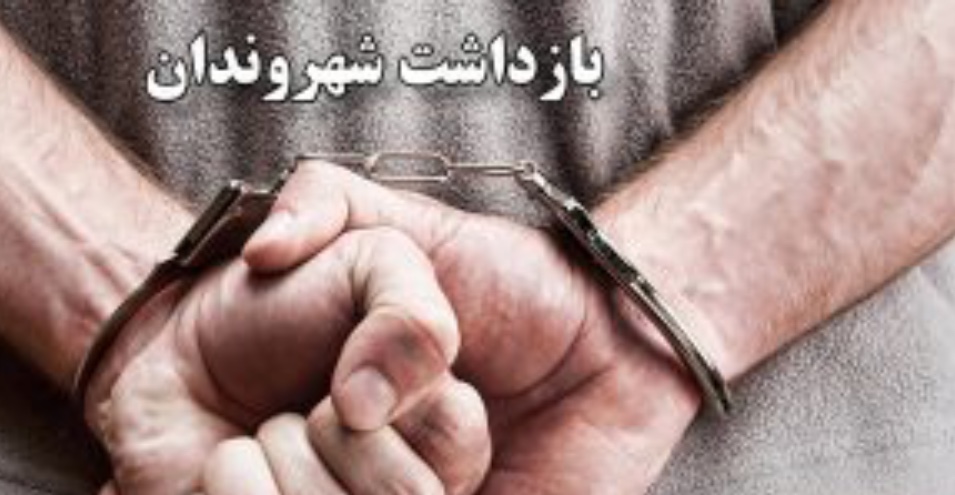
According to published reports, on Sunday, November 24 (November 15), the intelligence forces of Semnan Province simultaneously raided the homes of five Bahai families and the workplace of one of them. During this operation, Behfar Khanjani and the Bahai couple Hossam Tabanian and Zahra Nikkhayyim were arrested and transferred to an undisclosed location.
According to informed sources, officers first stopped Behfar Khanjani on the street and after beating and handcuffing him, took him to his home. His family residence was searched and mobile phones and laptops of family members were confiscated. In a report published by Hrana, it is stated that upon entering the home, officers found Khanjani’s daughter alone in the residence, an event that caused her severe distress. According to information received by Hrana, the search of this house lasted from 9 a.m. to 3 p.m.
In another phase of this operation, officers searched the home of Hossam Tabanian and his wife Zahra Nikkhayyim, Tabanian’s store, and his mother’s residence. This couple was arrested and their mobile phones and laptops were confiscated. Behfar Khanjani and Zahra Nikkhayyim have previously faced legal proceedings and endured imprisonment due to their religious beliefs.
Meanwhile, officers stopped Lida Perasate’s car on the street, searched her home and that of her husband Badih Nobakht, and took away the family’s electronic devices. Perasate was summoned to the intelligence office. The home of Babak Shabirin and Parvane Shabirin was also searched and this couple was informed they would be summoned in the future.
A notable point in this operation is the confiscation of items directly related to the families’ religious belief and identity. According to Hengaw’s report as well, officers confiscated books, images, and jewelry related to the Bahai faith in addition to electronic equipment and satellite receivers. As of the time this report was published, security authorities had not provided any explanation regarding the reason for this operation, possible charges against the detainees, or their place of detention.
Searching homes and confiscating personal property, especially in coordinated operations against several Bahai families, is not merely a routine administrative measure; particularly when items related to individuals’ religious beliefs are targeted. The confiscation of books, images, and religious jewelry raises the question: what connection exists between keeping these items in private homes and public security? If a specific charge exists against an individual, why should items related to their religious belief also be confiscated?
Article 23 of the Islamic Republic’s constitution clearly states that “investigation into beliefs is forbidden, and no one may be prosecuted or molested merely for holding a particular belief.” Article 22 also protects the honor, life, property, rights, home, and employment of individuals from violation, except in cases permitted by law. These articles at minimum raise serious questions about the necessity, legal basis, and proportionality of such searches.
Furthermore, Iran is a signatory to the International Covenant on Civil and Political Rights. Articles 17 and 18 of this covenant respectively protect privacy and the inviolability of home and family from arbitrary interference, as well as freedom of thought, conscience, and religion. These rights include the freedom to hold or adopt a belief and to express it individually or collectively, in private or in public. Therefore, mere affiliation with a religious faith cannot serve as grounds for arrest, deprivation, or security treatment.
The raid in Semnan city did not occur in a vacuum. Reports from human rights organizations in recent months indicate the continuation of arrests, prison sentences, home searches, property confiscation, and employment and educational restrictions against Bahai citizens in various parts of Iran.
Based on these organizations’ reports on the situation of Bahais in October 2026, at least two Bahai citizens were arrested that month, six faced prison sentences, and the homes of six Bahai families and one café were searched and their property confiscated. These organizations also reported in September that at least six Bahais were arrested, prison sentences were issued for four individuals, and the homes of at least seven families were searched.
The U.S. Commission on International Religious Freedom also expressed concern in its October 2026 country report on Iran regarding increased pressure on Bahais and Christians, arbitrary arrests, enforced disappearances, property confiscation, violent home searches, and reports of torture of detainees. The commission also noted the use of security charges and the portrayal of Bahais as enemies of the state.
Iran’s Bahai community has faced a set of restrictions and treatment for years; from educational and employment deprivation to arrest, property confiscation, and legal persecution. Bahais are not recognized in the Islamic Republic’s constitution as among the officially recognized religious minorities in Article 13, which names Zoroastrians, Jews, and Christians as recognized religious minorities. However, the official non-recognition of a religion does not authorize depriving its followers of fundamental human and civic rights.
The Semnan case is an example of a situation in which several families, without any specific charges being publicly announced, face simultaneous home searches, confiscation of personal property, and detention of family members. The arrest of three citizens and lack of knowledge about their place of detention also increases concerns about access to lawyers, contact with family, and fair legal proceedings.
No citizen should be subjected to intimidation, arrest, or deprivation because of their religious belief. Security, freedom, and the right to live with dignity are not privileges that a government should reserve only for followers of its approved religions. As long as Bahai citizens, Christians, Zoroastrians, and other minorities are targeted by security operations due to their beliefs and even their books and religious symbols are confiscated, claims of respect for freedom of thought will remain at odds with the actual conduct of government institutions.