When Quds Force Fears Economic Collapse: “Take Tehran Bazaar Protests Seriously”
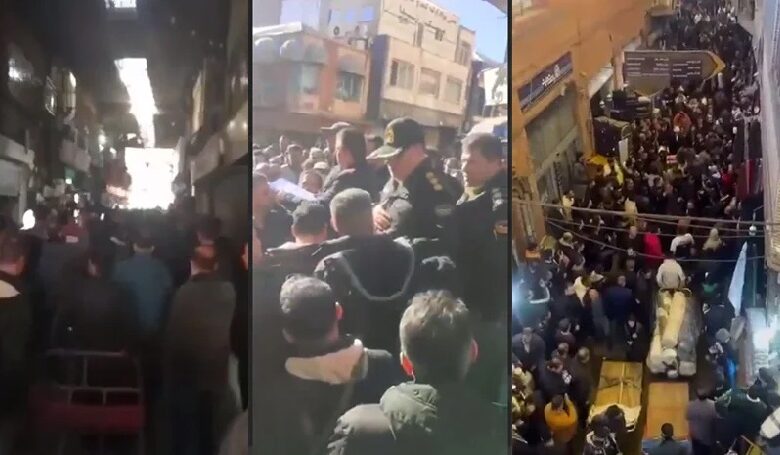
The government’s negligence in controlling the economic crisis has prompted the Quds Force channel to warn about Tehran bazaar demonstrations and highlight the scale of the economic crisis in light of the protests.
On Sunday, December 28, corresponding to December 7 on the Iranian calendar, vast sections of Tehran’s bazaar witnessed a wave of strikes and protests rooted in economic pressure, sharp currency rate increases, and declining purchasing power among the people. This situation, which continued through Monday, December 29 (December 8 on the Iranian calendar), became so acute that even official channels close to the Islamic Republic’s security institutions expressed concern—a rare occurrence demonstrating the depth of the crisis.
The Telegram channel affiliated with the Quds Force wrote in a message moments ago: “It is expected that officials respond properly to the people’s protests, otherwise the path will be paved for another Israeli war.” This explicit stance reveals not only fear of intensifying domestic unrest, but also apprehension about the regional consequences of instability in Iran.
These protests began on Sunday, the 7th of Dey month, when merchants in Tehran’s Alaoddin Mobile Passage closed their shops and began their protest from inside the passage with chants such as: “Don’t be afraid, don’t be afraid / We are all together.” The gathering then spread to areas around Hafez Bridge and Jumhuri Street, where protesters attempted to encourage other bazaar merchants and citizens to join them.
Videos published on social media show that these strikes have spread from the Alaoddin Passage to the Charsou commercial complex, Shoush Bazaar, Chaharsoogh Bazaar, and other locations.
Through closing shops and blocking commercial routes, protesters expressed their dissatisfaction with Iran’s deteriorating economic situation and emphasized the necessity of unity and mutual support.
One of the main factors behind the merchants’ anger is the unprecedented increase in the dollar exchange rate. In recent days, the peak of protests coincided with the dollar’s price surge in the free market, which exceeded 144,000 tomans, representing a significant increase compared to approximately 114,000 tomans a month earlier.
This surge has affected not only commodity prices but also import costs, goods prices, and ultimately the daily livelihood of the people. This same economic pressure has caused even traditional and historic bazaars like Tehran Bazaar, which have demonstrated resilience through years of crisis, to join in protest.
Today’s protests in Tehran Bazaar are part of a broader wave of economic discontent that has engulfed other sectors of Iranian society in 2025. Multiple sources have reported workers’ strikes, retiree gatherings, and occupational protests from various groups, indicating that this widespread protest demonstrates the crisis extends beyond any single sector.
With the Quds Force channel’s warning about the dangers of these protests’ consequences, it has implicitly shown that even media outlets close to those in power are no longer denying the economic and social situation and have indirectly demanded accountability from officials.
Although no direct reports of violent suppression of protesters have been published at the time of this report, the atmosphere of economic and political discontent is evident in Tehran’s streets. In the published videos, protesters have also chanted slogans such as: “Police / Support, support,” which may indicate pressure for more constructive engagement with security forces rather than harsh crackdowns.
With the continued fall in the rial’s value and rising living costs, analysts believe these protests could strengthen the pattern of occupational and public protests in the coming months—a matter that has been addressed and raised not only by civil society but also by media outlets connected to the power structure.