Claims of Armenian Equality in Iran Contradicted by Prison Sentences and Church Confiscation
The Chief Justice of the Islamic Republic claimed during a meeting with an Armenian delegation that Armenians in Iran enjoy equal civil rights with others; however, the cases of Christian citizens sentenced to lengthy prison terms, restrictions on worship in the Persian language, and the confiscation of the St. Peter’s Evangelical Church complex in Tehran present a different picture of religious freedom in Iran.
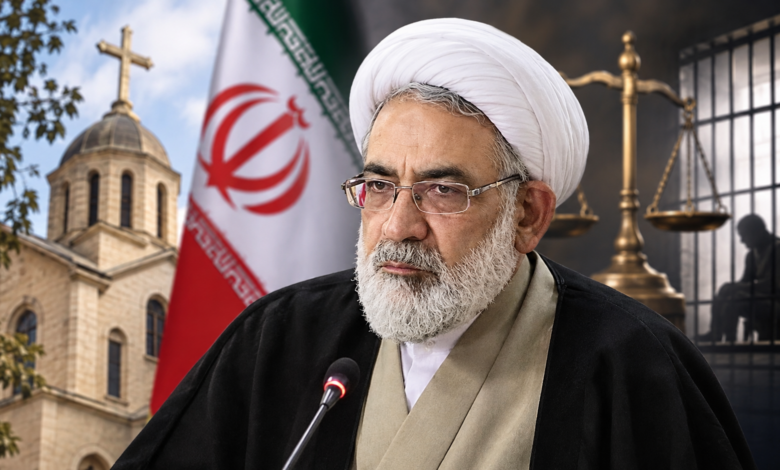
Mohammad Jafar Montazeri, Chief Justice of the Islamic Republic, said on Wednesday, November 18, during a meeting with an official delegation from Armenia’s Investigation and Inspection Committee, that Armenians in Iran have no difference in civil rights compared to other citizens. He also cited Armenians’ representation in the Islamic Consultative Assembly and the handling of their personal affairs, including marriage, divorce, and inheritance, according to their own religious regulations, as signs of the government’s respect for religious minorities.
These statements come at a time when reports from human rights organizations and legal cases of Christian citizens raise serious questions about the actual scope of this equality. Having a representative in parliament and official recognition of a religious community in the constitution does not, by itself, mean enjoying full freedom of worship, religious activities, access to churches, and immunity from security measures.
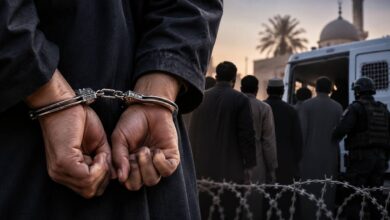
One clear example of this contradiction is the case of Lida Alexani, an Armenian-descended Christian citizen, and her husband Joseph Shahbazian. Alexani was arrested on April 13, 2025, during a raid on her home by Ministry of Intelligence officers and was released on bail after about a month. The Tehran Revolutionary Court sentenced her to eight years in prison in December of that year, a verdict confirmed on appeal in June 2026.
In October 2025, Alexani was summoned to serve her sentence and was given three days to report to the judicial authority. Her husband, Joseph Shahbazian, was also sentenced to ten years in prison and is currently serving his sentence in Evin Prison.
According to Hrana’s report, citing Article 18, in the indictment of this case, organizing and running a home church, holding religious meetings, and conducting rituals such as baptism and communion were listed as examples of the charges. Human rights reports also mention Christian prayer meetings and religious ceremonies, including Christmas, as part of the activities cited in this case.
This case extends beyond prison sentences. Joseph Shahbazian’s mother died in April 2025, and he was denied the opportunity to attend his mother’s funeral. Lida Alexani, who was arrested a few days before the ceremony, was also unable to attend. Depriving a family of a final farewell to a mother and wife demonstrates the human dimension of the pressures that extend beyond legal punishment, affecting the lives of families of prisoners of conscience.
Another example is the case of Hakob Kutchumyan, an Armenian citizen and Christian who has been detained in Iran since August 2023 and is serving a ten-year sentence in Evin Prison. The U.S. Commission on International Religious Freedom (USCIRF) has also listed his name among prisoners of conscience.
According to the Christian Solidarity Worldwide report, one of the charges against Kutchumyan was possession of seven volumes of the Bible in Persian; books that he allegedly prepared for a number of Iranian Christians. In the information released from his case file, the charge of Christian proselytism was also raised. Therefore, while possession of a Persian Bible was not the only charge in his case, this issue alone raises a fundamental question about the government’s treatment of citizens’ access to religious texts.
Pressure on Christians is not limited to arrest and prison cases. In July 2026, United Nations human rights experts condemned the confiscation of the St. Peter’s Evangelical Church complex in Tehran and the eviction of 27 Christian Armenian and Assyrian citizens living there.
This historic complex, dating back approximately 150 years, was not merely a place of worship; it housed a church, two schools, residential homes, and offices of Christian organizations including the Bible Society. According to UN experts, the families living in this complex, many of whom were from low-income groups, were given only two weeks to vacate their homes. They also reported threats made to church leaders of arrest if they resisted the eviction.
UN experts emphasized that the confiscation of this complex and the eviction of its residents are part of a long-standing process of restricting Christian worship, particularly worship in the Persian language. The World Council of Churches also issued a statement calling for the return of the complex to the Council of Evangelical Churches in Iran and the restoration of the residents’ and church members’ ability to return.
An updated report by the British Foreign Office on Christians in Iran from October 2026 made an important point about the status of Christian minorities: “Armenians and Assyrians are recognized in the Constitution and have the ability to conduct religious activities within a limited framework, but holding church services in the Persian language is prohibited. Churches must be registered, and the presence of converts in official church services can have security consequences for the church and its officials.” The report also mentions surveillance of churches and the closure of premises that have failed to comply with designated restrictions.
Thus, even Christian citizens belonging to historic and officially recognized communities face restrictions in using the Persian language for worship and communication with other Christians. Convert Christian citizens also face greater risk of arrest and legal prosecution.
The U.S. Commission on International Religious Freedom stated in its October 2026 Country Report that by June of that year, at least 63 Christians had been detained for their beliefs or religious activities; 38 were serving their sentences and 25 were in pre-trial detention. The report states that the majority of those formally charged are convert Christians, and vague security and religious charges, including alleged proselytism against Islam, have been used in their cases.
The Chief Justice’s claim about Armenians enjoying equal rights stands in stark contrast to a clear question: If Christian citizens enjoy equal rights, why can conducting prayer services, communion, and baptism be cited as charges in legal cases? Why is access to the Persian Bible and worship in the Persian language restricted? And how can one speak of respect for religious minorities when a historic church complex is confiscated and families living there are evicted from their homes?
Parliamentary representation and formal recognition of religions acquire real meaning only when citizens can practice their religious rituals without fear of arrest and conviction, worship in the language of their choice, possess holy scriptures, and be assured of the security of their churches and religious properties.
The contradiction between official statements and the documented experience of Christian citizens cannot be overcome by repeating claims of equality. The true measure of respect for religious minorities is not speeches at diplomatic meetings, but the guarantee of their rights in courts, prisons, churches, and daily life.