Are Bible prophecies being fulfilled in Iran now?
Some analysts, referring to the verses of Jeremiah Chapter 49 in the Bible, spoke about the connection between the prophecies mentioned in this book and recent developments in Iran.
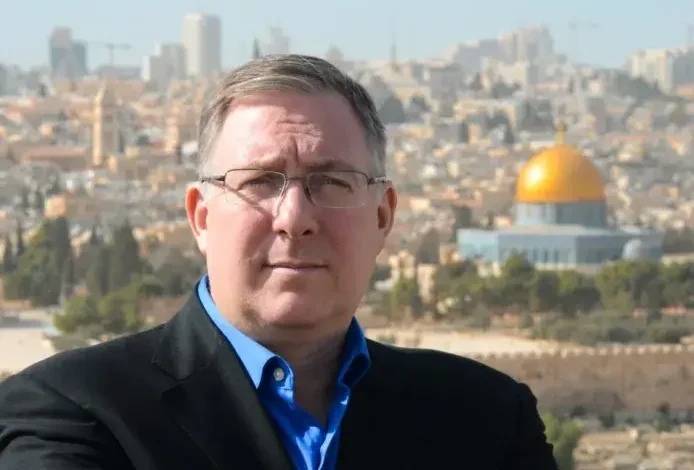
In recent days, some analysts close to the Protestant Christian community, such as Joel Rosenberg, an author and expert on Middle East issues, have attempted in their analytical programs to link the current developments in the Middle East with some parts of the Bible's prophecies, especially chapter 49 of the Book of Jeremiah.
Joel Rosenberg, an American-Israeli author and Christian activist who has written about Middle Eastern conflicts and biblical prophecy, has recently referred to verses 24-39 of chapter 49 of the Book of Jeremiah, which mentions “Elam,” a historical term that some have attributed to parts of ancient Iran.
In his interpretations and some Christian media, this section of the Book of Jeremiah is interpreted as follows:
- "Breaking the bow of Elam" is a symbol of the destruction of the country's military power. He linked this phrase to the weakening of Iran's current missile and weapons capabilities.
- The verse that speaks of the dispersion of the people has been attributed to the widespread migration of Iranians after the 1979 revolution and the formation of an Iranian community abroad.
- Some other verses are also attributed to "God's severe judgment," which, according to him, affects the Iranian political regime and not ordinary people.
- He also interpreted that the phrase "I will set my throne in Elam" could refer to some kind of great spiritual transformation in Iran.
It should be noted that these are the personal and religious interpretations of the analyst and not historical or event certainty proven in non-religious or academic sources.
These views are essentially theological interpretations, not independent political or military analysis; therefore, they cannot be definitively translated into actual trends.
No reputable news source or independent political analysis endorses such predictions as certainties. In fact, most media outlets point out that these types of prophetic interpretations are common among religious scholars and churches and are not necessarily a true reflection of political events.
For example, Rosenberg has repeatedly said in past interviews that prophetic interpretation should be viewed with caution and that the Bible does not specifically speak about when or exactly how events will occur (although he sees it as relevant to modern events).
He also referred to the Book of Jeremiah, Chapter 49, which says: "I will blow against them winds from all over the world, and I will scatter its people everywhere, and I will bring my fierce anger upon it, and I will destroy its king and princes," referring to the migration of many Iranians to all corners of the world and regime change, and stated: "These people want regime change. God says that in the last days of history, he will bring regime change."
The views of Rosenberg and other religious analysts about the connection between developments in the Middle East and the verses of Jeremiah exist and are being discussed in Christian faith media. But these views have not been confirmed as proven fact by independent political or historical sources.