Forcing victims to remain silent is one of the obstacles to justice for the past.
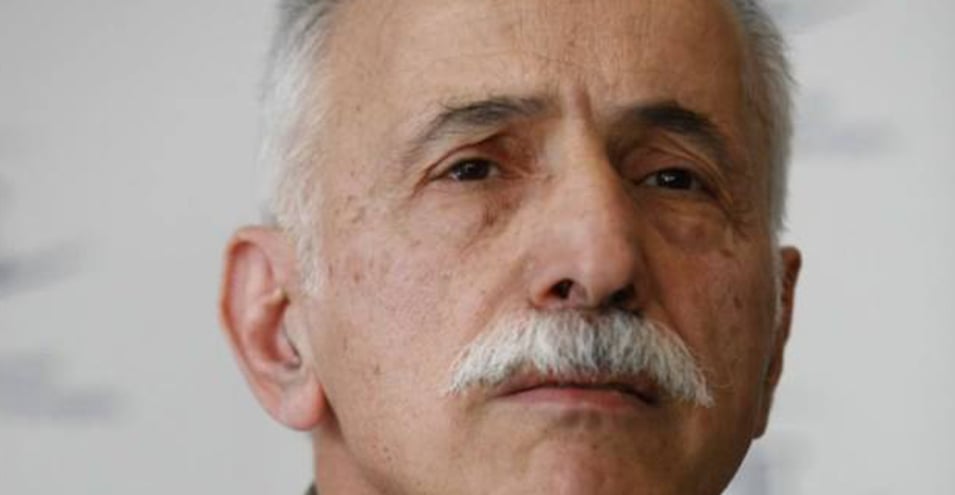
ASO Interview with Abdul Karim Lahiji, Former and Honorary President of the International Federation of Human Rights Societies
In this interview, the lawyer and founder of the Society for the Defense of Human Rights in Iran discusses the conditions for the realization of transitional justice and the obstacles to using international mechanisms. In his opinion, legal pursuit of cases such as the executions of the 1960s through UN institutions is conditional on the request and complaint of the victims, and there must be a private plaintiff to pursue such cases.
Aso: Do the principles emphasized in transitional justice, such as the right to know the truth, the right to access justice, reparation, and guarantees of non-repetition, only apply during the transition to democracy, or can they also be invoked to administer justice before the transition?
Abdul Karim Lahiji: Transitional justice or justice during the transition period means that after the developments leading to a change of government or government policies, what mechanisms should exist so that victims of violations of rights and freedoms can access justice and demand and receive their rights. But the issue is not only the type of government, but the main issue is the conditions that must be met so that the procedure can be called justice during the transition period and not something formal. For example, in some countries like Morocco, we see that the truth commission was formed by order of the king and has started working, but they have mostly tried to investigate cases that have not caused much anger in the government, and many victims are still waiting for more developments because no fundamental change has occurred and the structure of the government has not changed. It is true that the move towards democracy has begun in Morocco, but in the field of addressing grievances and ensuring the rights of all victims, the measures that have been taken are not yet such that we can say that justice during the transition period has truly been achieved.
In fact, it is a process that may take years and decades to realize these four basic principles and when we say knowing the truth, we mean the whole truth.
In fact, to fully realize these four basic principles of transitional justice, there must be an independent judiciary and a system in place where, if the government or its agents violate the rights of the people, they can complain to independent institutions and seek redress. Laws must also be changed and laws must be enacted that recognize the fundamental rights and freedoms of the people and provide criminal guarantees for perpetrators of human rights violations.
Before these changes occur, are there international laws that can force a government like Iran to confront its past and that can be used in international courts to investigate past human rights violations?
A.L: The International Criminal Court does not try states and governments, but individuals who commit these crimes. In addition, it only includes countries that have accepted the statute of this court, but many countries, including the United States, Russia, Israel and Iran, have not yet accepted this statute. Of course, an exception is when the UN Security Council asks the criminal court to investigate a crime that occurred in a country, such as the case of Libya in the months before the fall of Gaddafi or the case of Mohamed Bashir, President of Sudan, who went to the International Criminal Court at the request of the Security Council. There is no other international court to investigate cases such as the 1967 massacre in Iran. However, the UN Human Rights Council has periodic reviews that regularly examine human rights violations in all countries. There are also mechanisms such as the UN Special Rapporteur on a specific country and the UN thematic rapporteurs that can be referred to. However, even when the UN Human Rights Council issues a resolution on human rights violations in a country, it can only recommend and pressure the human rights-violating country to reconsider its practices, and in fact, these resolutions have no guarantee of implementation.
Over the past three decades, to what extent have Iranian activists used these UN mechanisms to address gross human rights violations in the past, including the execution of political prisoners and violations of the rights of Baha'is?
A.L.: As a human rights activist, I do not consider myself authorized to open a case for a victim at the United Nations and pursue the matter until the family of a victim or the victim of a human rights violation contacts me and expresses their consent.
Due to the closure and suppression of human rights institutions in the early years after the revolution, unfortunately, there were no institutions left to defend human rights in Iran for many years. In the following years, several human rights institutions were established outside Iran, but due to the Iran-Iraq war and the severance of relations between Iran and the international community, it was a very difficult time. In addition, there was no mass media in its current form, no internet, and even no fax, and we, as human rights activists, had to somehow obtain news from inside Iran and provide it to the Special Rapporteur on Iran. In the last years of the Hashemi and Khatami presidencies, it was in continuation of these efforts that the Special Rapporteur and thematic rapporteurs went to Iran and reported.
Yes, these things were done, but all of this was and is focused on human rights violations that are happening now. Can we use the mechanisms of the United Nations in a way that can address past human rights violations?
A.L.: It is not that information was only given and these institutions and mechanisms were not used. Part of the changes that occurred in the human rights situation in Iran during the Rafsanjani and Khatami eras were the result of the activities of activists and their connection with UN institutions and UN rapporteurs.
But have you managed to apply the same method to, for example, the executions of the 1960s, so that some UN rapporteurs will address these issues in their reports?
A.L.: We have given the list of those executed to the UN Special Rapporteurs at various times and to the Rapporteur on Arbitrary Executions, but the problem we had and still have in the field of activity regarding the 1967 massacre is that many families, especially those in Iran, are not willing to put their names on a complaint due to the conditions of repression and suffocation prevailing in Iran. Of course, this has happened outside of Iran, and at least we ourselves in the human rights community have given the names of 30 to 40 of the executed to the relevant institutions in the last 15 years, because you know that there must be a private complainant to follow up on this issue.
But human rights institutions can also follow up on this issue themselves, and in some cases, such as the UN Working Group on Enforced Disappearances, it is not necessary for the family to intervene. If a human rights institution has reliable information about the case in question, it can register and follow it up, and it is acceptable to the Committee.
A.L: This is not just a question of law, it is also a question of ethics. Even in the case of arrest, you know that in Iran, many families, due to the pressure, suffocation, and intimidation that exists, do not want the arrest of one of their family members to be mentioned in the news media or reported to the international community in the first days and weeks. Unfortunately, this situation exists, and it is the same with the victims and the executed.
In these cases, when international action is taken through the UN, it is communicated to the Iranian government and they demand answers from Iran. Many families have been repeatedly threatened that if they take action, their pensions will be cut off or they will be threatened with dismissal from their jobs, and not everyone is willing to take this risk. As a human rights activist, I do not consider myself authorized to open a case for a victim at the UN and follow up on the matter until the family of a victim or the victim himself contacts me and expresses his agreement. In fact, the task of a human rights activist is not to settle scores with the government or to form an investigation team that only wants to find out the number of deaths. Therefore, nothing can be done until the complainant as a victim or survivor of a victim requests it. The right to know the truth that we emphasize first belongs to the victims themselves, and then to the people, society, history, and the effects and results of this investigation and investigation during the transition period.
But can't human rights activists go to the families themselves, because the families may not be aware of these mechanisms at all?
A.L.: No, it cannot be said that the families are not aware of it now. These complaints should be transformed from anonymous and collective complaints by the families and turned into public complaints. Otherwise, the rapporteur or the UN body will not have the same effect. Unfortunately, this situation has not yet arisen. All these years, political groups have also wanted to use this category as a goodwill gesture, and whenever a voice was raised, it was from political groups, and human rights organizations cannot get involved in such a matter. I still maintain that as long as the victim or the survivors of the victim do not complain, I, as a human rights activist and lawyer, will not allow myself to get involved in such a matter. The same procedure has existed in human rights organizations in other countries, as well as in countries that were seeking transitional justice. However, everyone has a system, and this is how we have operated and will operate, and this has been our framework and practice for the past three decades.
Source: LDDHI