Female political prisoners from Evin protest against “misogynistic rule”
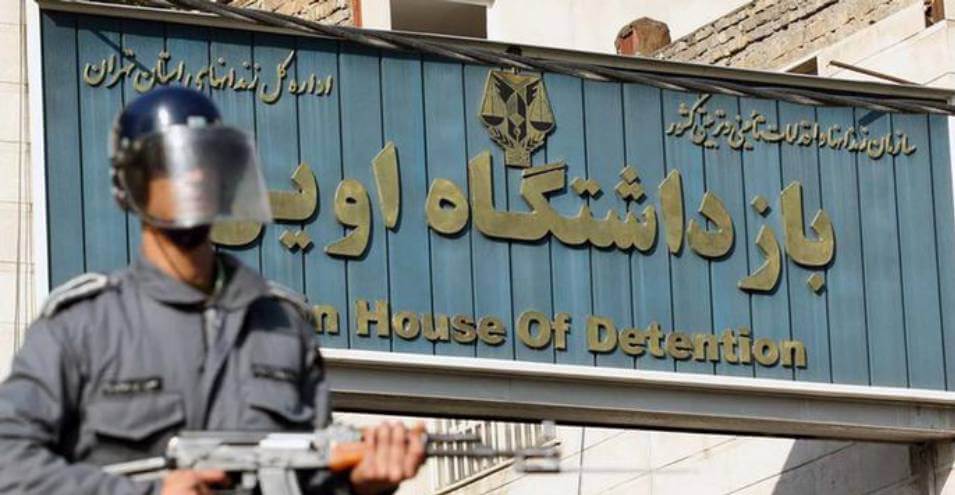
A number of female political prisoners from Evin issued a statement protesting the “oppression and injustice against women.” According to them, “the awakened conscience of society will not tolerate these oppressions” and will soon “provide for the liberation of suffering mothers.”
Several female political prisoners imprisoned in Evin have issued a statement protesting the Islamic Republic's "misogynistic" approach and "inhumane and unjust behavior," declaring that "society will not tolerate these oppressions."
In their statement, the text of which was published on the website of the Center for Human Rights Defenders in Iran, the women imprisoned in Evin Prison referred to “the years of conflict between the dominant power and the desire for freedom and justice,” and wrote, among other things: “This conflict and battle have been most clearly manifested in the government’s confrontation with mothers and motherhood over the years.”
The signatories of this statement stated that “despite emphasizing women’s motherhood to confine them to the home, the government does not tolerate the motherhood of protesting women,” and wrote: “Many women have given birth to and raised their children in prison; some mothers have even been denied the right to see their children’s bodies and burial sites; some mothers have been sent to prison for the crime of seeking revenge for their children or demanding their children’s release; or they have been forced to abandon their children who are only a few months old and have spent years in prison without even a day’s leave, separated from their children; mothers who have been denied even the right to visit and see their children in prison visiting halls; and restless mothers endure similar suffering behind prison doors, waiting for hours for their most obvious right and to hold their children in their arms.”
The government's "inhumane" treatment of women
The protest statement of female political prisoners from Evin continued by referring to the “misogynistic government’s struggle with women and mothers who have stood up for freedom and justice,” and cited examples of “inhumane treatment” of these women and mothers, writing: “In just the past few months, Farangis Mazloum was arrested for defending her son, Soheil Arabi, despite her illness. Alireza Shirmohammadi’s mother lost her son in prison due to not having 80 million tomans of bail. Raheleh Asl Ahmadi was arrested for demanding the release of her son, Saba Kord Afshari, and numerous other cases.”
Female political prisoners imprisoned in Evin have also addressed the latest cases of this type of treatment and wrote: "Nazanin Zaghari's 5-year-old daughter, Gisso Ratcliffe, was forced to leave Iran to live with her father after 3 years and 8 months away from her mother. This is while the authorities have implicitly conditioned her release on the outcome of negotiations and deals with Britain, and what is being ignored in the meantime are human beings, their rights, justice, and truth. From this perspective, the actions of both governments are two sides of the same coin."
Nazanin Zaghari, a dual Iranian-British citizen who was sentenced to five years in prison for participating in a "soft coup", herself criticized the Islamic Republic's performance in her case in a letter from Evin about two weeks ago, stating that "my country auctioned me off for a huge sum of money" and that "politicians" were using her and her daughter as "tools" to achieve their goals.
“Society will not tolerate these oppressions”
The statement of political prisoners imprisoned in Evin continues: "We, the signatories of this statement, some of whom have experienced the long years of suffering of our children, once again declare our protest against the oppression of women, inhumane treatment, and injustice."
The signatories of this statement have finally emphasized that Iranian women, “on this side or that side of the prison wall,” believe that “the awakened conscience of society will not tolerate these oppressions, and not too late, but at the dawn of time, with action and determination, and at every moment, it will provide for the liberation of the suffering mothers of this land. Hand in hand, in the hope of brighter days, let us raise the voices of mothers in prison, for this act is the key to liberating the painful conscience of human society.”
The statement of women prisoners in Evin, dated October 1399, has been signed by 17 of these political prisoners. Yasmin Ariani, Maryam Akbari Monfared, Sima Entesari, Aras Amiri, Marzieh Amiri Ghahfarkhi, Leila Hassanzadeh, Nazanin Zaghari, Zahra Zehtabchi, Atena Daemi, Fatemeh Ziaei, Monireh Arabshahi, Negin Ghadmian, Saba Kord Afshari, Neda Naji, Narges Mohammadi, Fereshteh Mohammadi, and Sepideh Moradi are the signatories of this protest statement.
Source: DW