A repressive force's confession about the government's brutal crimes against the people
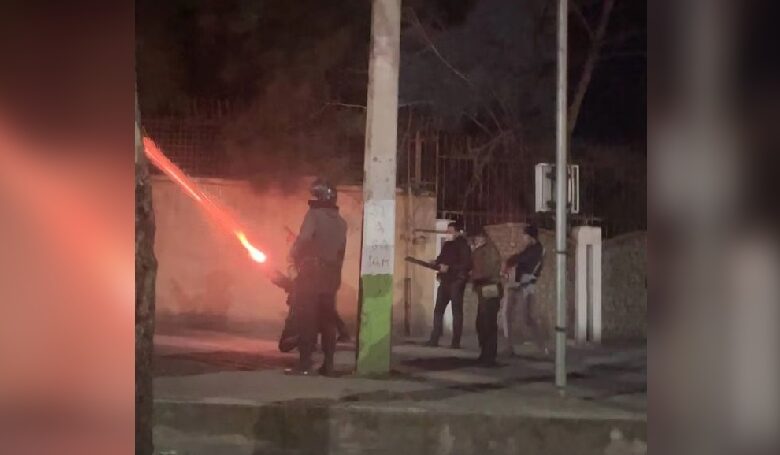
A crackdown force's shocking account of the government's planned massacre and operation reveals revelations about distributing weapons to thugs, firing live ammunition at the wounded, and using refrigerated trucks to transport bodies.
On the bloody days of January 8 and 9, the streets of Tehran became the scene of one of the most horrific crackdowns in Iran's contemporary history, an event that was not only a reaction to popular protests, but, according to a number of observers and witnesses, was a planned, widespread, and targeted operation to brutally massacre protesting people.
While international sources and media reports such as Reuters have confirmed the implementation of a severe crackdown, a repressive security force known by the pseudonym Kazem has now revealed shocking details of the involvement, orders and operations at the heart of the crackdown.
Kazem, a 40-year-old man living in Tehran who has had connections with government institutions in the past due to family ties, says that during these two bloody nights he was a member of the repression machine, although he emphasizes: "My hands are not stained with anyone's blood."
He says that after being detained for a period by the Revolutionary Guards' intelligence service, which he considers "a bad mistake," he was released on the condition of cooperation and, under pressure and death threats, was forced to accompany the security forces.
He recounts that on the evening of Wednesday, January 7, he received a call and was suddenly summoned to the Vali-Asr barracks of the Revolutionary Guards; the center from which the dispatch and management of the suppression forces in Tehran is directed.
In Kazem's account, he explains that the forces at that meeting were divided into different groups; some were in civilian clothes or in the appearance of employees, and another group was a thug type: "Apart from a few familiar people, two types of people were seen there. A number were also thugs and they behaved very brutally."
He says that a number of people were given brief weapons training and, based on their experience, were given permission to use Kalashnikovs, pistols, and bullets. This unprecedented distribution of weapons to civilians and plainclothes is contrary to the government's official claim that only formal forces were involved in the crackdown. Human rights sources have previously reported the presence of informal forces and plainclothes in the crackdown.
He has uncovered two new patterns in the killings during these nights that he says were unprecedented. One was the hunting of “leaders” or prominent activists of the protesters, whom Kazem describes as follows: “After identifying the target, they would shoot them in the back of the head with a Colt at close range.”
He calls the second pattern "death ambush" and says: "They would lead the crowd, frightened by the sound of gunfire, into dead-end alleys, where no one was supposed to be arrested, they were supposed to be killed."
These tactics show that the goal of the repressive forces was not to neutralize the protest, but to maximize the number of deaths.
The most difficult part of the story is when he encountered the wounded on the street. “He begged me not to hit him, I have a small child,” Kazem says. He continues that at that moment he witnessed an armed officer firing at the wounded, even as the defenseless man begged. “When he was sure he was alive, he shot him in the head at close range,” he adds.
Another of the most horrifying parts of the narrative is the use of refrigerated trucks from the Mihan ice cream company to transport the bodies. Kazem says: “Like the 1401 protests, Mihan ice cream refrigerated trucks were used here too. I myself helped load the bodies.”
He even witnessed one of his companions remove the necklace and earrings of a murdered girl and put them in his pocket before shooting her.
Independent human rights sources, including reports from Human Rights Watch and other reputable media outlets, have also confirmed cases of victims' bodies being transported in unprofessional containers and trucks.
Kazem estimates that more than 200 children were killed in Tehran during these two nights, a number that, while not yet independently verifiable, is consistent with visual evidence and field reports.
He also confirmed the presence of the Popular Mobilization Forces (PMF) during the nights of repression in Tehran, saying: "The absolute majority of the operating forces were IRGC, plainclothes, Basij, and security forces, but I saw a small number of PMF forces."
Kazem also explicitly states that the burning of banks and mosques was the work of the security forces themselves, and in many cases, before the fire, people were asked to leave the area to allow for cleanup.
International media and human rights reports have spoken of widespread killings, the use of arson, and the use of unofficial forces in the repression. Also, verified video reports have shown that in many areas, security forces have targeted the protesting population, even though the protesters were completely unarmed.
Kazem’s account, while shocking and personal, is framed within the context of numerous international reports and eyewitness testimonies. The Iranian government has not only responded violently to protests, but has also implemented an organized version of repression and massacre, including training and distributing weapons to informal forces, deadly ambush tactics, lethal shooting of the wounded, and the use of inhumane means to transport bodies.
Iran is at the heart of a human rights crisis that has not only targeted protests but has also put the lives of children, youth, and defenseless citizens at risk in an unprecedented manner.