New revelations about Mansouri, the fugitive judge accused of financial corruption
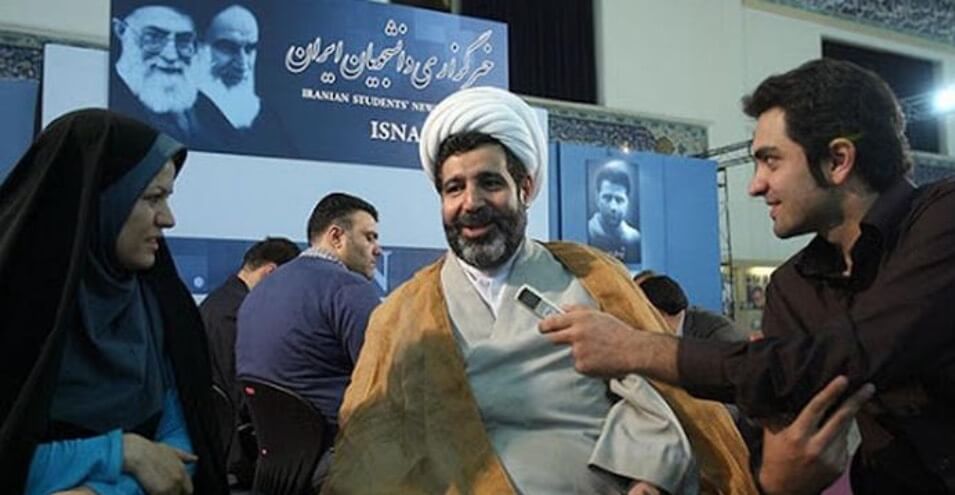
Jam TV announced that Judge Mansouri took the brothers and sister of its director hostage in 2012 to force the network to close. Meanwhile, Mansouri has claimed that he is abroad for medical treatment and that the coronavirus has prevented him from returning to the country.
In the first trial session of Akbar Tabari and about twenty other defendants, which was held yesterday, June 8, the naming of some defendants, including Gholamreza Mansouri, who was for a time an inspector and head of the Culture and Media Prosecutor's Office, has led to many reactions and revelations.
During the presidency of Mahmoud Hashemi Shahroudi, Tabari was the director general of the financial affairs of the judiciary. During the presidency of Sadeq Larijani, he was appointed as the executive deputy head of the judiciary, retaining this position.
Mansouri, a senior judicial official during Larijani's tenure, is now the ninth defendant in a corruption and bribery case. According to Rasoul Ghahremani, his attorney is a fugitive and is accused of receiving a bribe of 500,000 euros. In response to these interactions and accusations, on Monday evening, June 9, Mansouri released a video message claiming that he was abroad for medical treatment and that he could not return to the country simply because the borders were closed due to the coronavirus.
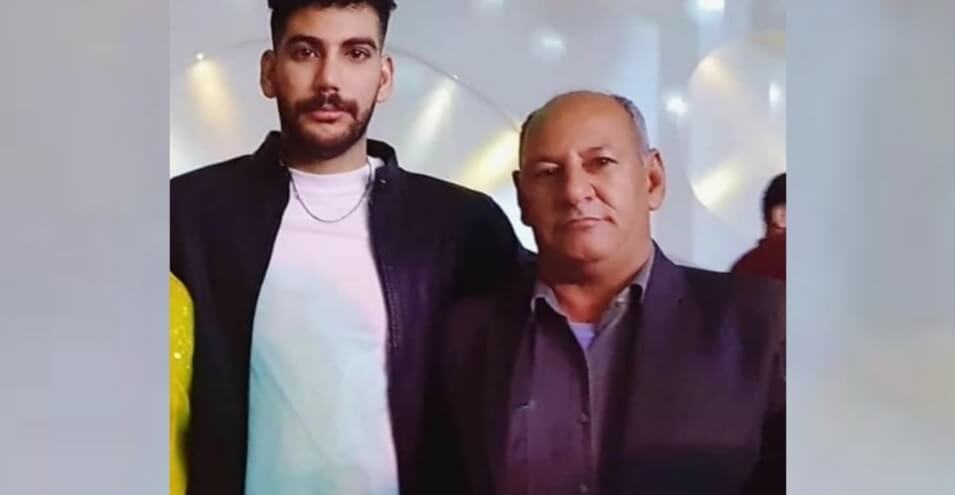
Meanwhile, after revelations by a number of journalists and political activists who were imprisoned by Mansouri's order or his intervention, GEM TV also revealed for the first time on June 9, in a post published on social media, that Judge Mansouri "took the relatives of the network's director, Saeed Karimian, hostage in 2012 and imprisoned them for a long time in the country's most secure prisons and in the worst possible conditions."
"Hostage-taking" of relatives of Jam Network manager
The post states that the goal of pressuring Karimian was to force the closure of Jam Network, but even after the network was temporarily closed for ten days, his brothers and sister were not released from prison.
Jam TV Network wrote: "This pressure continued in the form of publishing yellow news and dirty rumors about Saeed Karimian and attempts to assassinate him, putting pressure on the families of the media personnel in Iran, and ultimately led to the assassination of Saeed Karimian in 2017."
Karimian was the target of an armed attack and assassinated in Istanbul in May 2017. In this attack, the assailants fired 27 bullets at the then-director of Jam TV and a Kuwaiti businessman accompanying him, killing both of them.
Simultaneously with the publication of this statement, Abbas Amirifar, Secretary General of the Provincial Preachers' Association, Imam of the Presidential Institution Mosque in the first administration, and Cultural Advisor to the institution in the second administration of Mahmoud Ahmadinejad, in a note published on Ensaf News, held Judge Mansouri and Sadegh Larijani responsible for his mistreatment.
Fugitive judge, special judge Larijani?
Amirifar wrote in this note: "The same filthy person and special judge named Gholamreza Mansouri and special judge Sadeq Larijani detained me in 2011 on the false charge of assisting in the release of the CD "Zhohor is Near" on the orders of Sadeq Larijani, without any legal charges, for 52 days in solitary confinement in Ward 241 of the Hafa Qovah Prison, and after 8 years, he officially announced that I was acquitted and retired before the arrival of Ayatollah Raisi I on the orders of Sadeq Larijani, and finally fled the country for fear of being arrested for bribery!"
Akbar Tabari was dismissed in late 2018, with the beginning of Ebrahim Raisi's presidency of the judiciary, and was arrested by IRGC intelligence agents in late July of the following year.
After the news of Akbar Tabari's arrest was published, there was much discussion about his connection with Sadegh Larijani, who was appointed head of the Expediency Discernment Council at the time.
The Office of the Advisory Council later issued a statement denying the allegations made against Tabari, writing: "Some of the allegations made against the deputy executive director of the presidential district had previously been investigated by the prosecutor's office and were proven false. The former head of the judiciary himself had independently investigated them and it had been proven to him that they were false."
Tabari's acquittal months before the trial began, and some other evidence, have put Sadegh Larijani under a lot of pressure. The news site "Asr Iran" wrote in an analysis of Tabari's trial that corruption of this magnitude could not have been carried out individually or by a small team, especially over many years.
The necessity of accountability for Sadegh Larijani
"Asr Iran" stated that Tabari was considered the second most powerful figure in the judiciary during the era of Sadegh Larijani and that his words were equivalent to the head of the judiciary's orders, and wrote: "The former head of the judiciary must also be held accountable for his actions towards Akbar Tabari within the framework of the law."
A day before the start of the trial of Akbar Tabari and his co-defendants, Amirifar welcomed the public nature of the trial and expressed hope that the trial of Sadegh Larijani would also be held soon.
A number of journalists who were imprisoned by a judge accused of accepting half a million euros in bribes have also reacted to the presence of his name among the defendants in the corruption case in the judiciary.
Journalist Hossein Mehrzad posted a picture of a number of journalists against whom Mansouri had issued sentences on Twitter, writing that these sentences were issued in February 2012, which was "perhaps the most difficult days of the 1990s for our profession."
Imprisoning media people “for the sake of God”
Akbar Montajabi, deputy editor of Sazandegi newspaper, also tweeted, referring to Mansouri's accusation of large-scale bribery and his absconding status, saying that he "issued arrest warrants for 20 journalists overnight in 2012."
Pouria Alemi, a satirist and journalist who, according to her, spent 34 days in solitary confinement with the “Mansouri judgment,” wrote in a note addressed to him: “You told my mother, ‘You are ruling for the sake of God.’ God must be pleased with you; because I read in the news that God has given you 500,000 euros and a one-way ticket to France as a reward.”
It is expected that in the coming days, more victims of judges whose names were also mentioned in the case of Akbar Tabari and his accomplices will come forward.
However, many critics believe that nothing will change until there is a serious change in the structure and context that is the orphanage and arena of action of "corruptors." The accused judges have been engaged in activities in this same judicial system for decades, for which they are now being tried in part.
In the case of people like Judge Mansouri, the only issue at hand is bribery and corruption. It is unclear what will happen to the potentially unjust verdicts issued by such judges, and who is responsible for the harm that journalists, political activists, and many citizens have suffered from these verdicts.
Source: DW