Religious minorities oppressed in Iran's elections
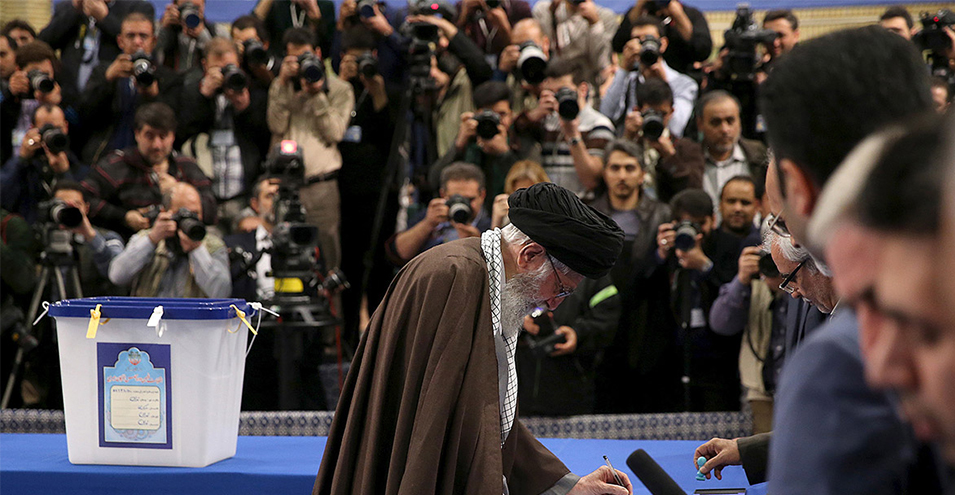
While the Islamic Consultative Assembly is responsible for overseeing city council elections and determining the qualifications of their candidates, on April 16 of this year, Ahmad Jannati, Secretary of the Guardian Council, issued a statement calling for the disqualification of candidates from non-Muslim religious minorities in city and village council elections in Muslim-majority areas.
According to FCNN, according to the Constitution of the Islamic Republic of Iran, religious minorities and followers of the Sunni religion are not given the right to run for president in Iran... Or is there a way to amend these legal articles in favor of the rights of religious minorities?
"According to the constitution, the official religion of Iran is Twelver Shia, and the only position recognized in the constitution is the post of president, which must be held by a Twelver Shia. As for other positions, whether appointed or elected, the legislator has not placed any restrictions on the holding of these positions by followers of non-Shiite religions."
According to Article 13 of the Constitution, Christian religious minorities, including Armenians and Assyrians, Kilims and Zoroastrians, are recognized minorities of the country, each of which has one or two representatives in the parliament and according to the Constitution, they swear by their own holy book and there are no other restrictions in this regard. Also, according to Note 1 of Article 26 of the Councils Law approved in 1975, minorities recognized in the constitution believe in their religious principles and swear by their own book. Therefore, there have been no restrictions in this regard so far. However, in the case of official religious minorities, the subject of Article 113 of the Constitution, they have only achieved representation in the parliament.
The letter from Ahmad Jannati, Secretary of the Guardian Council, to prevent the approval of candidates for religious minorities in city and village council elections is very surprising; since it is stated that in cities with a Muslim majority, minorities cannot participate in city council elections as candidates. He (Jannati) cited one of Imam Khomeini's speeches in which he said in October 1979 - he had said in general terms - that candidates for city councils must be Muslim, religious, and well-known. However, the constitution, the Covenant and Mother Law, was approved in November 1979, one month after the Imam's statements.
The Councils Law was passed in 1995 and rewritten in 2009. It was rewritten again in 2012 and 2013, but each time this law went to the Guardian Council, and the Guardian Council never raised any objections to Note 1 of Article 26. Now, why is Mr. Jannati worried after 21 years is a wonder?
The Guardian Council cannot, through a path that is not permitted by law, intervene in laws that have gone through the proper legislative procedures and declare a law unconstitutional, because this law has not been submitted to the Guardian Council and has not been challenged, so the steps for its amendment and approval have been fully implemented and it has already passed the Guardian Council's filter.
We must know that if this issue takes hold, under this pretext, the Guardian Council will expand its approval supervision of approved laws that have passed the legal process. According to Articles 19 and 22 of the Guardian Council's internal regulations, the Guardian Council cannot suddenly change a law that has undergone the procedures for amendment and approval and say that this law is against Sharia.
.
The failure to appoint followers of official religious minorities to the highest government positions has not been due to a legal prohibition. In any case, it is an innovation that has been and is spreading in the country. The constitution only briefly states that the president must be a Shiite; no legal prohibition has been declared for other positions. In any case, this is the prevailing administrative view in the country.
The role of religious minorities in the Iran-Iraq War is very thought-provoking… We had so many martyrs among religious minorities in the Iran-Iraq War. They were good during the war, but are they bad when they run for city council elections?
The Islamic Republic's governmental structure is defined by the principles and values of the Ja'fari Shia sect, which does not recognize separate rights for national and religious minorities. For the past thirty years, non-Persian ethnic groups and followers of non-Shiite sects have consistently criticized the treatment they have received as alien or second-class citizens.
Undoubtedly, the existence of religious minorities with different tendencies resulting from different cultures and civilizations leads to cultural and social diversity in every country, which strengthens and strengthens the country. In the meantime, one of the ways to achieve sustainable development is to pay more attention to human resources and human development; therefore, religious minorities can play a special role in the development and prosperity of the country.
According to unofficial estimates by religious organizations, Baha'is, Jews, Christians, Sabians, Mandaeans, and Zoroastrians make up two percent of the country's total population. Baha'is, with a population of between 300,000 and 350,000, are the largest non-Muslim religious minority. Unofficial estimates of the Jewish community range from 20,000 to 30,000.
According to the United Nations, there are 300,000 Christians in the country, mostly from the Armenian ethnic minority. Unofficial estimates put the country's Assyrian Christian population at between 10,000 and 20,000. Various Protestant denominations, including evangelical groups, also have a presence in the country. Christian groups abroad have estimated the Protestant Christian community at less than 10,000, although many Protestants are believed to keep their religion secret. The Sabean Mandaean community is estimated to number between 5,000 and 10,000. According to government figures, the Zoroastrians, a minority of Iranian origin, number between 30,000 and 35,000, while Zoroastrian groups put their population at 60,000.
According to the constitution, the Christian, Jewish, and Zoroastrian minorities are recognized as religious minorities, and therefore, followers of these religions have special rights in elections. Among the four types of national elections in Iran, religious minorities can only nominate candidates in the parliamentary and council elections. According to the note to Article 2 of the parliamentary election law, five of the total number of representatives are thus related to religious minorities. Zoroastrians and Jewish Christians can each have one representative, Assyrian and Chaldean Christians can have one representative together, and Armenian Christians from the south and north can each have one representative in the parliament.
In fact, this introduction is also limited to areas where minorities have a high population density, and of course, the number of their representatives can also increase based on the growth rate of their population. Therefore, a religious minority cannot be a candidate in a city where that minority does not have a high population density. Rather, a minority must simply represent its co-religionist. Although it may be said in practical terms that assuming such a person were to run, there would be no chance of winning the election given the Muslim population structure of that area, it can also be correctly inferred from the interpretation of this law and its implementation procedure that this is also prohibited by law.
However, the law on council elections is silent on how minorities can participate in elections. In fact, this law does not provide a quota for religious minorities, nor does it limit the number of elected representatives. Therefore, it would be theoretically possible to assume that the members of a city council are minorities. In the presidential and expert leadership elections, religious minorities do not have the right to nominate candidates. The constitution explicitly states that being Muslim and Shiite are one of the conditions for the presidency, and therefore religious minorities only have the right to vote. In the expert leadership elections, the condition of ijtihad in jurisprudence, which is one of the Islamic sciences, is also foreseen for those elected, so that the minority in question will have no role in these elections except for the right to vote.
In a brief summary of the above discussions, it can be concluded that religious and secular minorities, whether recognized or not in law, do not enjoy the same rights as other citizens in elections. But this is not the whole story. In fact, the restrictions imposed on all Iranian citizens who follow the official religion of the country by the political system are also imposed on religious and secular minorities in a more severe manner. Among these restrictions is the special supervision of the country's intelligence service over candidates who are introduced by religious minorities. The qualifications of these individuals are examined by the Special Department of Religions and Sects in the Ministry of Intelligence before being examined by the Guardian Council, and in some cases, candidates are nominated for election with the recommendation of this ministry. They also cooperate closely with this service during their presence in the parliament. Of course, these cases do not include religious converts. Muslims born to Christianity not only lack social rights from the perspective of the Islamic Republic system, but in some cases they are also arrested and prosecuted and sentenced to severe punishments, including death. Therefore, it can be said that their situation is similar to that of the followers of the Baha'i Faith.
The above studies show that religious and religious minorities within the framework of the theocracy in Iran have legal and extra-legal restrictions on participating in elections. In fact, if it is said that elections in Iran are very limited for the majority of the people in Iran, this restriction is much greater for minorities. Minorities can currently enjoy the chance to be present in decision-making centers as determined by law if they attract the attention of the intelligence and security services in terms of the level of their cooperation with them. In general, it can be said that none of the minorities in Iran can play a role in the country's micro and macro decision-making.