Ejei says handcuffs or restraints should only be used on defendants "in dangerous cases"
The head of Iran's judiciary issued orders today, during a joint meeting of the Supreme Council of the Judiciary and the Supreme Judicial Council of the provinces, which was held via video conference, regarding the method of arresting defendants, searching their homes, and using handcuffs and handcuffs.
Part of today's speech by Gholamhossein Mohseni Ejei, the head of Iran's judiciary, focused on the method of arresting defendants, searching their homes and workplaces, and using handcuffs and shackles.
Among other things, he said that in cases where it is not necessary, arresting individuals should be avoided and that the accused should be released pending trial after being informed of the charges.
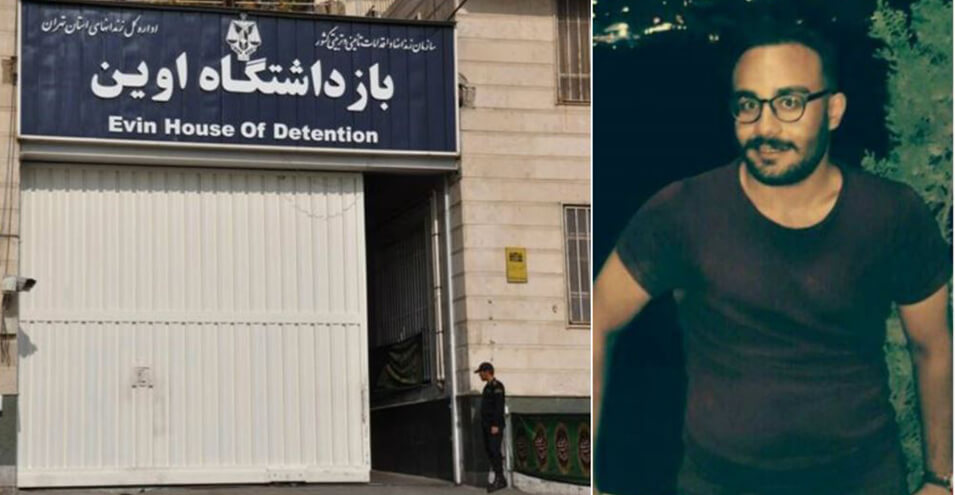
This is while Ali Younesi and Amir Hossein Moradi, two elite students of Sharif University of Technology, have been in temporary detention since April 2020 without any warrant being issued against them.
Narges Mohammadi, spokesperson for the Center for Human Rights Defenders, has also been detained in solitary confinement by security agencies for about 40 days, and her family has not heard from her.
Gholamhossein Mohseni Ejei also emphasized that officers should only use handcuffs or restraints on defendants in special and dangerous cases.
He is making these remarks despite the fact that in recent years, numerous reports have been published of violent or sometimes humiliating treatment of individuals by security and law enforcement officers.
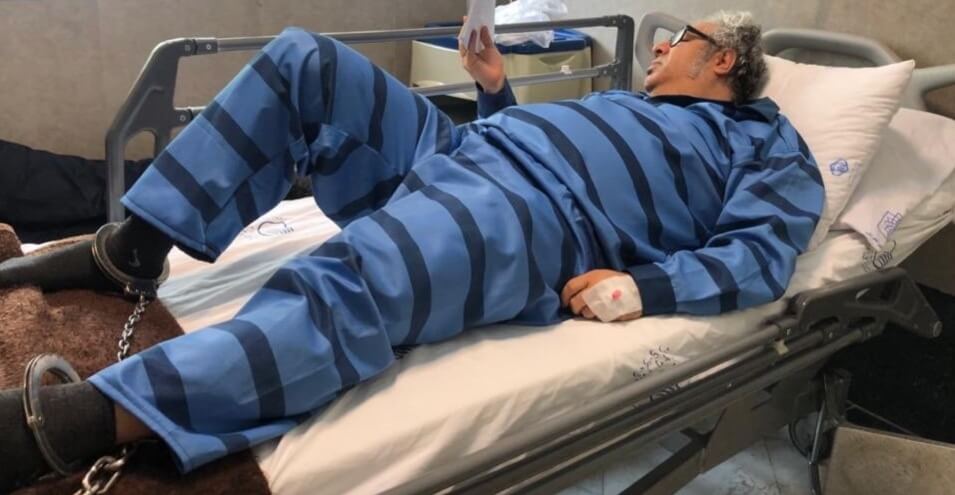
Including dissidents, writers, and civil activists who are even chained to the hospital bed. One of the recent cases was the publication of images of imprisoned writer Bektash Abtin on a hospital bed with his legs chained.
In another part of his speech today, Gholamhossein Mohseni Ejei asked officers to consider measures to prevent harm or fear from occurring to the defendants and their families when inspecting their homes or workplaces.
Gholamhossein Mohseni Ejei, head of Iran's judiciary, said: "Really see whether the cases everywhere, home inspections, workplace inspections, are necessary or not. If it is not necessary, the type of accusation is not such that they will definitely go to their house, the neighbors will find out, they will find out themselves, their wife and children will be alarmed, and the inspection will not be carried out."
Gholamhossein Mohseni Ejei also emphasized the need to fully comply with the law when detaining individuals.
Words that in many cases have no guarantee of implementation.
Among them are the accounts of civil society activists and critics of the Islamic Republic. People like Manouchehr Bakhtiari, the father of Pouya Bakhtiari, one of those killed in the November 2019 protests, who was violently arrested at his brother's home in front of the worried eyes of his family members, or Leila Hosseinzadeh, a student who was beaten during interrogation just 10 days ago.
Today's remarks by Gholamhossein Mohseni Ejei do not contain anything new. All of these are stipulated in Iran's constitution and international obligations, but violators of these provisions have always been immune from legal prosecution and punishment, according to human rights organizations.
And the United Nations and human rights defenders have repeatedly accused the Iranian judiciary of violating the rights of defendants, torturing, and mistreating detainees and prisoners.
Source: Voice of America