Silent Scream in Evin Cells, a Critical Narrative of the Long-Term Hunger Strike of Political Prisoners
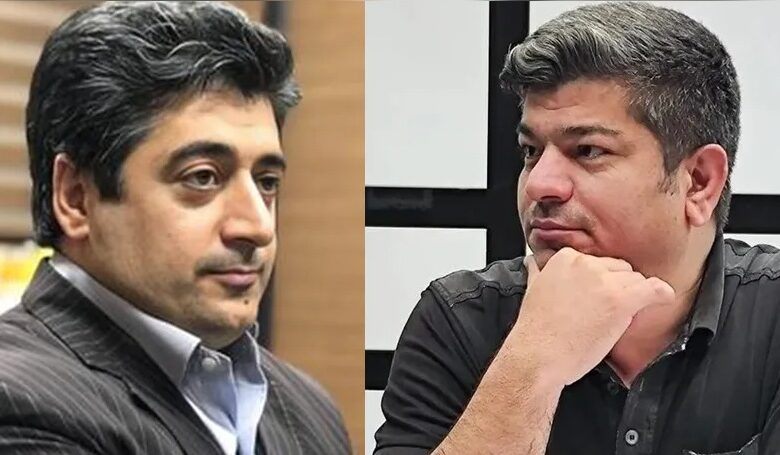
The silent cry of Turkish political prisoners in Evin has become a critical narrative of the long-term hunger strike of political prisoners and the humanitarian crisis it has become.
On Monday night, December 1, an Instagram page attributed to "Vadod Asadi" published a short but shocking piece of news, writing: "A Turkish-Azerbaijani political prisoner who has been on a hunger strike for 35 days has been transferred to Evin Hospital due to his "severe deterioration" of his condition." The sentence in the same post, "His blood pressure has dropped so much that they have had to put him on a CPR," reveals not only the physical condition of a prisoner, but also the way the prison structure deals with human life.
Asadi is not alone, his hunger strike began two days after that of imprisoned lawyer Taher Naqvi, who demanded nothing more than the rule of law and the right to medical treatment and leave for political prisoners. Both were eventually transferred to solitary confinement, a move that many human rights observers see as a form of “punishment” for demanding legal rights.
According to reports published by informed sources, Asadi and Naqvi are in critical condition and have each lost more than ten kilos. The severe weakness, low blood pressure and blood sugar, as well as the recurrence of previous illnesses, occurred in a situation where, according to one source: “In these thirty-seven-eight days, they were sent to the hospital only once, and were returned to prison without undergoing an MRI or ultrasound.”
This behavior is not just an administrative violation, it is a form of structural indifference to the health of political prisoners that is also unjustifiable under domestic law. The hunger strike began in early November with the action of Taher Naqvi, and was later joined by five other Turkish political prisoners: Vadud Asadi, Ayaz Seifkhah, Morteza Parvin, Aziz Azimi Qadim, and Mahmoud Ajaqlu.
With their transfer to Ward 240 of Evin, except for Asadi, the others were forced to break the strike under pressure; but Asadi and Naqvi's resistance continued; a resistance that had both physical costs and security consequences.
However, several of the same prisoners returned to the strike after about ten days, a sign that the issue was not just an individual protest but reflected widespread distrust in the legal mechanisms within the prison.
In mid-November, the families of Asadi and Naqvi sat in front of Evin Prison for a week. This civil action, which is less likely to be reported in the media, ultimately forced the authorities to return the two prisoners from solitary confinement to Ward 8. However, their return was not a “return to security,” it was only a change in the place of detention, not in the level of access to treatment, leave, or consideration of their requests.
Among the messages published from prison, two sentences are the most shocking: "Taher Naqvi wrote in a letter on the 19th day of the strike: "I will continue until my death," and Wadud Asadi wrote in an Instagram message: "May our death be a wake-up call for the freedom of our nation."
These sentences are not slogans, but declarations of a state of emergency from a windowless cell, where a prisoner is forced to risk his life to be seen. Prison officials have repeatedly told prisoners that they will investigate and coordinate with the security guard, but these promises, as one source says, have been nothing more than empty promises.
The reality is simple: no medical leave has been granted, no effective treatment has been provided, and not even a regular referral to the hospital. This is despite the fact that lawyer Musa Barzin clearly explains that according to prison regulations, the patient has the right to treatment, the prison is obliged to provide treatment inside or outside the prison in life-threatening situations, and in many countries (and even in Iran in some cases), referral to leave during a long hunger strike is quite common. Therefore, the failure to address this situation is not due to “legal ambiguity”, but rather the result of blatant inaction.
The human dimension of this story is perhaps more painful than its legal aspect. Vadud Asadi’s youngest child is about to undergo surgery for the third time. In a released audio file, Asadi tells his son: “My child, Taymaz, it is true that I am not with you, but your mother is there and you are surrounded by people who love you.” These words are a reminder that the costs of political imprisonment are not only borne by the prisoner, but also by the families whose voices are not heard.
What is happening to Vadud Asadi, Taher Naqvi, and other Turkish political prisoners is not an isolated incident, but part of a chronic pattern of denial of treatment, transfer to solitary confinement for pressure, structural disregard for health, and refusal to implement the minimum requirements of the law.
When a prisoner is forced to go to the brink of death for the right to medical treatment, the issue is no longer a legal dispute;
The moral and human crisis is a system, and until the responsible institutions respond to this crisis, the silent cry of political prisoners will continue to be repeated in the corridors of Evin.