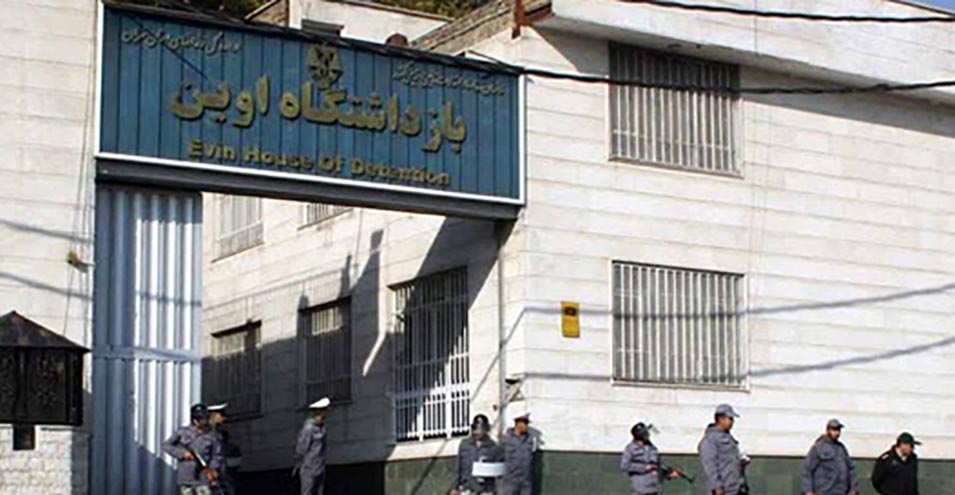
According to FCNN, Nazk Afshar, a former employee of the cultural section of the French Embassy in Iran, was arrested at Tehran's Imam Khomeini Airport in late March of last year and remains imprisoned.
She had a history of being arrested after the controversial June 2009 elections in Iran and had been living in France for the past few years. The charges against Ms. Afshar have not yet been announced, but reports indicate that she has been transferred to the women's ward of Evin Prison.
Nazk Afshar, however, was not the only one who was arrested and imprisoned after the Hassan Rouhani government came to power and after returning to Iran. Mostafa Azizi, Serajeddin Mirdamadi, Hossein Nourani Nejad, Sajideh Arabsorkhi, Abdolhossein Herati, Bahman Dar-e-Shafaei, Hamid Babaei, Masoumeh Gholizadeh, and Kazem Bargev are among the other citizens who were imprisoned in the past two years and after returning to Iran.
This is despite the fact that in the first months of the 11th government coming to power, Iranian President Hassan Rouhani had called for the formation of a committee by the Ministries of Intelligence and Foreign Affairs to facilitate the return of Iranians living abroad.
Nazk Afshar was not the only person to be arrested and imprisoned after the Hassan Rouhani government came to power and after returning to Iran. Mostafa Azizi, Serajeddin Mirdamadi, Hossein Nourani Nejad, Sajideh Arabsorkhi, Abdolhossein Herati, Bahman Daroshfaei, Hamid Babaei, Masoumeh Gholizadeh and Kazem Bargev are among the other citizens who have been imprisoned in the past two years and after returning to Iran.
Mr. Rouhani said in a public ceremony on July 15, 2013 that we must “facilitate the path of those who are ready to return.” He also emphasized to reporters on October 1, 2013: “All Iranians living abroad should be able to travel to their country easily, and if they do not travel, both we and they will lose.” On December 25, 2013, the president also called the country’s environment safe for the return of Iranians living abroad and emphasized: “We have a very large human capital abroad. I hope they all return and do not withhold their help from us.”
But the call for Iranians abroad to return to Iran did not stop at these words. According to media reports, a committee was formed by the Ministries of Intelligence and Foreign Affairs called the “Committee for the Return of Iranians Abroad,” and Iranian Intelligence Minister Mahmoud Alavi announced that “we guarantee that anyone who has committed no crime will not have any problems.”
Hassan Qashqavi, Deputy Minister of Consular, Legal and Parliamentary Affairs of the Ministry of Foreign Affairs, also announced in an interview with Shargh newspaper that an email has been launched for Iranians abroad. He called the fear of Iranians returning to their country unrealistic and caused by the opposition’s insinuations, and said: “In Iran, there is absolutely no fear of Iranian immigrants entering the country, and we do not have anything in the penal code called entry ban.”
Mansour Haghighatpour, Vice Chairman of the National Security and Foreign Policy Commission of the Islamic Consultative Assembly, went even further and said in an interview with the Fararoo website that Iranians cannot be denied access to their country simply for signing a statement and making a political statement.
However, more than 2 and a half years after Hassan Rouhani's government came to power, there is no news about the use of an email that was called a problem-solving email to address concerns, and Iranians living abroad were supposed to inquire about their legal and judicial status in Iran by using this email. There is also no news about the committee that was created by the government to pave the way for Iranians abroad to return to their country. In addition, a group of civil and political activists and journalists who returned to Iran following this invitation have also been arrested and imprisoned.
Siraj al-Din Mirdamadi, a reformist political activist and journalist living in France, was among the first to return to Iran after Hassan Rouhani was elected president in the June 2013 presidential election. According to his family, he was interrogated repeatedly and was arrested in May 2014, charged with propaganda against the regime and collusion against the country’s internal security, and sentenced to six years in prison. Mr. Mirdamadi is a veteran of the Iran-Iraq War and a cousin of Ayatollah Khamenei, the leader of the Islamic Republic. He was imprisoned until March 14, 2013, when he was finally released from Evin Prison on parole.
Hossein Mirdamadi, the father of Seraj Mirdamadi, had announced after his son's arrest that they wanted to send a message to Iranians abroad not to return to Iran. This was also expressed by the family of Hossein Noorani Nejad, a journalist and member of the Participation Front. He, who was living in Australia, was arrested on May 1, 2014, two months after returning to Iran and was initially sentenced to 6 years in prison and then to one year on appeal. Mr. Noorani Nejad has been released from prison after serving his sentence.
Mostafa Azizi, a Canadian-based writer and television producer, is another Iranian living abroad who was imprisoned after returning to Iran. He was arrested on February 1, 2014, a month after returning to Iran, and was sentenced to eight years in prison by a lower court on charges including gathering and colluding against national security, acting against national security (through cyberspace), and insulting the Leader of the Islamic Republic. Mr. Azizi was released on bail for a few days of Nowruz leave in the last days of last year, and then returned to prison.
Sajideh Arab Sorkhi, a journalist and reformist political activist, returned to Iran from France in September 2013 and was imprisoned three months later. Her father, Feyzollah Arab Sorkhi, a member of the Mojahedin of the Islamic Revolution Organization, was among those arrested in 2009 and was imprisoned for four years. Sajideh Arab Sorkhi was released from prison after serving a one-year sentence that was handed down in absentia, although her family says she has another open case.
Also, Abdolhossein Herati, former advisor to the head of the Expediency Discernment Council and former head of the General Records Department of Islamic Azad University, lived in Australia and returned to Iran after the Hassan Rouhani government came to power. He was arrested in June 2014, and his wife stated in an interview with the RoozOnline website that she did not expect that he would be treated in this way, given the government's promises to return Iranians abroad. He was released from prison on bail in August of the same year. He was charged with propaganda against the regime and insulting officials. The charges were based on a letter Mr. Herati wrote in 2010 to Mehdi Karroubi, a leader of the Green Movement who is currently under house arrest.
After Mr. Rouhani's government came to power, a committee was formed by the Ministries of Intelligence and Foreign Affairs called the 'Committee for the Return of Iranians Abroad', and Iranian Intelligence Minister Mahmoud Alavi announced that 'we guarantee that anyone who has committed no crime will not have any problems.'
Kazem Barzov, a prominent member of Mir Hossein Mousavi's campaign in the 2009 presidential election, returned to Iran on February 15, 2013, and was arrested at Imam Khomeini International Airport in Tehran. He was sentenced in absentia to five years in prison for gathering and colluding against internal security through participation in gatherings. His prison sentence was reduced last year on the occasion of Eid al-Fitr.
Journalist, translator and blogger Bahman Daroshfaei was also arrested on February 25 last year. He had returned to Iran from London about 2 years ago and was working as a translator and editor. The author of the famous blog Aq Bahman was summoned and subjected to lengthy interrogations for months after returning to Iran until he was finally arrested. However, the journalist has been free on bail since February 25.
Hamid Babaei, a PhD student at the University of Liège in Belgium, and Masoumeh Gholizadeh, a philosophy graduate from Allameh Tabatabaei University and a student at Ankara University, were among other Iranians who were arrested and imprisoned after the Hassan Rouhani government came to power and upon their return to Iran. Mr. Babaei was sentenced by the Revolutionary Court to 6 years of imprisonment and 4 years of suspended sentence, and his family announced that he had traveled to Iran to visit family and relatives when he was summoned to the Ministry of Intelligence and asked to cooperate with the ministry, but he refused and was accused of collaborating with hostile governments. Masoumeh Gholizadeh was also sentenced to 10 months in prison for propaganda activities against the regime.
So far, Hassan Rouhani's government has not provided any explanation about the fate of the Committee for the Return of Iranians Abroad, but Gholamhossein Mohseni Ejei, at the same time as Hassan Rouhani's invitation to Iranians abroad to return to Iran, said that "if someone commits a crime and leaves the country or commits a crime abroad, they will be prosecuted by the judicial system as soon as they return to the country."
He added: "Also, people who played a role in the events after the 2009 elections will be prosecuted upon their entry if they return to the country."
Source: BBC Persian