Pope Leo's confrontation of Christ's message of peace with the logic of war and the White House's reaction to his words
The confrontation between Christ's message of peace and the logic of war has intensified as the White House responded to Pope Leo's words and, at the same time, a new crisis has emerged regarding Christian access to the holy sites of Jerusalem.
Amid rising military tensions in the Middle East, a clear divide is emerging between the spiritual messages of Christian leaders and the political-military approaches of governments; a divide that has become more pronounced in recent days with the White House's response to the Pope's remarks as well as a controversial event in Jerusalem.
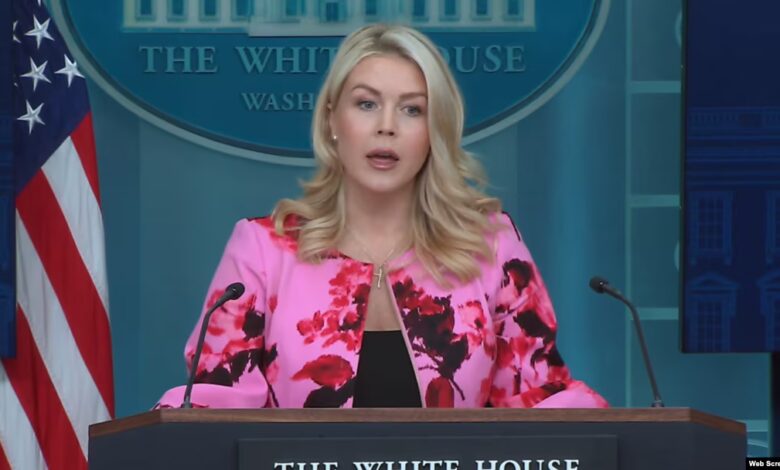
White House spokeswoman Carolyn Leavitt responded to Pope Leo XIV’s recent Palm Sunday remarks, in a press briefing that focused on the ongoing conflict with Iran. In a blunt statement, the pope, citing biblical teachings, stressed that God does not listen to the prayers of leaders who wage war. He also described war as contrary to God’s will, recalling the image of Christ as the “King of Peace.”
In response (without directly rejecting the view), Leavitt emphasized the place of prayer in U.S. history, saying, “Our nation was founded 250 years ago on Judeo-Christian values. We have seen presidents, leaders of the Department of War, and our soldiers turn to prayer and supplication during the most turbulent times in our country’s history.” He also added that calling for prayer for the military is a moral act and part of America’s national tradition.
This stance comes at a time when some Christian leaders and theologians have criticized the instrumental use of prayer in the context of war. They believe that the message of the Gospel, especially in the teachings of Jesus Christ, emphasizes peace, forgiveness, and avoiding violence, and any justification of war in the language of faith is considered a distortion of this message.
Amidst these theological debates, an incident in Jerusalem has also captured the world's attention. On the eve of Holy Week, Cardinal Pierbattista Pizzaballa, the Latin Patriarch of Jerusalem, was barred from entering the Church of the Holy Sepulchre, a site of great significance to Christians around the world, believed to be the site of the crucifixion and resurrection of Jesus Christ.
The move, which was cited as security reasons and in response to missile threats, was met with widespread reactions. Church leaders and some Western officials described the restriction as worrying. Following the criticism, Israeli officials, including the country's prime minister and president, expressed regret and reiterated their commitment to ensuring Christian access to the holy sites.
Leavitt also addressed this issue at the same press conference, adding: "We have expressed our concerns about the closure of these holy sites to Israel. We want believers to be able to access these holy sites. Of course, safety is the top priority, but we understand that Israel is working on security measures to reopen these sites during Holy Week, and that is something we appreciate."
The closures come as recent rocket attacks have heightened security concerns in the region, with reports suggesting some of the attacks have even come close to religious sites in Jerusalem's Old City, raising concerns about the safety of pilgrims and residents.
Meanwhile, many Christian leaders believe that the current situation is a serious test of the world's commitment to the values of faith. They emphasize that a return to the peaceful message of Christ is more necessary than ever at a time when war and violence are widespread.
Analysts also believe that the simultaneous development of these developments, on the one hand, the escalation of the war and on the other hand, the restriction of access to holy sites, could have profound consequences for international relations and the state of religious freedom. For the Christian community in the region in particular, these events are a reminder of the vulnerability of the situation in which faith, politics and security are intricately intertwined.