Water war and land revenge threaten Iran
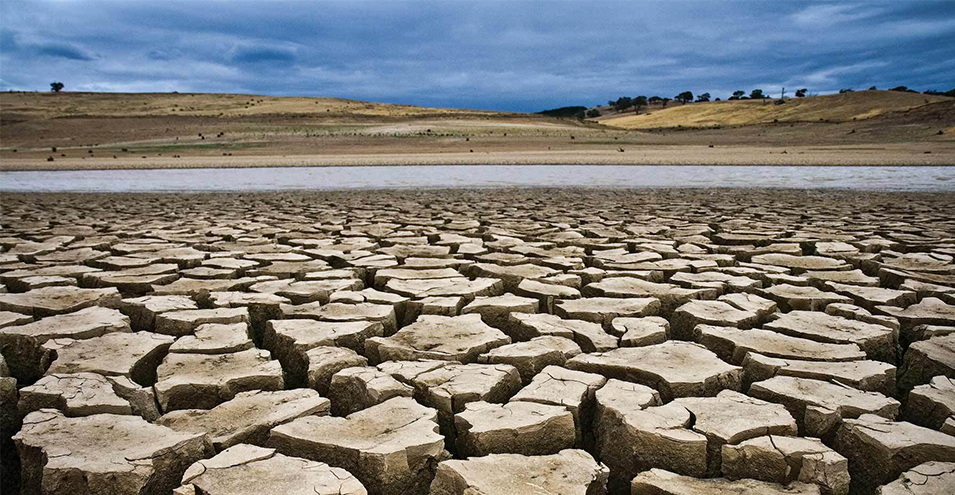
Soheila.S., FCNN News Agency: In a situation where the unfortunate phenomenon of water war and its consequences threaten Iran, the authorities of the Islamic Republic are still engaged in a power struggle. In the meantime, it seems that Iranians have adopted indifference or consider leaving the country as the only way out.
In this situation, a number of compatriots emphasized in an interview with FCNN that the increasing guilt and corruption among the leaders of the Islamic Republic's government are the main factors behind these problems.
They believe that the negligence of the regime's officials and the indifference of the people in these crisis-provoking circumstances are due to this corruption, and they believe that the war to maintain power and negative competition among government leaders are clear examples of this corruption.
The low importance of resolving the crisis for regime officials
In an interview with FCNN, Omid, a Christian convert, referred to research that indicates the emergence of a "water war" or "hidden war" in 18 countries in the Middle East and North Africa, including Iran.
This Christmas, Omid has been busy praying and worshipping with his family in the corner of his house, asking God for deliverance from the crisis in Iran in a united prayer.
According to this compatriot, Iranian authorities have been talking about this crisis for more than two decades, but have not taken any effective measures to prevent it. This is because they do not care about this issue and prefer to spend the money elsewhere. However, the consequences of this crisis are not small, and we are already witnessing widespread subsidence in many parts of our country due to the indiscriminate extraction of water resources.
Omid continues: "For example, despite the fact that, according to statistics, more than 90 percent of the country's water resources are spent on agriculture, officials did nothing to manage water consumption optimally. Farmers continued to waste water with traditional irrigation methods and were not even willing to stop growing high-consumption crops."
Omid believes that the government sector has not come to the aid of farmers either. While it was expected that in previous decades, new irrigation or land leveling projects would be implemented to preserve existing water resources without imposing costs on low-income farmers.
Omid considers the failure to prioritize such measures to be the result of the Islamic Republic's leaders' desire for power, especially since over the past few decades, Iranian people's money has been repeatedly spent in countries that support the Islamic Republic in order to maintain the regime's power at home and abroad.
The local media is also to blame.
Another compatriot, Hamideh, holds the Iranian media responsible and believes that the leaders of the Islamic Republic would not have been able to oppress the people to such an extent if they did not have the support of the visual and audio media.
He emphasizes that the lack of accountability of Iranian authorities for shortcomings and weaknesses stems from the poor performance of these media outlets.
This compatriot continues: "In recent decades, whenever the media wanted to discuss solutions to prevent the worsening of the water crisis, they targeted the people and asked them to save money. However, the people of Iran do not directly and intentionally play a major role in the country's water crisis. People use only 7 percent of the water available in the entire country, and saving 20 percent of this consumption is only effective at 1.5 percent. For this reason, the media must address excessive withdrawals and the drilling of unauthorized wells and the resulting subsidence, which began two decades ago and is now threatening several cities, including Tehran.
Of course, the lack of these radical issues in the media that question the regime's leaders is not surprising, because the owners of most media outlets in Iran are connected to the main powers of the Islamic Republic. Even seemingly independent individuals use media privileges to seek profit and income that neutralizes information. This entire atmosphere causes compassionate media people to be isolated or their cries to be lost in the clamor of opportunists. This media debris makes the Islamic Republic regime fatter and the people weaker day by day.
Indifferent people and fugitives are the main culprits.
Mojtaba, a Christian convert, sees the escalating water crisis and its roots in Iran from a different perspective.
He considers public indifference to be the main factor and believes that the Iranians, by the method they have adopted, are actually feeding the corrupt leaders of the Islamic Republic.
Mojtaba also criticizes the emigration of an increasing number of Iranians, emphasizing that this group is also guilty of the destruction of their ancestral homeland and has submitted to the will of the regime's leaders.
He referred to the recent statements of Ali Akbar Nateg Nouri, head of the inspection office of the Supreme Leader of the Islamic Republic of Iran, and said: "Corruption among government leaders has reached a point where Nateg Nouri called it humiliating and admitted that the perpetrators of corruption are all managers, officials, and members of government factions who are not dealt with due to face-offs or expediency."
This is despite the fact that the Islamic Republic of Iran has dropped from 86th to 136th place in terms of corruption.
In Mojtaba's view, this situation is so dire that it cannot tolerate people's indifference or flight, and it creates a more favorable environment for the regime's leaders to be corrupt. Of course, this compatriot also considers the people's distrust of officials due to corruption to be a factor in their abdication of civic responsibility.
Mojtaba continues: “By stealing people’s property and ignoring Iranian rights, along with suppressing any protest or criticism, the authorities of the Islamic Republic have created people’s indifference to the future of their land and have taken away their national identity. On the other hand, trapping people in everyday matters such as feeding their stomachs or providing shelter and health has also fueled this public indifference.”
Some regime leaders want the destruction of Iran
Subsidence in the country is one of the consequences of the water crisis in Iran. However, this phenomenon has not resulted in an effective preventive response from the regime's leaders, and its scope has expanded year by year.
In an interview with FCNN, urban planning expert Ibrahim claimed that the Islamic Republic's officials have been monitoring and witnessing these subsidences for years. However, their disregard for prevention is so great that it sometimes feels like it is intentional and that some of the regime's leaders and stakeholders want Iran's destruction.
According to this expert, the main reason for subsidence in the country's well-known plains is the drop in water table levels, which is caused by a lack of rainfall and excessive extraction of groundwater, and those involved in the matter did nothing to combat it.
Ibrahim says: "In recent decades, officials have sat outside and only chanted slogans, without speaking about their duties and taking action. In addition, they did not protest against the damaging actions of others, including the construction of unqualified dams during Rafsanjani's presidency. It was clear what thefts from the credit resources of these dams flowed into the pockets of officials and what lands were gaining added value. While subsidence in the country was preventable and its spread can be prevented even now."
We are now witnessing that subsidence is spreading in Tehran itself and its southern and southwestern lands, and it has been said that such a trend, with an annual rate of 36 centimeters, is unprecedented in the world. According to Ibrahim, the indifference of government leaders to such dangers cannot be accepted with any justification.
This compatriot continues: "In circumstances where we hear news every day about Iranian money flowing in and being spent in other countries, how can we believe that the leaders of the Islamic Republic care about Iran and are working together to prevent the destruction of this land?"
Earth's revenge is lurking in Iran
According to FCNN, historical evidence indicates that Iran has struggled with water shortages since ancient times.
The existence of the goddess and temple of Anahita in the country and Cyrus the Great's prayer that God would keep this land away from drought are some of this evidence.
In addition, the digging of aqueducts and the construction of various water reservoirs in Iranian cities show that Iranians have always been concerned about accessing water.
But the Iranians' ancient and identity beliefs have helped them in this dilemma, as they have always considered water a sacred and divine element and have spontaneously managed its consumption. Today, however, while the news tells of bitter realities, there is no mention of those beliefs.
For example, we see that the per capita amount of renewable water in our country in 1300 was about 13 thousand cubic meters, and at present this amount has decreased to about 1900 cubic meters, which is expected to worsen in the future. In addition, out of 600 plains in Iran, 230 fertile plains in the country are experiencing a water shortage crisis, and more than 60 plains in Iran are in a critical situation. As a result of these conditions, the phenomenon of subsidence and sinkholes threaten life in more than 7 provinces of the country. However, we see that excessive withdrawals from water resources and disregard for the necessity of managing the consumption of this vital element continue.
And it is feared that in the not-so-distant future, Iran will face a fate that will be a blind spot and can only be called the revenge of the earth.