Javad Larijani denies killing of “protesters” in November crackdown
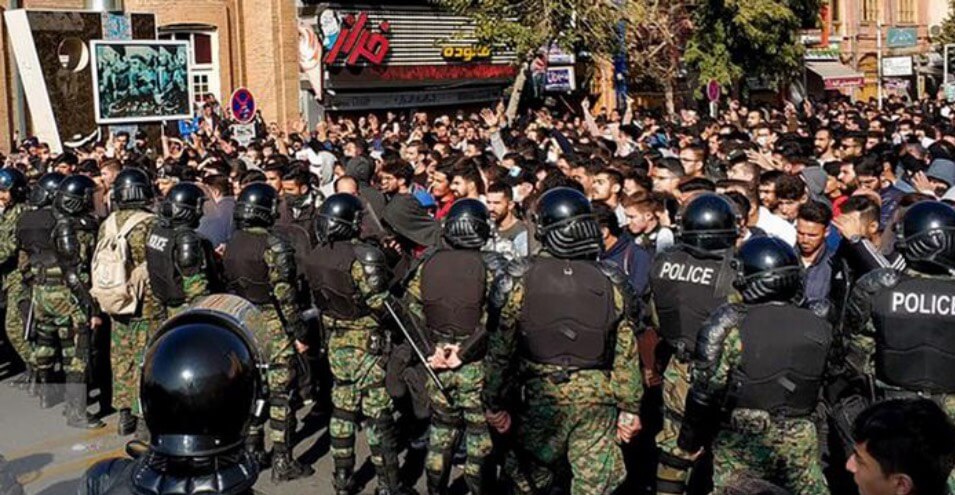
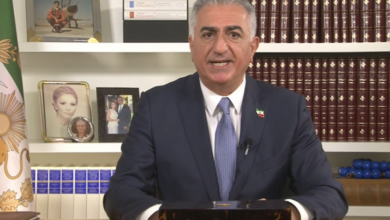
The head of the Judiciary's Human Rights Headquarters claims that there were no protesters among those killed in the November protests. The judiciary's spokesperson also called Amnesty International's figure of at least 304 deaths in the crackdown "allegations" but did not provide any other figures.
While Islamic Republic officials have refused to provide accurate statistics on the number of people killed, injured, and detained in these incidents, four weeks after the suppression of the November protests, the secretary of the Judiciary's Human Rights Headquarters has denied the existence of violent confrontations with protesters by announcing ambiguous statistics.
According to ISNA news agency, Mohammad Javad Larijani claimed on Tuesday, December 16, that 15 percent of those killed in the November incidents were "terrorist forces" and 85 percent of the rest were security forces and people "defending their homes against the attack of rioters."
In this way, and as this senior judicial official has categorized the victims of the November protest movements, no protester was killed by security forces.
The November protests began after the unexpected announcement of a gasoline price increase. According to a resolution of the Coordination Council of the Heads of the Three Powers, which was approved by the Leader of the Islamic Republic, Ali Khamenei, as of the morning of November 14, the price of a liter of rationed gasoline increased by 50 percent to 1,500 tomans, and the price of free gasoline increased threefold to 3,000 tomans.
The protests, which initially began in response to the high price of gasoline, quickly took on an anti-government dimension, with slogans against the Islamic Republic's regional provoking policies and criticism of the inefficiency, mismanagement, and corruption of government officials being widely heard.
Shooting protesters “with intent to kill”
Protesters also chanted slogans against Khamenei and burned his images, which is believed to have been one of the reasons for the violent crackdown. Michelle Bachelet, the UN High Commissioner for Human Rights, said the shooting at protesters was “with intent to kill.”
In its latest report on recent developments in Iran, Amnesty International estimated the death toll at at least 304. The human rights organization has published several reports on the issue since the beginning of the crackdown in November, in which the number of victims has been steadily increasing.
The secretary of the Judiciary's Human Rights Headquarters attributed the statistics of international organizations about the November events to the formation of a "political movement against Iran," saying: "I wrote a letter to the High Commissioner for Human Rights that we are witnessing the birth of a new ISIS group. The previous ISIS talked about Islam, but these talk about something else."
At the same time, Gholamhossein Esmaili, spokesman for the judiciary, called the statistics announced by Amnesty International a "propaganda scenario."
A day after the protests began, Islamic Republic officials cut off access to the global internet, partly to prevent the spread of news and images of violent repression.
“The Internet serves terrorist purposes”
Mohammad Javad Larijani, defending this action, said: "The think tank of the rioters was outside the borders. They used the facilities of cyberspace extensively and for this reason they were upset by the internet shutdown. In fact, the internet was at the disposal of terrorist purposes, and those who are in favor of the internet should consider this dimension of the internet, namely its terrorist abuse."
Larijani, who claimed that none of the dead were protesters, admits to the existence of the protests: "After the announcement of the increase in gasoline prices, two incidents occurred; the first incident was a public protest, and we should pay attention to these protests, but the second incident was an organized action by trained and guided groups that, with extensive resources, quickly hid themselves under the public protests and began to commit acts of violence, destruction, and killing."
Regarding the number of those arrested in the November protests, the judiciary official said: "Currently, the number of prisoners is in the hundreds, not thousands."
The Etemad newspaper, quoting Hossein Naqvi Hosseini, spokesman for the National Security Commission of the Islamic Consultative Assembly, wrote that about 7,000 people have been arrested during the recent unrest. This number has been estimated to be up to 8,000.
Jamal Orf, the deputy political director of the Interior Ministry, said in early December that in a meeting with other agencies, the Attorney General's Office was tasked with presenting statistics regarding recent incidents, and that it would announce its opinion "soon" based on statistics it receives from forensic medicine and other authorities.
On December 6, Mohammad Jafar Montazeri, the country's Attorney General, denied that several thousand people had been arrested, saying that there were three groups of detainees, some of whom were released "immediately" and others "with very simple terms."
He said: "A large number of those who, according to evidence, committed crimes at the scene of the riots are still in custody." Unlike Larijani, Montazeri did not deny that protesters were killed and told the ILNA news agency about their number: "I cannot announce it because I do not have accurate information."
Interior Minister's reaction to protesters being shot in the head
This lack of accurate information and denial comes despite the fact that, according to some evidence, images and videos published on social media, and what eyewitnesses and victims' families have said, security officers have in some cases shot protesters at close range.
This issue was also raised in the meeting of signatories of the impeachment motion against the Interior Minister Abdolreza Rahmani Fazli. Mahmoud Sadeghi, one of the representatives present at the meeting, described the meeting in an interview with the website “Imtadat” published on December 15.
Sadeghi says that the Interior Minister, in response to a member of parliament who asked him why some protesters were shot in the head and whether they couldn't have been shot at least below the waist, said: "Well! They were also shot in the legs." The Tehran representative in the parliament says that the members present were "surprised" by Rahmani Fazli's response, which was described as "an imaginary figure."
Source: DW