Josep Borrell: Russia wanted to prevent lifting of Iran oil embargo
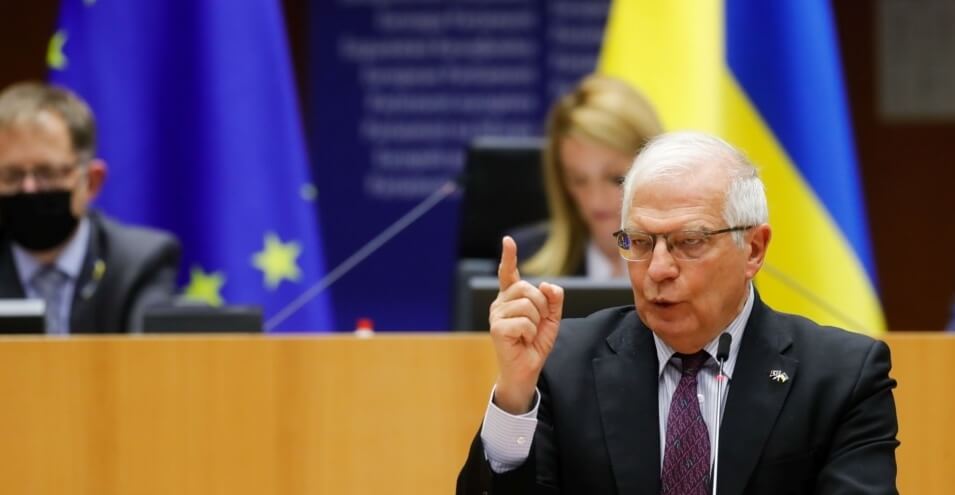
The EU's foreign policy chief says Russia wanted to prevent the lifting of the Iranian oil embargo "because if Iran resumes production, more oil will enter the market, and that is not in Russia's interest."
"Two weeks ago it looked like a deal had been reached with Iran. Then Russia came in and was obstructing," Josep Borrell told the European Parliament on Monday, after returning from a regional trip to the Arab Gulf states. "And then Russia came in and was obstructing" as Moscow seeks to gain concessions from the West over its war in Ukraine.
On March 4, Russian Foreign Minister Sergei Lavrov asked the United States to provide written guarantees that Western sanctions against that country due to its aggression against Ukraine would not affect economic and military cooperation between Moscow and Tehran.
After some time, he announced that Moscow had received guarantees from the United States in this regard. American officials, denouncing Russia's actions in obstructing the revival of the JCPOA, emphasized that the developments in Ukraine and the JCPOA are unrelated.
The International Energy Agency recently said that Western sanctions could cut Russian oil production and exports by 30 percent. Iran and Venezuela could increase their output by more than two million barrels per day in the coming months if US sanctions are lifted.
Iran also has 110 million barrels of unsold oil stored in onshore facilities and tankers anchored in the Persian Gulf, which could be quickly brought to market and partially offset the decline in Russian oil exports.
Borrell: There is no guarantee of reaching an agreement
The European Union's foreign policy official continued his remarks by saying that negotiations between Iran and the parties to the JCPOA are now in trouble.
Mr. Borrell added: “Now there are other things that have come up that have nothing to do with the JCPOA - guarantees about the Revolutionary Guard.”
This European official is referring to the Islamic Republic of Iran's request to remove the Islamic Revolutionary Guard Corps from the United States' list of terrorist organizations.
The EU foreign policy chief expressed skepticism about reaching an agreement to revive the JCPOA, saying: "It would be a shame not to reach some kind of agreement, especially when we are so close to it. But I cannot guarantee that we will reach an agreement."
Based on the 2015 agreement between Iran and six world powers, known as the Joint Comprehensive Plan of Action (JCPOA), the main part of the sanctions against Tehran related to its nuclear activities were gradually lifted, and Iran was also required to limit the scope of its nuclear activities, including the volume and concentration of enrichment.
However, following the withdrawal of the Donald Trump administration from the JCPOA in May 2018 and the resumption of severe sanctions against Iran, the existence of the JCPOA was jeopardized.
Iran has also gradually deviated from its commitments in this agreement since 2019 and pursued its nuclear activities, including enriching uranium to 20 and 60 percent, using advanced centrifuges, and suspending the Additional Protocol.
With the beginning of Joe Biden's presidency in January 2021, negotiations to revive the JCPOA began, and in recent weeks all parties involved in the negotiations have expressed optimism about reaching an agreement.
However, Russia's unexpected request and then Iran's demands that the US remove the IRGC from the US list of terrorist organizations, the US guarantee that it would not withdraw from the JCPOA again, and the lifting of all sanctions caused the Vienna talks to be halted, and there is no prospect of their resumption.
Source: Radio Farda