Definitive reasons for power outages in Iran; from mazut fuel to Bitcoin production by Chinese
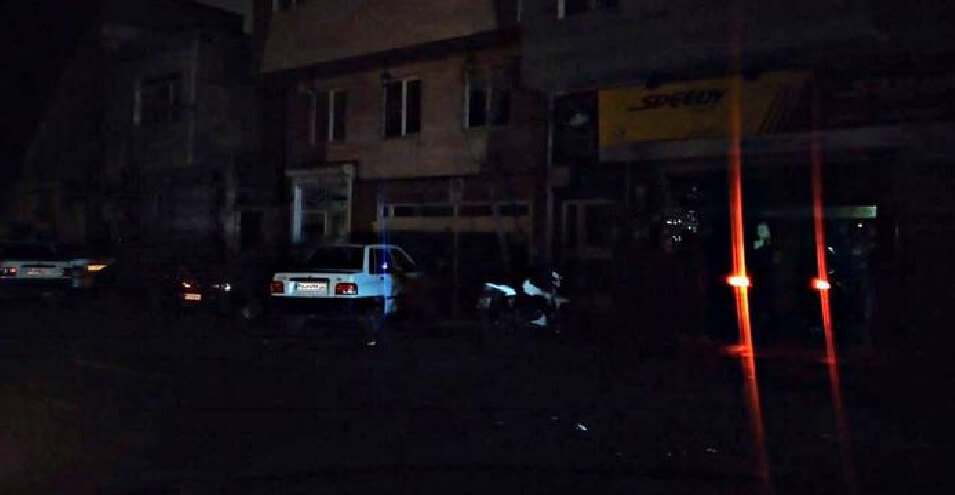
Officials of the Islamic Republic say that due to high consumption of residential and commercial electricity and gas, they have been forced to cut power in some areas. However, some experts and journalists link power outages to Bitcoin production by Chinese in Iran.
Since the early hours of Tuesday, December 23, power has been cut in some areas of Tehran and several other cities. Some areas have also reported water shortages. Taraneh Baniyaqoub, a journalist, tweeted about power and water cuts in Anzali.
The spokesman for Iran’s power industry, confirming the news, attributed it to fuel constraints at power plants. Mostafa Rajabi Mashhadi also said: “As soon as the fuel problem and gas supply constraints are resolved, we will not have blackouts.”
According to this member of the board of directors of Tavanir Company: “If people save 10 percent on gas consumption, we will not have power outage problems.” He also asked people to cooperate with officials by turning off extra lights, wearing warm clothes at home, and lowering the temperature in their homes and workplaces.
Tavanir Company also announced in a statement: “Due to increased consumption of electricity and gas in the residential and commercial sectors and fuel supply constraints to some power plants, scattered blackouts have been implemented in some areas.”
Some urban consumers also received a text message with the following content: “Wear warm clothes at home so that the gas and electricity of other compatriots are not cut off.”
In recent days, reports were published indicating that at power plants, due to lack of the main fuel (gas), mazut is being used as fuel. Isa Kalantari, head of Iran’s Environmental Protection Organization, cited the consumption of non-standard mazut and diesel in industries as the main source of air pollution in winter.
Bijan Zanganeh, Iran’s Minister of Oil, while confirming the use of mazut for power plants, attributed the solution to lower electricity and gas consumption at home, saying that if people consume less electricity and gas, we would not be forced to burn mazut to supply power plants with energy.
The fingerprints of the Chinese in power outages
However, there are other speculations, including that the power shortage is related to Bitcoin extraction by Chinese companies around Rafsanjan.
According to officials at the Ministry of Energy, producing each coin (digital currency) is equivalent to the consumption of electricity for 24 residential units connected to the network in Tehran per year.
On December 18, Nasim Tavakolli, a manager and entrepreneur residing in Iran, tweeted that the Chinese have established a Bitcoin mining farm in the Rafsanjan economic zone. Along with this tweet, he also marked the coordinates of this location using Google Maps.
After this tweet, the Tejarat News network published a report on December 21, quoting Mohammad Reza Sharifi, a member of Iran’s Blockchain Association, raising the question: “If a foreign investor can be present in the country, why are there various obstacles that prevent our own people from entering the field of cryptocurrency extraction?”
According to Tejarat News: “Sharifi, however, does not find the sensitivity to the issue of energy consumption correct; because according to him, the tariff applicable to digital currency extraction centers is the highest tariff of its kind in the country, and besides, this industry has not yet developed much in Iran.”
The Ravi multimedia network, in publishing a video report, stated: “The Chinese have disrupted Iran’s power grid.”
This report referred to “a 10-fold increase in Bitcoin prices in the past year and cheap Iranian electricity,” and that there is a connection between these two issues. This report mentioned an institution called bitooda, which, based on charts published on their website, places Iran and Kazakhstan, each producing 8 percent of the world’s total Bitcoin, in third place after China and the United States.
In its video report, the Ravi network, quoting Amir Nazemi, deputy minister of communications, confirms the existence of Bitcoin mining farms in two areas of Rafsanjan and Aras by the Chinese. He clarified, however, that special conditions were not given to the Chinese, and if an Iranian company also wants to, the same facilities would be available to it.
Protests on social networks
The issue of Bitcoin production’s connection to power outages, as well as the use of mazut fuel, which is very harmful to health, has faced heavy criticism on social networks, and in the opinion of many users, this measure means “either you suffer from mazut or tolerate power outages.”
Pejman Mousavi, a journalist, tweeted about high electricity consumption in Bitcoin mining farms and related it to urban power outages.
Masoud Nouri, a journalist, also referred to Iran’s third place in Bitcoin production and related the issue of power shortage in Iran to it.
Hamid Hajipour, another journalist, wrote: “You are busy producing Bitcoin while we suffocate from mazut, it does not matter.”
Hosein Mehrzad, with the hashtag of the desired governance model, wrote about the choice between power outages or suffocation from mazut.
Just search for the hashtag mazut or Bitcoin on social networks, and then you will see what volume of space is occupied by citizens’ protests against this issue; citizens who have the choice between suffocating from mazut or having power cut in a country that is the third largest Bitcoin producer in the world.