Karaj and Tehran earthquakes that were not recorded by any international organization
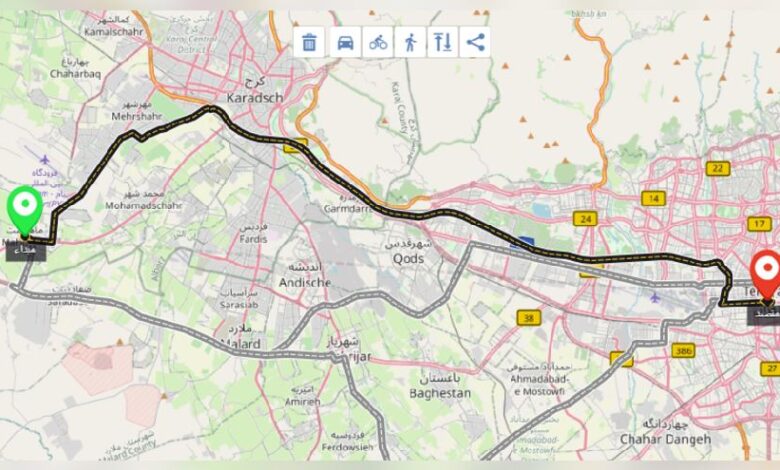
The earthquake that shook Karaj and Tehran was not recorded by any international institution except the University of Tehran Seismological Center.
On the evening of Saturday, May 4, an earthquake measuring 4 on the Richter scale shook Alborz Province. According to the records of the University of Tehran Seismological Center, this earthquake occurred at 9:47 p.m. on Saturday in Alborz Province, and the distances of this event were reported to be 4 kilometers from Mahdasht, Alborz, 5 kilometers from Safadasht, Tehran, and 8 kilometers from Meshkin Dasht, Alborz.
Ali Baitollahi, head of the seismology department, said: "The Mahdasht faults in Karaj are active, and this 4.0 magnitude earthquake was serious, but without damage. Unfortunately, the entire extension of the fault north of Tehran, the Baghestan fault in north of Karaj, and the Mahdasht faults in south of Karaj cover this active seismic area."
"The fault crossing this area is the well-known Mahdasht fault, and although the earthquake that occurred in this area was not large, it was felt by the people of the area because it was close to residential areas."
The Islamic Republic's media reported the occurrence of this 4.0 magnitude earthquake, while the United States Seismological Center and other international institutions have not recorded any reports about such an event in Iran, and the only source of announcement of this earthquake is the Seismological Center of the University of Tehran, and official sources have so far refused to provide details of this earthquake.
According to local residents in Karaj, an explosion was heard before the earthquake, and then buildings began to shake. Citizens in the western and central regions of Tehran also reported the activation of air defenses and the flying of fighter jets at low altitudes at around 8:40 p.m. These events, while the state media and official authorities have not yet reacted to them.
Analysts described the event as “cover narratives for security or military activities,” a theme that has been repeated in the past.