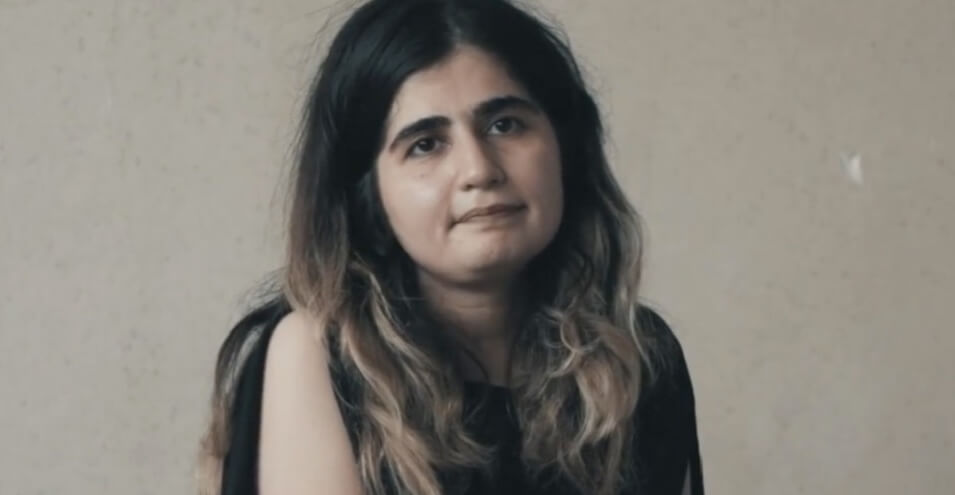
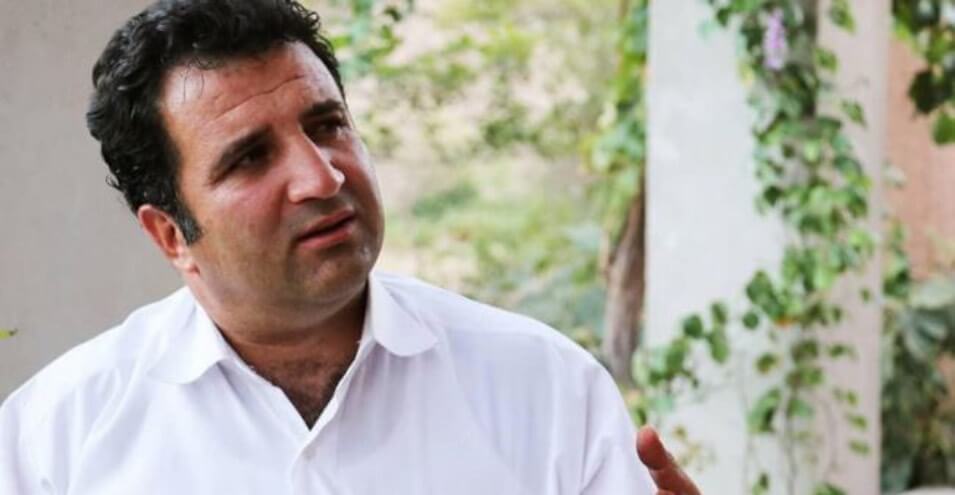
Sepideh Qolyan did not write to the Leader asking for pardon, so she was imprisoned.
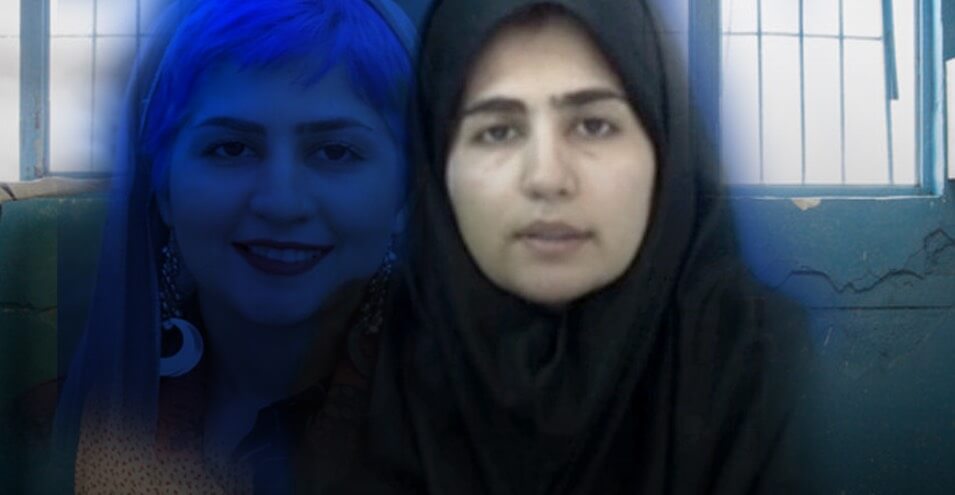
The prison sentence of civil rights activist Sepideh Gholian in Iran has been carried out despite the fact that the labor rights activist stated that the judge executing her sentences had threatened to execute her sentence if she did not request clemency from the Leader of the Islamic Republic.
Sepideh Qolyan was transferred to Evin Prison on Sunday, July 21, 2020. A day earlier, on Saturday, June 11, she had stated in a statement on her Twitter page that she was not eligible for amnesty in the Haft Tappeh case and that when she applied for the execution of the sentences, the judge asked her to write a request for amnesty to the Supreme Leader.
In a video posted on Twitter, he said, “When I entered Evin Prosecutor’s Office, the judge of the first branch of the execution of sentences told a soldier, ‘Sir, send Ms. Qolyan inside.’ I asked what the pardon process was. They said, ‘Write a pardon request to the Leader so we can see what we can do for you.’ When I said, ‘I will not write a pardon request,’ they said, ‘You will be arrested and transferred to Qarchak Prison.’”
However, he was released on bail that same day and transferred to Evin Prison the next day.
Ms. Gholian was sentenced to a total of 18 years in prison in September 2019 by Branch 28 of the Revolutionary Court, presided over by Judge Mohammad Moghiseh, in the case of the labor magazine "Gam," of which seven years were enforceable under Article 1 of the Islamic Penal Code. Her sentence was reduced to five years in prison by the Court of Appeal. According to Heidari Manesh, Sepideh Gholian's lawyer, she was accused of gathering and colluding against national security, membership in the Gam group, propaganda activities against the regime, and spreading lies.
Sepideh Qolyan announced that the appeals courts were being held in absentia for her and other labor activists, and stated that “the judge supervising the prison had told me that appeals courts would no longer be held, but Mr. Raisi ordered that the Haft Tappeh case be held in the presence of the head of the Revolutionary Court. Not only was no trial held, but also punitive sentences were issued to make the mockery of the administration of justice more scandalous than before.”
Ms. Qolyan wrote on her personal Instagram and Twitter that “I do not see any legitimacy for these rulings and I knew from the beginning that our temporary freedom was nothing more than a carnival show for the authorities. In the coming days, we will continue our protests in any way possible.”
Jamal Heydarimanesh, Sepideh Qolyan's lawyer, also announced in an interview with ILNA news agency that "his client's verdict was finalized without holding a trial session, while holding this session could have helped clarify the issue and issue a fair verdict."
This labor rights activist also has two other cases, and was charged with “propaganda against the system” for publishing news about Arab prisoners and “spreading lies” for exposing the role of interrogator-journalist Ameneh Sadat Zabihpour, a Radio and Television journalist, and was released on bail of 180 million Tomans. He reported on the presence of activist Ameneh Sadat Zabihpour during his interrogations and stated that “During the production stages of the burnt design, Ms. Ameneh Sadat Zabihpour was present in the interrogation room to provide us with a text she had prepared in advance to read in front of the camera after hours of physical and mental torture.”
The Burnt Design was a pseudo-documentary broadcast by the Iranian Broadcasting Corporation against labor activists, including Sepideh Qolyan.
Sepideh Qolyan was transferred to prison at a time when in June 2020, the Judiciary Media Center announced the pardon of a number of prisoners, including those arrested in the Haft Tappeh case.
Sepideh Qolyan, born in 1995, a civil rights activist from Ahvaz, was arrested on November 17, 2018, during the several-day protests by sugarcane workers in Haft Tappeh, Khuzestan, along with labor activist Esmaeil Bakhshi and a group of other workers. She was released a month later, on December 17, on bail of 500 million Tomans.
After Ismail Bakhshi, a representative of the workers at the Haft Tappeh sugar factory, wrote in an Instagram post about his torture during his detention and called on the Minister of Information to respond, Sepideh Qolyan also wrote on her Twitter about the torture of Ismail Bakhshi and herself.
Despite their lawyers’ efforts to sue for torture and harassment during their detention, on the evening of January 19, a documentary called “Burnt Design” was broadcast on the 2030 News Channel of the Iranian Broadcasting Corporation (IRBC), which contained confessions from Esmaeil Bakhshi and Sepideh Qolyan on camera. In the program, they were identified as affiliated with groups opposed to the Islamic Republic.
In response to the broadcast of her confessions on television, Sepideh Qolyan called for a public trial on Twitter: “These images of me that were broadcast were further evidence to prove my words that I was tortured during my detention. I will pursue my torture more seriously than before, and now that my confessions have been broadcast, I demand that my trial be held in public.”
Sepideh Gholian and Esmaeil Bakhshi were arrested again by the officers on the morning of January 20. During Sepideh's arrest, the officers also arrested her brother Amir Gholian. Amir Gholian was released from the Ahvaz detention center on February 10 on bail of 100 million tomans, and Sepideh Gholian was released in this case on bail of 1.5 billion tomans in November 2019.
Source: Human Rights Campaign